


NAND flash memory controller supplier Phison Electronics Corp (群聯電子) yesterday said it is considering making a NT$26 billion (US$849.65 million) contribution to a group of investors looking to acquire Toshiba Corp’s memorychip unit, to show its support for its debt-ridden Japanese partner.
Phison, about 10 percent owned by Toshiba, said it has formed a strong partnership with the Japanese firm over the past decade and it “would not be absent” from Toshiba’s divestment of its memorychip unit.
Phison was informed about the spinoff when Toshiba made the decision before the Lunar New Year holiday in February, the company said.
Phison said Toshiba told it to be ready with an unspecified amount of capital.
Toshiba supplies NAND flash memory chips to Phison.
“We will lend a hand to Toshiba as we have promised, given our long-term partnership,” Phison chairman Pua Khein-seng (潘健成) told investors at an earnings conference in Taipei. “We will not rule out the possibility of making an investment, if necessary.”
The company might seek to raise NT$5 billion to NT$6 billion via offering 20 million shares via a private placement and aim to raise another NT$10 billion to NT$20 billion by selling corporate bonds, Pua said.
Because of the planned investment, Phison said it has proposed distributing a cash dividend of only NT$14 per common share this year, representing a payout ratio of about 57 percent, he said.
The company distributed a NT$24 dividend last year.
“No matter which investors clinch the deal, Phison will be among them,” Pua said. “There is a slim chance that only a single investor wins [the bid].”
He declined to comment on whether Toshiba had reserved a certain share of its memorychip unit for Phison and dismissed speculation that Toshiba might sell its Phison shares in a bid to alleviate its financial problems.
Meanwhile, Pua said he expects NAND flash memory chip prices to undergo a correction this quarter following a price surge amid a supply crunch.
“The rapid hikes are smothering demand as material costs have become too expensive,” Pua said. “Some Chinese smartphone brands have lowered their equipment loading rate to between 10 percent and 20 percent to reduce losses.”
A moderate price decline would help restore market order in the second half, he said, adding that NAND flash memory supplies would remain tight throughout the year.
Phison reported NT$2.68 billion in gross profit and a 24.19 percent gross margin for the final quarter of last year.
The figures for last quarter might hit record levels, thanks to an increase in NAND flash prices and higher contribution from high-margin flash memory modules for automobiles, Pua said.
However, a strong New Taiwan dollar would likely erode the company’s earnings by NT$1.5 per share in the first quarter, he said.
Pua said he expects non-operating gains from other areas to help offset the erosion.
Taiwan’s long-term economic competitiveness will hinge not only on national champions like Taiwan Semiconductor Manufacturing Co. (TSMC, 台積電) but also on the widespread adoption of artificial intelligence (AI) and other emerging technologies, a US-based scholar has said. At a lecture in Taipei on Tuesday, Jeffrey Ding, assistant professor of political science at the George Washington University and author of "Technology and the Rise of Great Powers," argued that historical experience shows that general-purpose technologies (GPTs) — such as electricity, computers and now AI — shape long-term economic advantages through their diffusion across the broader economy. "What really matters is not who pioneers
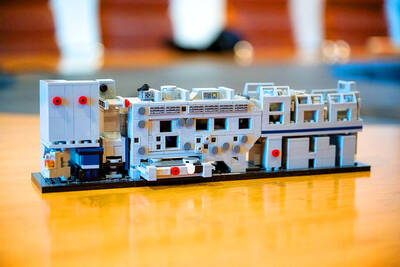
In a high-security Shenzhen laboratory, Chinese scientists have built what Washington has spent years trying to prevent: a prototype of a machine capable of producing the cutting-edge semiconductor chips that power artificial intelligence (AI), smartphones and weapons central to Western military dominance, Reuters has learned. Completed early this year and undergoing testing, the prototype fills nearly an entire factory floor. It was built by a team of former engineers from Dutch semiconductor giant ASML who reverse-engineered the company’s extreme ultraviolet lithography (EUV) machines, according to two people with knowledge of the project. EUV machines sit at the heart of a technological Cold
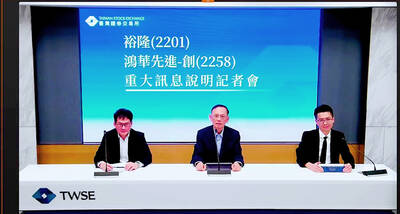
TAIWAN VALUE CHAIN: Foxtron is to fully own Luxgen following the transaction and it plans to launch a new electric model, the Foxtron Bria, in Taiwan next year Yulon Motor Co (裕隆汽車) yesterday said that its board of directors approved the disposal of its electric vehicle (EV) unit, Luxgen Motor Co (納智捷汽車), to Foxtron Vehicle Technologies Co (鴻華先進) for NT$787.6 million (US$24.98 million). Foxtron, a half-half joint venture between Yulon affiliate Hua-Chuang Automobile Information Technical Center Co (華創車電) and Hon Hai Precision Industry Co (鴻海精密), expects to wrap up the deal in the first quarter of next year. Foxtron would fully own Luxgen following the transaction, including five car distributing companies, outlets and all employees. The deal is subject to the approval of the Fair Trade Commission, Foxtron said. “Foxtron will be
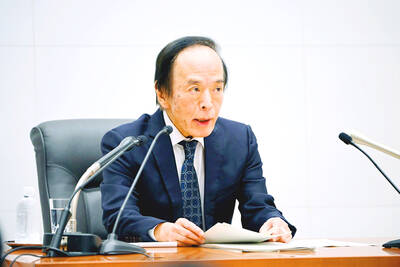
INFLATION CONSIDERATION: The BOJ governor said that it would ‘keep making appropriate decisions’ and would adjust depending on the economy and prices The Bank of Japan (BOJ) yesterday raised its benchmark interest rate to the highest in 30 years and said more increases are in the pipeline if conditions allow, in a sign of growing conviction that it can attain the stable inflation target it has pursued for more than a decade. Bank of Japan Governor Kazuo Ueda’s policy board increased the rate by 0.2 percentage points to 0.75 percent, in a unanimous decision, the bank said in a statement. The central bank cited the rising likelihood of its economic outlook being realized. The rate change was expected by all 50 economists surveyed by Bloomberg. The


 RSS
RSS