


Tongtai Machine and Tool Co Ltd (東台精機), one of the nation’s leading machine tool makers, yesterday said it would commercialize its 3D printing technology this year, setting an annual sales target of NT$200 million (US$6.48 million).
Headquartered in Kaohsiung, the 48-year-old company is the world’s second-largest maker of processing systems for printed circuit boards after Japan’s Hitachi Via Mechanics Ltd.
Tongtai said it would be able to manufacture 3D metal printing equipment through collaboration with US-based Optomec Inc, a system supplier for 3D printed metals and printed electronics.
“3D metal printing equipment is expected to be Tongtai’s next sales catalyst,” company spokeswoman Lulu Yen (嚴璐) said at the Taipei International Machine Tool Show.
The high-end equipment could be widely used in the aerospace and medical device industries, further broadening Tongtai’s global customer base, she told the Taipei Times.
Apart from developing new products, Tongtai is also working on a capacity expansion project.
The company’s new plant in Kaohsiung’s Lujhu District (路竹), which cost nearly NT$600 million, is to start operations next month, Tongtai said.
The new plant is to mainly manufacture large, high-priced machines for customers in the aerospace industry, it said.
Revenue from aerospace companies constitutes nearly 10 percent of the company’s total sales, while sales to automotive companies accounts for about 50 percent, company data showed.
The firm has an annual sales growth target of 5 percent for this year and expects sales in the overall machinery industry to continue increasing, Yen said.
Tongtai last year posted sales of NT$9.78 billion, up 4.3 percent from the previous year, on the back of its acquisition of two European companies.
In 2015, Tongtai acquired a 100 percent stake in France-based PCI Scemm and Austria-based Anger Machining GmbH as part of efforts to increase its presence in the global market.
Taiwan’s machine tool industry was gloomy last year, with machinery exports falling 1.7 percent annually to US$21.1 billion, due to a global economic slowdown and the depreciation of the Japanese yen.
However, this year’s machinery exports are expected to grow 10 percent amid a recovering global economy, the Taiwan Association of Machinery Industry (台灣機械公會) said.
More than 1,100 Taiwanese machine tool makers are taking part in the show, which is to run through Sunday.
The event is forecast to fetch orders valued at US$1.5 billion, the association said.


The domestic unit of the Chinese-owned, Dutch-headquartered chipmaker Nexperia BV will soon be able to produce semiconductors locally within China, according to two company sources. Nexperia is at the center of a global tug-of-war over critical semiconductor technology, with a Dutch court in February ordering a probe into alleged mismanagement at the company. The geopolitical tussle has disrupted supply chains, with some carmakers reportedly forced to cut production due to chip shortages. Local production would allow Nexperia’s domestic arm, Nexperia Semiconductors (China) Ltd (安世半導體中國), to bypass restrictions in place since October on the supply of silicon wafers — etched with tiny components to

Taiwan is open to joining a global liquefied natural gas (LNG) program if one is created, but on the condition that countries provide delivery even in a scenario where there is a conflict with China, an energy department official said yesterday. While Taiwan’s priority is to have enough LNG at home, the nation is open to exploring potential strategic reserves in other countries such as Japan or South Korea, Energy Administration Deputy Director-General Chen Chung-hsien (陳崇憲) said. While the LNG market does not have a global reserve for emergencies like that of oil, the concept has been raised a few times —
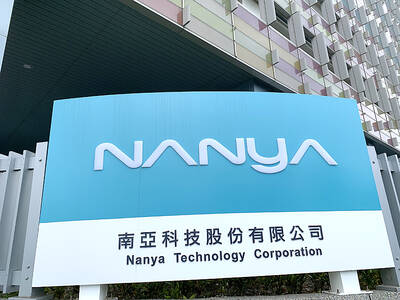
AI-FUELED DEMAND: The company has been benefiting from the skyrocketing prices for DRAM chips amid the AI frenzy, especially its core product — DDR4 DRAM chips DRAM chipmaker Nanya Technology Corp (南亞科技) yesterday reported that its revenue for the first quarter surged 582.91 percent to NT$49.09 billion (US$1.54 billion) from NT$7.19 billion a year earlier, as the supply crunch caused chip price spikes. Last quarter’s figure is the highest on record. On a quarterly basis, revenue jumped 63.14 percent from NT$30.09 billion, the company said. In January, Nanya Technology expected global DRAM supply scarcity to continue through the first half of 2028, thanks to strong demand for artificial intelligence (AI) applications. Market researcher TrendForce Corp (集邦科技) forecast prices of standard DRAM chips would rise between 58 percent and 63

HIGHER PRICES: Given rising energy costs, CPC raised natural gas prices for generators by 41.58%, which Taipower said would raise its power generation costs by NT$10 billion State-run CPC Corp, Taiwan (CPC, 台灣中油) has activated its fourth naphtha cracker to boost ethylene supply, aiming to ease concerns over plastic material shortages amid tensions in the Middle East, the Ministry of Economic Affairs said yesterday. The move is expected to add 19,000 tonnes of supply this month and 30,000 tonnes next month, Deputy Minister of Economic Affairs Ho Chin-tsang (何晉滄) said at a meeting of the legislature’s Economics Committee in Taipei. CPC on Tuesday held talks with major polyethylene producers, including Formosa Plastics Corp (台塑), Asia Polymer Corp (亞聚) and USI Corp (台聚), and pledged to supply ethylene feedstock


 RSS
RSS