


State-run Mega Financial Holding Co (兆豐金控) is to pursue stable and sustainable profit growth this year, and set up a computer system to prevent compliance failures, which led to a heavy fine on its New York banking branch last year, top executives said.
The bank-focused conglomerate is aiming for a conservative increase of between 1.5 and 2 percent in its loan book this year and is to stop seeking acquisition opportunities at home and abroad.
“We will give top priority to reversing the company’s tarnished image and shun bold moves in the pursuit of profit,” Mega Financial chairman Michael Chang (張兆順) told a news conference on Saturday.
Chang set the goal after the US$180 million fine in August last year by the New York State Department of Financial Services wiped out main subsidiary Mega International Commercial Bank’s (兆豐商銀) overseas earnings and accounted for the group’s profit decline of 23.52 percent from 2015.
Mega Financial posted a net income of NT$22.39 billion (US$826.9 million) last year, compared with NT$29.27 billion a year earlier, company data showed.
Offshore and overseas operations accounted for 60 percent of earnings contributions.
The company is to set up a computer system that will help identify money-laundering risks, allowing the bank and other subsidiaries to meet compliance requirements in Taiwan and overseas markets, Chang said.
Chang put his former colleague at First Commercial Bank (第一銀行) Jason Ko (柯明川) in charge of the task, which might entail NT$500 million of extra compliance costs and hiring hundreds of personnel.
Ko said he has to go to the US every month this year to handle the aftermath of the compliance failure.
Mega Financial president Bruce Yang (楊豐彥) said offshore and overseas operations would continue to drive business growth, but there would be much less emphasis on unreliable arbitrage opportunities.
“It is more important to focus on business areas where we can achieve stable and sustainable growth,” Yang said.
Mega Bank senior executive vice president Fu Ruey-yuan (傅瑞媛) said it is unrealistic to set aggressive loan growth targets if major local firms demonstrate a low appetite for investment.
Local developers and builders have refrained from launching new construction projects this year on expectations of an extended soft market, Fu said.
The abrupt and rapid appreciation of the New Taiwan dollar against the US dollar might erode the revenue of local exporters and life insurance companies if the upswing runs unchecked, Fu said.
Mega Bank vice president in charge of foreign-exchange trade Sandy Lee (李春香) declined to comment, saying the currency markets have evolved in directions at odds with earlier expectations.
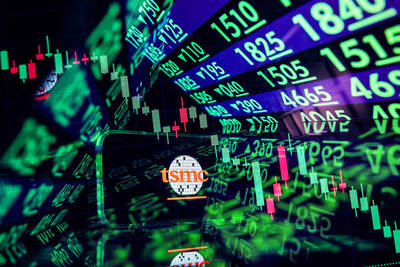
Taiwan Semiconductor Manufacturing Co (TSMC, 台積電) last week recorded an increase in the number of shareholders to the highest in almost eight months, despite its share price falling 3.38 percent from the previous week, Taiwan Stock Exchange data released on Saturday showed. As of Friday, TSMC had 1.88 million shareholders, the most since the week of April 25 and an increase of 31,870 from the previous week, the data showed. The number of shareholders jumped despite a drop of NT$50 (US$1.59), or 3.38 percent, in TSMC’s share price from a week earlier to NT$1,430, as investors took profits from their earlier gains
AI TALENT: No financial details were released about the deal, in which top Groq executives, including its CEO, would join Nvidia to help advance the technology Nvidia Corp has agreed to a licensing deal with artificial intelligence (AI) start-up Groq, furthering its investments in companies connected to the AI boom and gaining the right to add a new type of technology to its products. The world’s largest publicly traded company has paid for the right to use Groq’s technology and is to integrate its chip design into future products. Some of the start-up’s executives are leaving to join Nvidia to help with that effort, the companies said. Groq would continue as an independent company with a new chief executive, it said on Wednesday in a post on its Web

CHINA RIVAL: The chips are positioned to compete with Nvidia’s Hopper and Blackwell products and would enable clusters connecting more than 100,000 chips Moore Threads Technology Co (摩爾線程) introduced a new generation of chips aimed at reducing artificial intelligence (AI) developers’ dependence on Nvidia Corp’s hardware, just weeks after pulling off one of the most successful Chinese initial public offerings (IPOs) in years. “These products will significantly enhance world-class computing speed and capabilities that all developers aspire to,” Moore Threads CEO Zhang Jianzhong (張建中), a former Nvidia executive, said on Saturday at a company event in Beijing. “We hope they can meet the needs of more developers in China so that you no longer need to wait for advanced foreign products.” Chinese chipmakers are in
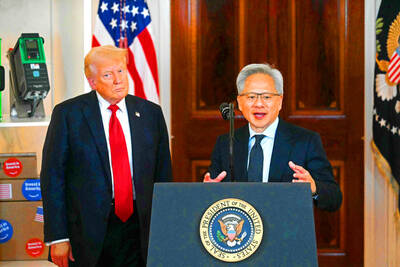
POLICY REVERSAL: The decision to allow sales of Nvidia’s H200 chips to China came after years of tightening controls and has drawn objections among some Republicans US House Republicans are calling for arms-sale-style congressional oversight of artificial intelligence (AI) chip exports as US President Donald Trump’s administration moves to approve licenses for Nvidia Corp to ship its H200 processor to China. US Representative Brian Mast, the Republican chairman of the US House Committee on Foreign Affairs, which oversees export controls, on Friday introduced a bill dubbed the AI Overwatch Act that would require the US Congress to be notified of AI chips sales to adversaries. Any processors equal to or higher in capabilities than Nvidia’s H20 would be subject to oversight, the draft bill says. Lawmakers would have


 RSS
RSS