


Nan Shan Life Insurance Co (南山人壽) yesterday won the Taiwan Insurance Guaranty Fund (TIGF, 保險安定基金) bailout auction of troubled Chaoyang Life Insurance Co (朝陽人壽) for NT$200 million (US$6.3 million), allowing Nan Shan to take over Chaoyang’s assets and debts, and retain the rights of existing policyholders unaffected.
It was the second attempt by the semi-official TIGF to sell Chaoyang, which was put under government receivership on Jan. 26 last year and failed to find a buyer at an auction in October last year.
TIFG is to pay Nan Shan the compensation with its own money contributed by insurance companies to support the industry’s smooth operations, TIGF chairman Lin Kuo-bin (林國彬) told reporters.
TIGF has relied on taxpayers’ money to dispose of unprofitable Kuo Hua Life Insurance Co (國華人壽), Singfor Life Insurance Co (幸福人壽) and Global Life Insurance Co (國寶人壽).
Apart from the compensation, the Financial Supervisory Commission will grant Nan Shan amnesties so it can better emerge from Chaoyang’s financial burdens.
Chaoyang had about 100,000 clients with 123,000 policies, total assets of NT$34.52 billion and long-standing negative net worth prior to the receivership that came after the company failed to remedy capital inadequacy, according to the commission.
Insurers with risk-based capital (RBC) ratios of lower than 50 percent might be taken into government control to safeguard the interests of customers and employees, the commission said.
Nan Shan said it is putting together a transition team to carry out the takeover and integration by May 2.
It also has to retain all Chaoyang employees and keep their compensation and benefits unchanged for at least one year, Lin said.
“The deal will enable Chaoyang customers to utilize Nan Shan’s broader and more diversified service network… The company will handle Chaoyang employees in line with contract terms,” Nan Shan said in a statement.
Nan Shan outbid Mercuries Life Insurance Co (三商美邦人壽) and Cathay Life Insurance Co (國泰人壽), though the latter did not participate in the due diligence inspection.
The commission stepped up preferential governance terms to attract buyers this time given that Chaoyang incurs NT$50 million in pre-tax losses a month and tax money is not an option for bailout plans, local media said.
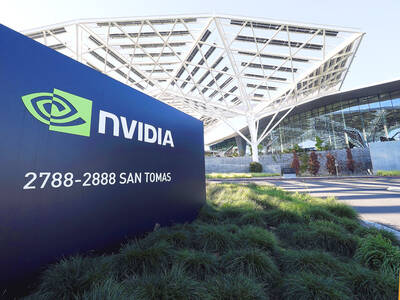
CHIP RACE: Three years of overbroad export controls drove foreign competitors to pursue their own AI chips, and ‘cost US taxpayers billions of dollars,’ Nvidia said China has figured out the US strategy for allowing it to buy Nvidia Corp’s H200s and is rejecting the artificial intelligence (AI) chip in favor of domestically developed semiconductors, White House AI adviser David Sacks said, citing news reports. US President Donald Trump on Monday said that he would allow shipments of Nvidia’s H200 chips to China, part of an administration effort backed by Sacks to challenge Chinese tech champions such as Huawei Technologies Co (華為) by bringing US competition to their home market. On Friday, Sacks signaled that he was uncertain about whether that approach would work. “They’re rejecting our chips,” Sacks
Taiwan’s long-term economic competitiveness will hinge not only on national champions like Taiwan Semiconductor Manufacturing Co. (TSMC, 台積電) but also on the widespread adoption of artificial intelligence (AI) and other emerging technologies, a US-based scholar has said. At a lecture in Taipei on Tuesday, Jeffrey Ding, assistant professor of political science at the George Washington University and author of "Technology and the Rise of Great Powers," argued that historical experience shows that general-purpose technologies (GPTs) — such as electricity, computers and now AI — shape long-term economic advantages through their diffusion across the broader economy. "What really matters is not who pioneers

BUBBLE? Only a handful of companies are seeing rapid revenue growth and higher valuations, and it is not enough to call the AI trend a transformation, an analyst said Artificial intelligence (AI) is entering a more challenging phase next year as companies move beyond experimentation and begin demanding clear financial returns from a technology that has delivered big gains to only a small group of early adopters, PricewaterhouseCoopers (PwC) Taiwan said yesterday. Most organizations have been able to justify AI investments through cost recovery or modest efficiency gains, but few have achieved meaningful revenue growth or long-term competitive advantage, the consultancy said in its 2026 AI Business Predictions report. This growing performance gap is forcing executives to reconsider how AI is deployed across their organizations, it said. “Many companies
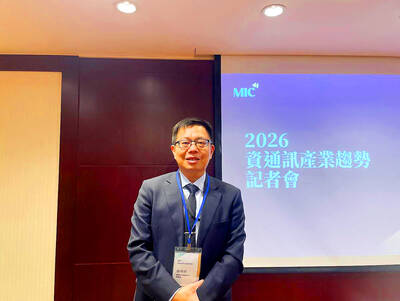
COST PRESSURE: Global PC brands such as HP Inc are expected to cope with the situation by either raising prices or downgrading their products, a researcher said Global PC shipments are expected to grow by a mere 0.3 percent to about 180 million units next year, as a surge in memory prices has added cost pressure on manufacturers, the Market Intelligence and Consulting Institute (MIC) said at a news conference in Taipei yesterday. As major memorychip suppliers such as Samsung Electronics Co and Micron Technology Inc shift resources and production capacity toward high-bandwidth memory, which is used primarily in servers and offers higher margins, the supply of low-power DRAM used in PCs and smartphones has been squeezed, tightening supply-demand conditions and pushing up prices, MIC ICT Industry Research


 RSS
RSS