


Whether profitable or not, it has become an important “ritual” in Taiwan that tech firms host large year-end banquets for employees, which feature performing artists and lucky draw prizes to boost employee morale.
The annual event, known as wei ya (尾牙), usually starts with speeches from management about the company’s performance, outlook or operational goals for the coming year and incentives to encourage employees to work harder.
This year, companies like Quanta Computer Inc (廣達), Pegatron Corp (和碩), Inventec Corp (英業達), Wistron Corp (緯創) and Compal Electronics Inc (仁寶) are hosting banquets at the Nangang Exhibition Hall in the weeks prior to the Lunar New Year. The venue can accommodate thousands of people and doubles as a concert hall.
The Formosa Regent Taipei (台北晶華酒店) is another choice venue because its banquet menu has at least eight dishes, including seafood and steak. The self-serve ice cream is a highlight.
Apart from a banquet to thank employees, some companies invite famous singers and popular talk-show hosts to entertain people. If A-mei (阿妹), Wu Bai (伍佰) or Jam Hsiao (蕭敬騰) were to sing at their year-end banquet it shows that the company is sincere about the event.
When A-mei performed at Pegatron’s banquet, nearly 8,000 employees watched the pop diva sing.
Sometimes management teams try to entertain employees themselves. Quanta chairman Barry Lam (林百里) and vice chairman C.C. Leung (梁次震) have worn costumes such as Neo, a character from The Matrix movie, and pained themselves blue like a Na’vi from Avatar. They have also dressed up like Confucius (孔子). During the latest banquet, the pair even held lightsabers, a weapon from the Star Wars movies and marched on stage to the films’ music to open the annual event.
Lucky draws usually create a cheerful atmosphere because the combined prizes could be worth tens of millions of New Taiwan dollars. Quanta gave away a total of NT$40 million (US$1.24 million) in prizes during last year’s event, with a grand prize of NT$300,000 cash for 18 employees, while Pegatron’s largest prize was a Skoda SUV valued at more than NT$1 million. Pegatron chairman Tung Tzu-hsien (童子賢) gave NT$10,000 in cash to 8,000 employees at last year’s banquet.
Compal has a tradition called “a handful prize.” Compal chairman Rock Hsu (許勝雄), president Ray Chen (陳瑞聰) and their wives scoop out as many tickets for workers’ prizes as they can from a transparent ball on stage. At last year’s event, Compal gave NT$30 million to employees, up 25 percent from the previous year’s NT$24 million.
Quanta is to host its year-end banquet on Friday, the first among its peers.
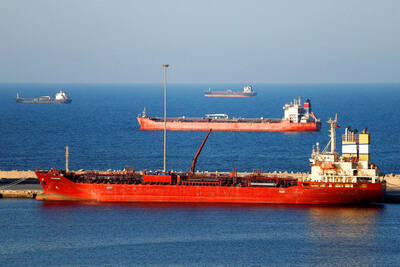
HORMUZ ISSUE: The US president said he expected crude prices to drop at the end of the war, which he called a ‘minor excursion’ that could continue ‘for a little while’ The United Arab Emirates (UAE) and Kuwait started reducing oil production, as the near-closure of the crucial Strait of Hormuz ripples through energy markets and affects global supply. Abu Dhabi National Oil Co (ADNOC) is “managing offshore production levels to address storage requirements,” the company said in a statement, without giving details. Kuwait Petroleum Corp said it was lowering production at its oil fields and refineries after “Iranian threats against safe passage of ships through the Strait of Hormuz.” The war in the Middle East has all but closed Hormuz, the narrow waterway linking the Persian Gulf to the open seas,
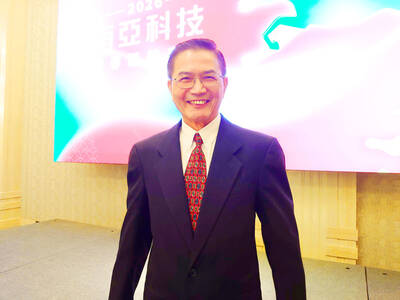
Nanya Technology Corp (南亞科技) yesterday said the DRAM supply crunch could extend through 2028, as the artificial intelligence (AI) boom has led the world’s major memory makers to dramatically reduce production of standard DRAM and allocate a significant portion of their capacity for high-bandwidth memory (HBM) chips. The most severe supply constraints would stretch to the first half of next year due to “very limited” increases in new DRAM capacity worldwide, Nanya Technology president Lee Pei-ing (李培瑛) told a news briefing. The company plans to increase monthly 12-inch wafer capacity to 20,000 in the first half of 2028 after a
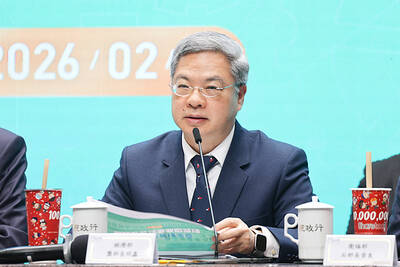
Taiwan has enough crude oil reserves for more than 100 days and sufficient natural gas reserves for more than 11 days, both above the regulatory safety requirement, Minister of Economic Affairs Kung Ming-hsin (龔明鑫) said yesterday, adding that the government would prioritize domestic price stability as conflicts in the Middle East continue. Overall, energy supply for this month is secure, and the government is continuing efforts to ensure sufficient supply for next month, Kung told reporters after meeting with representatives from business groups at the ministry in Taipei. The ministry has been holding daily cross-ministry meetings at the Executive Yuan to ensure
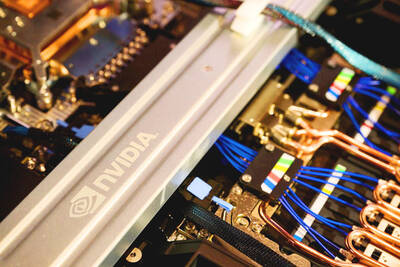
RATIONING: The proposal would give the Trump administration ample leverage to negotiate investments in the US as it decides how many chips to give each country US officials are debating a new regulatory framework for exporting artificial intelligence (AI) chips and are considering requiring foreign nations to invest in US AI data centers or security guarantees as a condition for granting exports of 200,000 chips or more, according to a document seen by Reuters. The rules are not yet final and could change. They would be the first attempt to regulate the flow of AI chips to US allies and partners since US President Donald Trump’s administration said it rescinded its predecessor’s so-called AI diffusion rules. Those rules sought to keep a significant amount of AI


 RSS
RSS