


Taiwan has gained significant headway in the ease of paying taxes, moving from 39th to 30th place worldwide, PricewaterhouseCoopers LLP’s (PwC) Paying Taxes 2017 report said.
While favorable tax terms carry heavy weight in global investment decisions, multinational corporations assign more importance to tax policy predictability, transparency and consistency, said the report, which is part of the World Bank’s Doing Business project.
“The improvement in ranking has much to do with the introduction of a new criterion — post-filing — that aims to measure the time it takes for tax authorities in different countries to process return applications,” PwC Taiwan financial services leader Richard Watanabe (吳偉臺) told a media briefing.
In developed nations, companies spend an average of eight hours to go through the process, which takes up to 27 hours in developing countries, Watanabe said.
Taiwanese authorities handle post-filings quite efficiently, as most applicants are export-oriented manufacturers that need smooth cash flows for capital equipment purchases and day-to-day operations, Watanabe said.
The study also looks at tax payments, time to comply and total tax rates in 190 economies globally, as part of the international body’s annual ease of doing business study.
The total tax rate in Taiwan has stayed unchanged at 34.5 percent this year, lower than the 36.27 percent benchmark in the Asia-Pacific region and 40.6 percent across the world, the report said.
The overall tax burden in Taiwan is heavier than Singapore’s 19.9 percent, Hong Kong’s 22.9 percent and South Korea’s 33.1 percent, but is much lighter than Japan’s 48.9 percent and China’s 68 percent, the report said.
The figures show that while taxes are an important factor, other considerations influence investment decisions by multinational corporations.
“Otherwise, tax havens like the Cayman Islands would be the world’s most attractive investment destination, while China, Japan and the US would scare away foreign investment given their heavy tax burden,” Watanabe said.
For global investors, tax policy predictability, transparency and consistency matter more than headline tax rates, PwC tax services partner Rosamund Fan (范書華) said.
The government must strike a balance between the nation’s economic development, social welfare and its fiscal health when approaching tax reforms, Fan said.
The Ministry of Finance plans to raise gift and inheritance tax rates by up to 10 percent to finance the nation’s long-term care system. The government is also seeking to overhaul the pension system for public servants, retired military personnel and school teachers in an effort to avoid a collapse of the system.
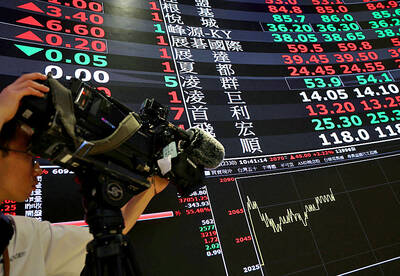
After several years flying high as Asia’s best Nvidia Corp proxy, Taiwan Semiconductor Manufacturing Co (TSMC, 台積電) is increasingly vying with other artificial intelligence (AI) stocks for investor attention. Stock traders are chasing a wider array of beneficiaries as mainstream usage of AI creates demand for hardware beyond the most-advanced chips TSMC makes for Nvidia. Subthemes from the deepening memory crunch to advances in robotics are also luring bids. At the same time, investment caps on single stocks are pushing funds to diversify, while retail investors long familiar with TSMC through its US depositary receipts are being offered a broader set of
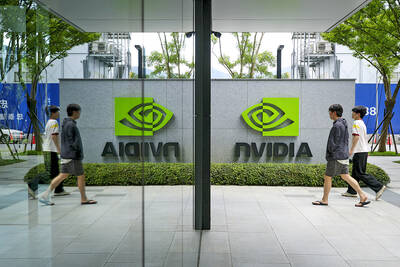
UNDER MICROSCOPE: Taiwan detained three people who allegedly conspired to buy servers in Taiwan and export them using fraudulent documentation, prosecutors said Nvidia Corp chief executive officer Jensen Huang (黃仁勳) on Saturday urged Super Micro Computer Inc to tighten up on compliance after Taiwan detained three people this week for allegedly making fraudulent declarations about artificial intelligence (AI) servers made by its US partner. The development marked the nation’s first crackdown on semiconductor smuggling, which grew after the US slapped restrictions on exports of high-end chips such as Nvidia AI accelerators to China. Nvidia is “rigorous” in explaining regulations to all of its partners, Huang told reporters after arriving in Taipei. “Ultimately Super Micro has to run their own company,” he said in response to
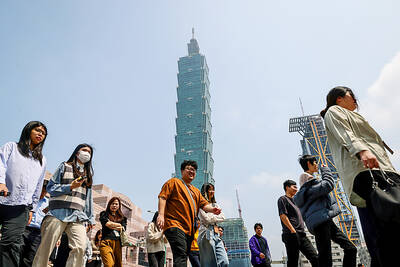
TECH RELIANCE: Growth is increasingly reflecting an unequal K-shaped distribution, where technology sectors outperform and other industries struggle, an expert said Standard Chartered Bank has significantly raised its forecast for Taiwan’s economic growth to 9.5 percent this year, up from 7.6 percent previously, citing surging artificial intelligence (AI) demand driving exports, semiconductor production and investment. The upgrade reflects a sustained AI supercycle that continues to fuel demand for advanced chips and technology infrastructure, which form the backbone of Taiwan’s exports, the bank said in a report this week. “We raise our 2026 growth forecast to reflect a much stronger-than-expected first-quarter GDP figure,” Standard Chartered senior economist for greater China and Asia Tommy Wu (胡東安) said in the report. Driven largely by a 35.3 percent
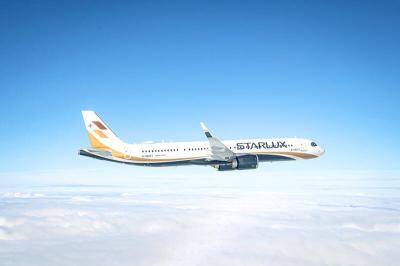
Two of Taiwan’s international carriers, Starlux Airlines Co (星宇航空) and EVA Airways Corp (長榮航空), have retained the five-star airline rating awarded by international airline review organization Skytrax. Starlux was awarded the distinction for a second consecutive year, while EVA Air received it for the 11th straight year, Skytrax said in statements released yesterday and on Thursday last week, respectively. The five-star rating is considered one of the airline industry's highest honors and is awarded following professional audits of airline product and frontline service standards, Skytrax said. The ratings are based on in-depth assessments using unified global quality standards rather than customer review scores


 RSS
RSS