


Japan’s economy expanded more than expected in the third quarter as exports offset slack consumer spending, government data showed yesterday, offering up some rare good news for the nation’s struggling growth project.
The world’s third-largest economy expanded 0.5 percent sequentially between July and September, and 2.2 from a year earlier, the Cabinet Office said.
That easily exceeded market expectations of a quarterly growth rate of 0.2 percent, or an annualized growth rate of 0.8 percent.

Photo: AFP
Japan’s economy contracted in the final three months of last year, before bouncing back in January to March with a 0.5 percent increase quarter-on-quarter and 0.2 percent expansion in April to June.
The wobbly trend has put Japanese officials under pressure to deliver as economists increasingly write off Japanese Prime Minister Shinzo Abe’s attempts to cement a lasting recovery.
His spend-for-growth policy, dubbed Abenomics, boosted stock prices and pushed down the yen, helping Japanese exports.
However, the yen, often bought as a safe haven in times of uncertainty, had been on the upswing since the start of the year and got a big bump after Britain’s shock vote to exit the EU.
It has recently weakened against the US dollar after Donald Trump’s election as US president, offering up some good news for Abe’s administration.
Yesterday, the yen was at a four-month low against the US dollar, brightening the outlook for exporters in the coming months.
It closed 0.9 percent lower at ¥107.65 in Tokyo trading.
“Third-quarter [growth] was a positive surprise; it should be a relief for Japanese policymakers,” Natixis Japan Securities economist Kohei Iwahara said.
“However, exports are making all the growth, mainly due to a pickup in the eurozone, so it could a one-off windfall. I would expect a slowdown in the fourth [quarter,” Iwahara said.
There are concerns about the impact of Trump’s presidency, including the possible derailing of a trade pact that is a pillar of Abe’s plans to revive growth.
Trump has expressed strong opposition to the Trans-Pacific Partnership (TPP), a 12-nation agreement spanning about 40 percent of the global economy.
The US and Japan are the two biggest members, but the trade deal became a hot-button issue during the US election campaign, with critics —including Trump — saying that it would cost US jobs.
The agreement has been signed, but is yet to be ratified by lawmakers in the US, while Japan’s lower house of parliament passed it last week.
Abe yesterday repeated his support for the trade pact and vowed that “it’s not over at all.”
“It is important to show our country’s will... at a time when protectionism is about to spread,” he told parliament.
Abe came to office in late 2012 and launched a growth plan — a mix of massive monetary easing, government spending and red-tape slashing.
However, promises to cut through red tape have been slow and Abe’s plan to buoy Japan’s once-booming economy have looked increasingly unrealistic.
His spend-for-growth policies have set Japan apart from some of its rich nation counterparts, including Germany, which has been reluctant to endorse them, seeing it as an ineffective way to stimulate the economy.
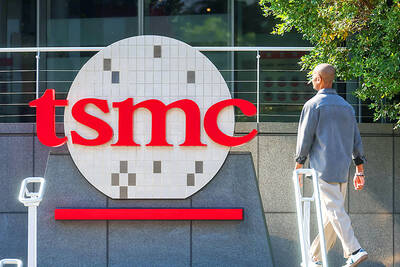
Shares of contract chipmaker Taiwan Semiconductor Manufacturing Co (TSMC, 台積電) came under pressure yesterday after a report that Apple Inc is looking to shift some orders from the Taiwanese company to Intel Corp. TSMC shares fell NT$55, or 2.4 percent, to close at NT$2,235 on the local main board, Taiwan Stock Exchange data showed. Despite the losses, TSMC is expected to continue to benefit from sound fundamentals, as it maintains a lead over its peers in high-end process development, analysts said. “The selling was a knee-jerk reaction to an Intel-Apple report over the weekend,” Mega International Investment Services Corp (兆豐國際投顧) analyst Alex Huang
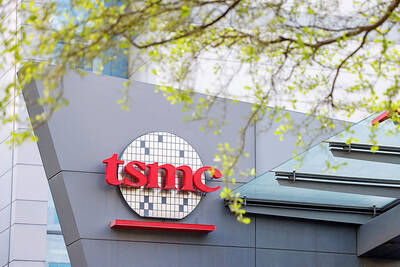
Taiwan Semiconductor Manufacturing Co (TSMC, 台積電) is expected to remain Apple Inc’s primary chip manufacturing partner despite reports that Apple could shift some orders to Intel Corp, industry experts said yesterday. The comments came after The Wall Street Journal reported on Friday that Apple and Intel had reached a preliminary agreement following more than a year of negotiations for Intel to manufacture some chips for Apple devices. Taiwan Institute of Economic Research (台灣經濟研究院) economist Arisa Liu (劉佩真) said TSMC’s advanced packaging technologies, including integrated fan-out and chip-on-wafer-on-substrate, remain critical to the performance of Apple’s A-series and M-series chips. She said Intel and Samsung
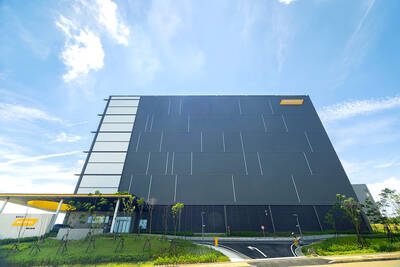
POWER BUILDUP: Powered by Nvidia’s B200 Blackwell chips, the data center would support MediaTek’s computing power demand and business growth, the company said Smartphone chip designer MediaTek Inc (聯發科) yesterday launched a new artificial intelligence (AI) data center with a maximum capacity of 45 megawatts to meet its rising demand for computing power required to develop new advanced chips for AI applications. The company has completed the first-phase computing power buildup at the data center in Miaoli County’s Tongluo Township (銅鑼), providing 15 megawatts of capacity to support its research and development (R&D) capabilities, despite an industrywide shortage of key components, MediaTek said. Supply constraints have plagued a wide range of key components, including memory chips, solid-state drives, power supply units and central
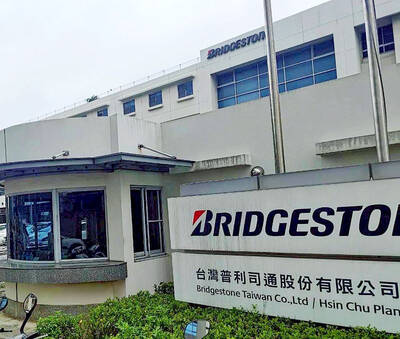
TRANSITION: With the closure, the company would reorganize its Taiwanese unit to a sales and service-focused model, Bridgestone said Bridgestone Corp yesterday announced it would cease manufacturing operations at its tire plant in Hsinchu County’s Hukou Township (湖口), affecting more than 500 workers. Bridgestone Taiwan Co (台灣普利司通) said in a statement that the decision was based on the Tokyo-based tire maker’s adjustments to its global operational strategy and long-term market development considerations. The Taiwanese unit would be reorganized as part of the closure, effective yesterday, and all related production activities would be concluded, the statement said. Under the plan, Bridgestone would continue to deepen its presence in the Taiwanese market, while transitioning to a sales and service-focused business model, it added. The Hsinchu


 RSS
RSS