


PChome InterPay (國際連), a wholly owned subsidiary of PChomePay (支付連), yesterday launched a third-party payment and online financing service.
PChome InterPay, with a paid-in capital of NT$501 million (US$15.88 million), said that its service would allow tens of millions of customers within subsidiaries of PChome Online Inc (網路家庭) to directly store money and make transactions with third-party payment accounts instead of using credit cards or bank accounts.
The company said in a statement that it would introduce the service to 8.8 million users at PChome subsidiary Ruten.com (露天拍賣) and expand its customer base to include PChome’s other subsidiaries — such as PChome Store Inc (商店街市集) — in the near future.
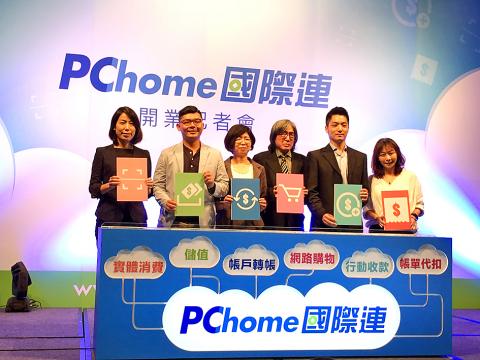
Photo: CNA
“E-commerce business in Taiwan has great potential, but the legal framework [for third-party payments] was not fully established until last year,” PChome chairman Jan Hung-tze (詹宏志) told a news conference in Taipei, referring to the legislature’s approval of amendments to the Electronics Payment Processing Institutions Act (電子支付機構管理條例).
Jan said that previously there were too many restrictions on online payment services, which had slowed the expansion of local e-commerce firms.
Former Financial Supervisory Commission chairman Chen Yuh-chang (陳裕璋) had been remiss in 2013 when he refused to allow non-financial companies to offer online payment services at a time when the practice had become common in China and many other nations.
“China’s Alipay (支付寶) has provided online payment services for 12 years, while Taiwanese companies are only being allowed to develop online payment services now,” Jan said.
In addition, more than 90 percent of people using PChome’s auction platform are amateur sellers, Jan said, adding that they need a more convenient way to do business and transfer money.
Moreover, third-party payment services could also help build up a big database for analyzing consumer behavior on the Internet, he said.
“Companies could use transaction data to assess buyers’ and sellers’ credit scores to develop better services,” Jan said.
E-commerce transactions on all PChome subsidiaries totaled about NT$200 billion per year, he said, citing company statistics.
Asked whether PChome InterPay would cooperate with other online stores or platforms like PayPal, Jan said that the firm has no such plans at the moment.
“We will focus on our existing customers first,” Jan said. “It took almost 30 years to make credit cards a common payment tool in Taiwan and there is still a long way to go” for third-party payment services.
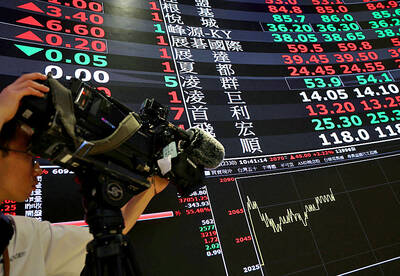
After several years flying high as Asia’s best Nvidia Corp proxy, Taiwan Semiconductor Manufacturing Co (TSMC, 台積電) is increasingly vying with other artificial intelligence (AI) stocks for investor attention. Stock traders are chasing a wider array of beneficiaries as mainstream usage of AI creates demand for hardware beyond the most-advanced chips TSMC makes for Nvidia. Subthemes from the deepening memory crunch to advances in robotics are also luring bids. At the same time, investment caps on single stocks are pushing funds to diversify, while retail investors long familiar with TSMC through its US depositary receipts are being offered a broader set of

UNDER MICROSCOPE: Taiwan detained three people who allegedly conspired to buy servers in Taiwan and export them using fraudulent documentation, prosecutors said Nvidia Corp chief executive officer Jensen Huang (黃仁勳) on Saturday urged Super Micro Computer Inc to tighten up on compliance after Taiwan detained three people this week for allegedly making fraudulent declarations about artificial intelligence (AI) servers made by its US partner. The development marked the nation’s first crackdown on semiconductor smuggling, which grew after the US slapped restrictions on exports of high-end chips such as Nvidia AI accelerators to China. Nvidia is “rigorous” in explaining regulations to all of its partners, Huang told reporters after arriving in Taipei. “Ultimately Super Micro has to run their own company,” he said in response to

TECH RELIANCE: Growth is increasingly reflecting an unequal K-shaped distribution, where technology sectors outperform and other industries struggle, an expert said Standard Chartered Bank has significantly raised its forecast for Taiwan’s economic growth to 9.5 percent this year, up from 7.6 percent previously, citing surging artificial intelligence (AI) demand driving exports, semiconductor production and investment. The upgrade reflects a sustained AI supercycle that continues to fuel demand for advanced chips and technology infrastructure, which form the backbone of Taiwan’s exports, the bank said in a report this week. “We raise our 2026 growth forecast to reflect a much stronger-than-expected first-quarter GDP figure,” Standard Chartered senior economist for greater China and Asia Tommy Wu (胡東安) said in the report. Driven largely by a 35.3 percent
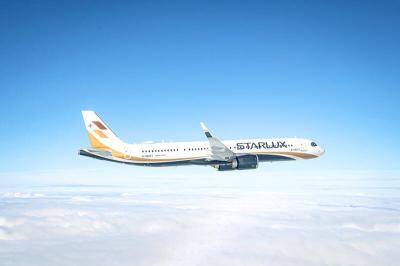
Two of Taiwan’s international carriers, Starlux Airlines Co (星宇航空) and EVA Airways Corp (長榮航空), have retained the five-star airline rating awarded by international airline review organization Skytrax. Starlux was awarded the distinction for a second consecutive year, while EVA Air received it for the 11th straight year, Skytrax said in statements released yesterday and on Thursday last week, respectively. The five-star rating is considered one of the airline industry's highest honors and is awarded following professional audits of airline product and frontline service standards, Skytrax said. The ratings are based on in-depth assessments using unified global quality standards rather than customer review scores


 RSS
RSS