


Formosa Chemicals & Fibre Corp (台化) has no plan to furlough its Changhua plant workers, even though the three boilers of the plant’s coal-fired generators were shut down yesterday.
The company said it would still pay salaries and bonuses to about 1,000 workers at the loss-making plant, which mainly produces artificial fibers such as nylon and rayon.
However, yesterday’s negotiation session between the company, the Changhua County Government and the Environmental Protection Administration (EPA) only reached consensus on the protection of labor rights and the company’s compliance with emission standards.
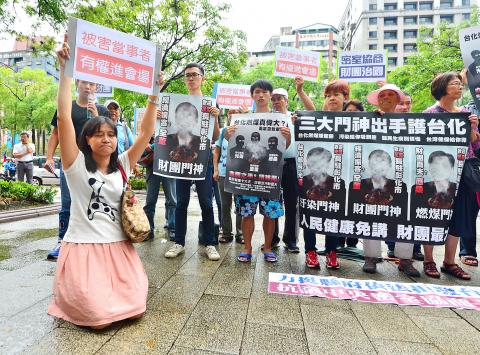
Photo: Wang I-sung, Taipei TImes
The key issue of the company’s license renewal application for its three boilers remains unsolved.
The license for the three boilers expired on Wednesday last week.
The county government has refused to renew the license due to the company’s failure to meet regulatory requirements by lowering the sulfur content in the bituminous coal used in the generators.
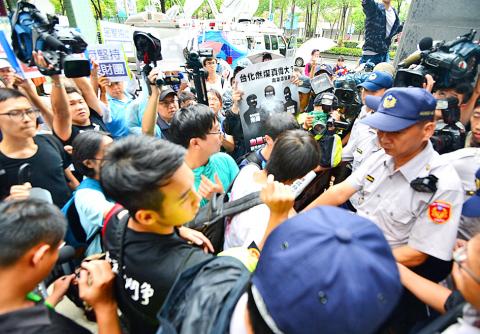
Photo: Wang I-sung, Taipei TImes
The county has also demanded that the company apply for a new permit for the boilers, but the company said it should only have to renew the license and promise to reduce sulfur oxide emissions to 25 parts per million (ppm) within four years.
Following a two-hour closed-door meeting at the EPA’s headquarters in Taipei, Environmental Protection Administration Minister Lee Ying-yuan (李應元) said that Formosa Chemicals & Fibre had promised to accept all the emission standards proposed by the country government during the negotiations.
“But the company still refused to apply for a new permit,” Lee said.
Changhua County Commissioner Wei Ming-ku (魏明谷) confirmed that the company agreed that the labor rights of the plant’s workers should be protected, but that there was no budging on the permit issue.
As the company has said it would file an administrative lawsuit over its failed application, Lee said the Changhua plant needs to halt operations for the duration of the transitional procedure.
In the long term, the company must come up with a plan to relocate the plant, as the county government has development plans for the site, including an elevated railway project that is to be completed in 2028, Lee said.
Separately, the EPA reviewed the company’s application for an administrative remedy over the Changhua plant’s industry categorization.
The county sees the plant site as a “special industrial area,” but the company rejects that label.
According to the Air Pollution Control Act (空氣污染防制法), a plant defined as a “special industrial area” must meet higher emission standards than other plants.
The EPA said in a statement that the Changhua plant should be seen as a special industrial area, which would mean its emissions total needs to include the emissions generated by the plant’s manufacturing process as well as what other facilities surrounding the plant produce.
The company has rejected criticism that the 51-year-old Changhua plant is a polluter, saying that the plant has not been fined in the past five years for violating emission standards. The plant is a money loser, the company said, losing a total of NT$1.7 billion (US$54 billion) over the past five years.
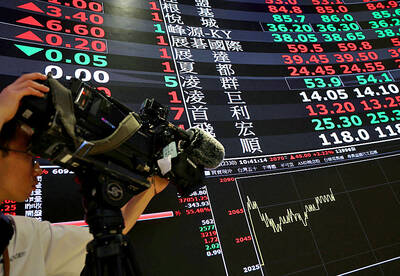
After several years flying high as Asia’s best Nvidia Corp proxy, Taiwan Semiconductor Manufacturing Co (TSMC, 台積電) is increasingly vying with other artificial intelligence (AI) stocks for investor attention. Stock traders are chasing a wider array of beneficiaries as mainstream usage of AI creates demand for hardware beyond the most-advanced chips TSMC makes for Nvidia. Subthemes from the deepening memory crunch to advances in robotics are also luring bids. At the same time, investment caps on single stocks are pushing funds to diversify, while retail investors long familiar with TSMC through its US depositary receipts are being offered a broader set of
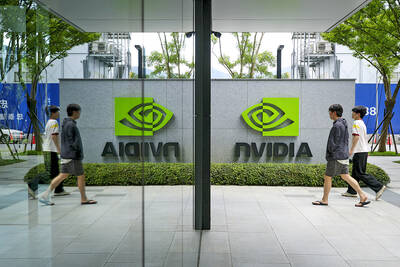
UNDER MICROSCOPE: Taiwan detained three people who allegedly conspired to buy servers in Taiwan and export them using fraudulent documentation, prosecutors said Nvidia Corp chief executive officer Jensen Huang (黃仁勳) on Saturday urged Super Micro Computer Inc to tighten up on compliance after Taiwan detained three people this week for allegedly making fraudulent declarations about artificial intelligence (AI) servers made by its US partner. The development marked the nation’s first crackdown on semiconductor smuggling, which grew after the US slapped restrictions on exports of high-end chips such as Nvidia AI accelerators to China. Nvidia is “rigorous” in explaining regulations to all of its partners, Huang told reporters after arriving in Taipei. “Ultimately Super Micro has to run their own company,” he said in response to
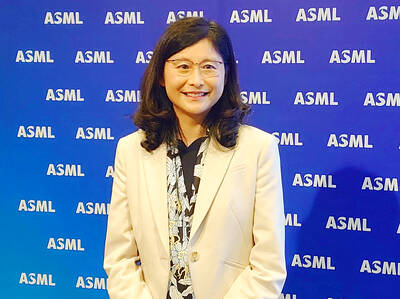
Netherlands-based semiconductor equipment supplier ASML Holding NV yesterday said that it is planning to hire an additional 1,000 people in Taiwan this year in response to growing demand from clients. ASML had previously planned to recruit 600 people this year, but that the plan has been adjusted upward, ASML vice president and ASML Taiwan general manager Grace Wang (汪佳慧) told reporters. ASML has a workforce of more than 4,500 in Taiwan, accounting for about 10 percent of its global total, Wang said. This year’s recruitment campaign would focus on adding people in the customer support, manufacturing and supply chain domains to assist ASML
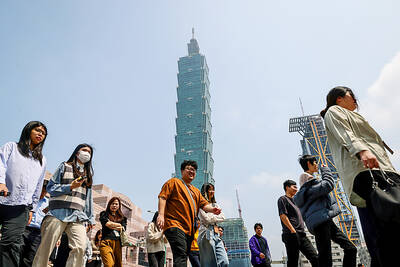
TECH RELIANCE: Growth is increasingly reflecting an unequal K-shaped distribution, where technology sectors outperform and other industries struggle, an expert said Standard Chartered Bank has significantly raised its forecast for Taiwan’s economic growth to 9.5 percent this year, up from 7.6 percent previously, citing surging artificial intelligence (AI) demand driving exports, semiconductor production and investment. The upgrade reflects a sustained AI supercycle that continues to fuel demand for advanced chips and technology infrastructure, which form the backbone of Taiwan’s exports, the bank said in a report this week. “We raise our 2026 growth forecast to reflect a much stronger-than-expected first-quarter GDP figure,” Standard Chartered senior economist for greater China and Asia Tommy Wu (胡東安) said in the report. Driven largely by a 35.3 percent


 RSS
RSS