


Tokyo authorities have imposed a back-tax of US$118 million on an Apple Inc subsidiary over money transfers to Ireland, reports said yesterday.
The Tokyo Regional Tax Bureau ordered music distribution firm iTunes KK to pay ¥12 billion (US$117.7 million) in unpaid taxes and the firm fully paid the sum, the mass-circulation Yomiuri newspaper and other media said, citing unnamed sources.
The extra tax was imposed on about ¥60 billion that iTunes transferred to Apple in Ireland over two years to 2014, Yomiuri, public broadcaster NHK and other media said.
The Japanese authority found a large amount of profits were transferred from the iTunes company in Tokyo to an Apple subsidiary in Ireland via Apple Japan, Kyodo news agency quoted sources as saying.
The authority argued that the transferred money should have been defined as royalty fees subject to income-tax payments, but the iTunes company did not declare the money as such, Kyodo said.
The bureau said it does not comment on individual cases.
Apple Japan told reporters in an e-mail that it had no comment.
The press reports came as Apple’s latest iPhone was launched in Japan.
Apple’s operations in Ireland have come under scrutiny.
The European Commission, the EU’s competition regulator, last month ordered Apple to reimburse a record 13 billion euros (US$15 billion) in unpaid taxes in Ireland.
In its landmark decision late last month, the commission argued that Dublin handed Apple favorable tax terms that amounted to state aid — illegal according to its rules.
EU Competition Commissioner Margrethe Vestager called Apple’s operations in Ireland a “sham,” designed to funnel revenue from across the globe to avoid paying tax.
Apple chief executive officer Tim Cook criticized the ruling and urged Ireland to appeal it to secure future investments.
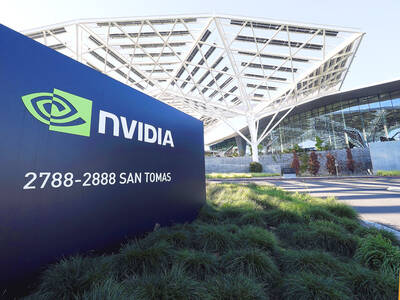
CHIP RACE: Three years of overbroad export controls drove foreign competitors to pursue their own AI chips, and ‘cost US taxpayers billions of dollars,’ Nvidia said China has figured out the US strategy for allowing it to buy Nvidia Corp’s H200s and is rejecting the artificial intelligence (AI) chip in favor of domestically developed semiconductors, White House AI adviser David Sacks said, citing news reports. US President Donald Trump on Monday said that he would allow shipments of Nvidia’s H200 chips to China, part of an administration effort backed by Sacks to challenge Chinese tech champions such as Huawei Technologies Co (華為) by bringing US competition to their home market. On Friday, Sacks signaled that he was uncertain about whether that approach would work. “They’re rejecting our chips,” Sacks
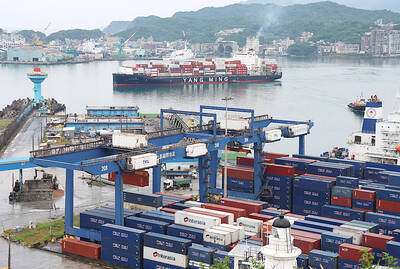
Taiwan’s exports soared 56 percent year-on-year to an all-time high of US$64.05 billion last month, propelled by surging global demand for artificial intelligence (AI), high-performance computing and cloud service infrastructure, the Ministry of Finance said yesterday. Department of Statistics Director-General Beatrice Tsai (蔡美娜) called the figure an unexpected upside surprise, citing a wave of technology orders from overseas customers alongside the usual year-end shopping season for technology products. Growth is likely to remain strong this month, she said, projecting a 40 percent to 45 percent expansion on an annual basis. The outperformance could prompt the Directorate-General of Budget, Accounting and
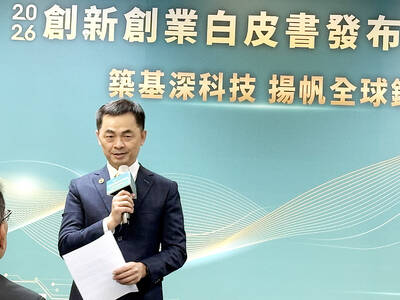
BARRIERS: Gudeng’s chairman said it was unlikely that the US could replicate Taiwan’s science parks in Arizona, given its strict immigration policies and cultural differences Gudeng Precision Industrial Co (家登), which supplies wafer pods to the world’s major semiconductor firms, yesterday said it is in no rush to set up production in the US due to high costs. The company supplies its customers through a warehouse in Arizona jointly operated by TSS Holdings Ltd (德鑫控股), a joint holding of Gudeng and 17 Taiwanese firms in the semiconductor supply chain, including specialty plastic compounds producer Nytex Composites Co (耐特) and automated material handling system supplier Symtek Automation Asia Co (迅得). While the company has long been exploring the feasibility of setting up production in the US to address

OPTION: Uber said it could provide higher pay for batch trips, if incentives for batching is not removed entirely, as the latter would force it to pass on the costs to consumers Uber Technologies Inc yesterday warned that proposed restrictions on batching orders and minimum wages could prompt a NT$20 delivery fee increase in Taiwan, as lower efficiency would drive up costs. Uber CEO Dara Khosrowshahi made the remarks yesterday during his visit to Taiwan. He is on a multileg trip to the region, which includes stops in South Korea and Japan. His visit coincided the release last month of the Ministry of Labor’s draft bill on the delivery sector, which aims to safeguard delivery workers’ rights and improve their welfare. The ministry set the minimum pay for local food delivery drivers at


 RSS
RSS