


Taiwan Cement Corp (台泥) yesterday said it was optimistic about its sales outlook in the second half of the year, benefiting from recovering demand in China.
The nation’s biggest cement maker said demand in the coming months is expected to be supported by Chinese infrastructure need and residential property sector. The company is the seventh-largest cement maker in China by capacity.
“We saw strong infrastructure spending in China supported cement demand in the first half, which is expected to continue growing for the rest of the year,” Taiwan Cement senior vice president Edward Huang (黃健強) told an investors’ conference in Taipei.
As land purchases in China picked up after 16 months of decline in March, demand for residential property is improving and that might be the catalyst for sales in the second half, Huang said.
“Despite an unstable economic environment, we have seen some indications of positive trends,” chairman Leslie Koo (辜成允) told investors.
Taiwan Cement is predicting sales growth in the fourth quarter, as it is usually a high season for the company’s clients in southern China, which in turn would trigger increased demand for the company’s products.
Taiwan’s anti-dumping duties on Chinese cement products might help stimulate sales in the local market, the company said.
Taiwan imposed a 91.58 percent anti-dumping tax on cement imported from China in 2011. The government is now considering if the levy should be maintained.
In the first half of this year, the company’s total sales volume from plants in Taiwan and China came to 28.6 million tonnes.
Sales volume for the whole of this year is expected to reach between 55 million tonnes and 60 million tonnes, compared with last year’s 56.3 million tonnes, Huang said.
The company said it was maintaining its long-term target of 100 million tonnes a year.
The company plans to build a new plant in China’s Guangdong Province focused in sewage treatment systems, which is expected to begin mass production in the first half of next year.
In addition to its core business, the 70-year-old company aims to move into skincare this year, Taiwan Cement said.
Last month, the company announced plans to invest NT$200 million (US$6.37 million) in its microalgae farm to produce astaxanthin, a key ingredient in high-priced skincare products.
In the first six months of the year Taiwan Cement’s net profit dropped 27.6 percent to NT$2.23 billion from a year earlier due to foreign exchange losses of NT$520 million in the second quarter.
Over the same period, gross margin rose from 14.6 percent to 16.34 percent on improving cement business in China and higher profitability of Hoping Power Co (和平電廠) and Taiwan Prosperity Chemical Corp (信昌化工).
Yuanta Securities Investment Consulting Co (元大投顧) analyst Leo Lee (李侃奇) said in a client note that Taiwan Cement is poised to benefit from the improving supply-demand situation in the future.
Taiwan Cement shares yesterday gained NT$0.9 to NT$35.1

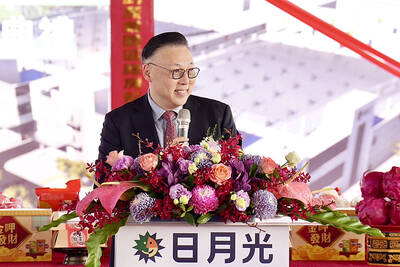
ENERGY ISSUES: The TSIA urged the government to increase natural gas and helium reserves to reduce the impact of the Middle East war on semiconductor supply stability Chip testing and packaging service provider ASE Technology Holding Co (日月光投控) yesterday said it planned to invest more than NT$100 billion (US$3.15 billion) in building a new advanced chip testing facility in Kaohsiung to keep up with customer demand driven by the artificial intelligence (AI) boom. That would be included in the company’s capital expenditure budget next year, ASE said. There is also room to raise this year’s capital spending budget from a record-high US$7 billion estimated three months ago, it added. ASE would have six factories under construction this year, another record-breaking number, ASE chief operating officer Tien Wu

The EU and US are nearing an agreement to coordinate on producing and securing critical minerals, part of a push to break reliance on Chinese supplies. The potential deal would create incentives, such as minimum prices, that could advantage non-Chinese suppliers, according to a draft of an “action plan” seen by Bloomberg. The EU and US would also cooperate on standards, investments and joint projects, as well as coordinate on any supply disruptions by countries like China. The two sides are additionally seeking other “like-minded partners” to join a multicountry accord to help create these new critical mineral supply chains, which feed into

For weeks now, the global tech industry has been waiting for a major artificial intelligence (AI) launch from DeepSeek (深度求索), seen as a benchmark for China’s progress in the fast-moving field. More than a year has passed since the start-up put Chinese AI on the map in early last year with a low-cost chatbot that performed at a similar level to US rivals. However, despite reports and rumors about its imminent release, DeepSeek’s next-generation “V4” model is nowhere in sight. Speculation is also swirling over the geopolitical implications of which computer chips were chosen to train and power the new
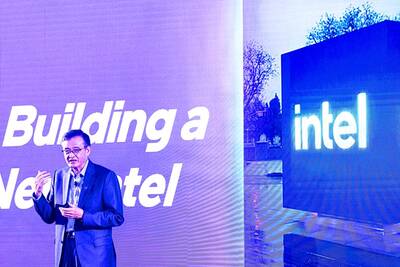
Intel Corp is joining Elon Musk’s long-shot effort to develop semiconductors for Tesla Inc, Space Exploration Technologies Corp and xAI, marking a surprising twist in the chipmaker’s comeback bid. Intel would help the Terafab project “refactor” the technology in a chip factory, the company said on Tuesday in a post on X, Musk’s social media platform. That is a stage in the development process that typically helps make chips more powerful or reliable. The chipmaker’s shares jumped 4.2 percent to US$52.91 in New York trading on Tuesday. The Terafab project is a grand plan by Musk to eventually manufacture his own chips for


 RSS
RSS