


Handset camera lens supplier Largan Precision Co (大立光) yesterday reported a record-high gross margin of 66.4 percent for last quarter on a better product portfolio and improved shipments.
Last quarter’s gross margin was up 8.65 percentage points year-on-year and 6.69 percentage points quarter-on-quarter, beating the market consensus estimate of 60 percent.
Operating margin also outperformed the market consensus to reach 57.64 percent last quarter, increasing 6.36 percentage points year-on-year and 7.05 percentage points quarter-on-quarter.
“Increasing shipments of new products benefited the performance of gross margin last quarter. Fewer shipments of voice coil motors also helped gross margin,” Largan chief executive Adam Lin (林恩平) told a teleconference.
Net income was NT$3.69 billion (US$115.05 million) last quarter, declining 23.44 percent from last year’s NT$4.82 billion, but 1.93 percent higher than the previous quarter’s NT$3.62 billion, company data showed.
Earnings per share were NT$27.51, compared with last year’s NT$35.96 and the previous quarter’s NT$27.91.
Largan’s net profit for last quarter fell short of BNP Paribas SA’s forecast of NT$4.29 billion, or earnings per share of NT$32.03.
Largan attributed the decline in net profit partly to a tax payment of NT$1.3 billion for undistributed earnings last quarter.
For this quarter, Largan said its revenue would be better than last quarter, driven by an increasing number of orders from clients.
“This month will be better than last month and next month is expected to outpace this month,” Lin said, citing clients’ order forecasts.
Lin said that the number of new molds for dual camera lenses this quarter is more than last quarter, suggesting a continuing trend for dual camera lenses to be used in the smartphone industry.
However, whether Largan’s shipments of the dual camera lenses this quarter would grow in tandem with the expanding number of molds would depend on clients’ decisions and consumer demand, he added.
With many of Largan’s clients planning to launch new smartphones this quarter, Lin said the improvement in the company’s product portfolio would boost gross margin this quarter.
However, the yield on new products at the beginning of a cycle of massive shipments could potentially drag on the performance of gross margin this quarter, he said.
Lin said the number of retail channels for Largan’s contact lenses has increased to 1,000 stores across the nation and the company recently opened its third direct store in Taipei.
Lin said that the company would aggressively expand the operational scope of its contact lens business, in a bid to help the segment become profitable as soon as possible.
Largan shares fell 1.73 percent to close at NT$3,120 in Taipei trading yesterday, underperforming the TAIEX, which gained 0.1 percent.
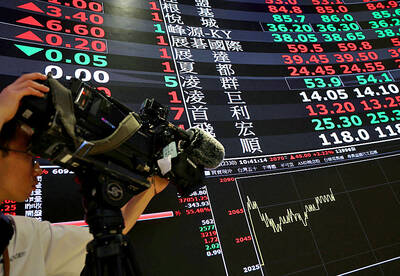
After several years flying high as Asia’s best Nvidia Corp proxy, Taiwan Semiconductor Manufacturing Co (TSMC, 台積電) is increasingly vying with other artificial intelligence (AI) stocks for investor attention. Stock traders are chasing a wider array of beneficiaries as mainstream usage of AI creates demand for hardware beyond the most-advanced chips TSMC makes for Nvidia. Subthemes from the deepening memory crunch to advances in robotics are also luring bids. At the same time, investment caps on single stocks are pushing funds to diversify, while retail investors long familiar with TSMC through its US depositary receipts are being offered a broader set of
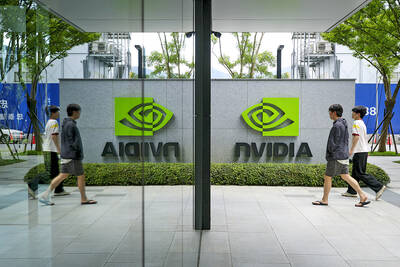
UNDER MICROSCOPE: Taiwan detained three people who allegedly conspired to buy servers in Taiwan and export them using fraudulent documentation, prosecutors said Nvidia Corp chief executive officer Jensen Huang (黃仁勳) on Saturday urged Super Micro Computer Inc to tighten up on compliance after Taiwan detained three people this week for allegedly making fraudulent declarations about artificial intelligence (AI) servers made by its US partner. The development marked the nation’s first crackdown on semiconductor smuggling, which grew after the US slapped restrictions on exports of high-end chips such as Nvidia AI accelerators to China. Nvidia is “rigorous” in explaining regulations to all of its partners, Huang told reporters after arriving in Taipei. “Ultimately Super Micro has to run their own company,” he said in response to

TECH RELIANCE: Growth is increasingly reflecting an unequal K-shaped distribution, where technology sectors outperform and other industries struggle, an expert said Standard Chartered Bank has significantly raised its forecast for Taiwan’s economic growth to 9.5 percent this year, up from 7.6 percent previously, citing surging artificial intelligence (AI) demand driving exports, semiconductor production and investment. The upgrade reflects a sustained AI supercycle that continues to fuel demand for advanced chips and technology infrastructure, which form the backbone of Taiwan’s exports, the bank said in a report this week. “We raise our 2026 growth forecast to reflect a much stronger-than-expected first-quarter GDP figure,” Standard Chartered senior economist for greater China and Asia Tommy Wu (胡東安) said in the report. Driven largely by a 35.3 percent
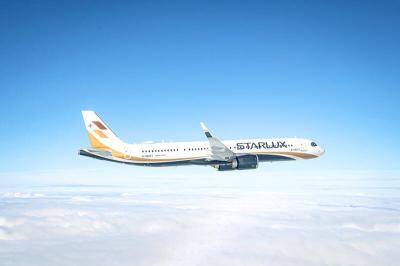
Two of Taiwan’s international carriers, Starlux Airlines Co (星宇航空) and EVA Airways Corp (長榮航空), have retained the five-star airline rating awarded by international airline review organization Skytrax. Starlux was awarded the distinction for a second consecutive year, while EVA Air received it for the 11th straight year, Skytrax said in statements released yesterday and on Thursday last week, respectively. The five-star rating is considered one of the airline industry's highest honors and is awarded following professional audits of airline product and frontline service standards, Skytrax said. The ratings are based on in-depth assessments using unified global quality standards rather than customer review scores


 RSS
RSS