


Formosa Plastics Group (FPG, 台塑集團) yesterday said it would pay compensation in installments to those affected by its Vietnamese steel unit discharging toxic waste and causing massive fish deaths in April.
The group’s major member companies and investment partners said in separate filings with the Taiwan Stock Exchange that they have agreed to pay the US$500 million compensation offer in two installments, but added that the payment period is still under negotiation with Vietnamese authorities.
The group’s member companies — Formosa Plastics Corp (台灣塑膠), Nan Ya Plastics Corp (南亞塑膠), Formosa Chemicals & Fibre Corp (台塑化纖) and Formosa Petrochemical Corp (台塑石化) — each hold an 11.432 percent stake in Formosa Ha Tinh Steel Corp (台塑河靜鋼鐵興業).
Formosa Taffeta Co (福懋興業), a textile subsidiary of the group, holds a 3.847 percent stake in Formosa Ha Tinh Steel, while China Steel Corp (CSC, 中鋼) owns a 25 percent stake in the Vietnamese steel venture.
The Formosa Ha Tinh Steel project is the biggest foreign direct investment venture in Vietnam. With it, the Formosa group hopes to turn the Vung Ang Economic Zones in Ha Tinh Province into the largest heavy industry center in Southeastern Asia, according to the company’s Web site.
In early April, mass fish deaths were discovered on a 193km stretch of Vietnam’s coastline, covering four central provinces.
At first the Vietnamese government and the company said there was no proof that Formosa Ha Tinh Steel was responsible for the mass fish deaths, but amid harsh criticism and protests, it last week blamed the company for the disaster.
“The toxic waste incident highlights the execution risk to the Formosa Group’s new business of steel production in a new market, Vietnam,” Moody’s vice president and senior credit officer Franco Leung (梁振邦) said in a statement on Tuesday.
The launch date of Formosa Ha Tinh Steel Corp’s No. 1 furnace has been postponed due to the incident.
It was initially scheduled to start operations last month, but a new schedule has not been made public.
Several legislators have voiced concern about the repercussions of the incident, as investment in Vietnam is related to President Tsai Ing-wen’s (蔡英文) “new southbound policy.”
“The incident showed us that attention should be paid to corporate social and environmental responsibilities when you invest abroad,” Vice Minister of Economic Affairs Shen Jong-chin (沈榮津) said at the Legislative Yuan on Monday.
Vietnam still attracts Taiwanese companies for its low tariffs, especially for textile and bicycle companies, he said.
The toxic spill was an isolated incident, Shen added.

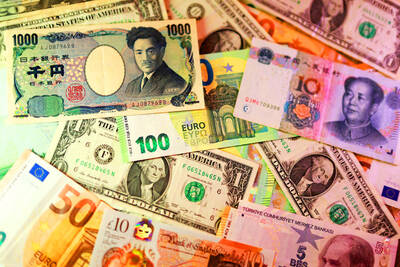
Taiwan’s foreign exchange reserves fell below the US$600 billion mark at the end of last month, with the central bank reporting a total of US$596.89 billion — a decline of US$8.6 billion from February — ending a three-month streak of increases. The central bank attributed the drop to a combination of factors such as outflows by foreign institutional investors, currency fluctuations and its own market interventions. “The large-scale outflows disrupted the balance of supply and demand in the foreign exchange market, prompting the central bank to intervene repeatedly by selling US dollars to stabilize the local currency,” Department of Foreign

Intel Corp is joining Elon Musk’s long-shot effort to develop semiconductors for Tesla Inc, Space Exploration Technologies Corp and xAI, marking a surprising twist in the chipmaker’s comeback bid. Intel would help the Terafab project “refactor” the technology in a chip factory, the company said on Tuesday in a post on X, Musk’s social media platform. That is a stage in the development process that typically helps make chips more powerful or reliable. The chipmaker’s shares jumped 4.2 percent to US$52.91 in New York trading on Tuesday. The Terafab project is a grand plan by Musk to eventually manufacture his own chips for
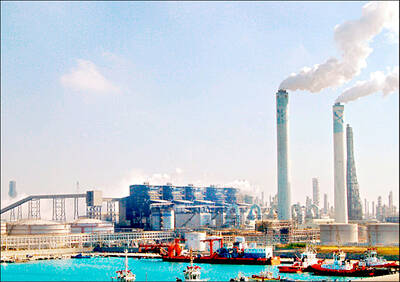
Taiwan Power Co (Taipower, 台電) yesterday said it plans to resume operations at two coal-fired power generators for three months to boost security of electricity supply as liquefied natural gas (LNG) supply risks are running high due to the Middle East conflict. The two coal-fired power generators are at Mailiao Power Plant in Yunlin County’s Mailiao Township (麥寮). The plant, operated by Formosa Plastics Group (台塑集團), supplied electricity to Taipower’s power grid until the end of last year. Taipower’s decision came about one month after Minister of Economic Affairs Kung Ming-hsin (龔明鑫) on March 10 said that the nation had no imminent
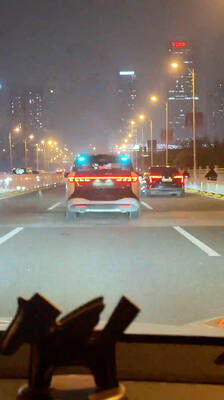
Some robotaxi passengers were left stranded in the middle of fast-moving traffic in a major Chinese city after their driverless vehicles stopped running, according to police and media reports on Wednesday. A preliminary investigation indicates more than 100 robotaxis came to a halt because of a “system malfunction,” police in the city of Wuhan said in a statement, without elaborating. No injuries were reported. One passenger told Chinese media that their robotaxi stopped after turning a corner. An instruction on a screen read: “Driving system malfunction. Staff are expected to arrive in 5 minutes.” After no one showed up, the passenger pushed


 RSS
RSS