


Alibaba Group Holding Ltd (阿里巴巴) founder and executive chairman Jack Ma (馬雲) is withdrawing from an anti-counterfeiting convention in Florida just two days before he was scheduled to give the keynote speech.
Alibaba announced the move on Tuesday following last week’s suspension of the company’s membership in the International Anti-Counterfeiting Coalition (IACC), a small, but influential, group that lobbies US officials and testifies before the US Congress.
Ma is a self-made billionaire, and Alibaba, which he founded in 1999, went public in 2014 in the biggest initial public offering of stock to date. However, some IACC members view the company as the world’s largest marketplace for fakes.
Members of the IACC rebelled against Alibaba’s membership in the group and were further upset about conflicts of interest involving IACC president Robert Barchiesi.
According to reports, Barchiesi had stock in Alibaba, had close ties to an Alibaba executive and had used family members to help run the coalition. The conflicts of interest were not fully disclosed to the IACC board and it has since hired an independent firm to review its corporate governance policies.
The IACC Web site said Ma was scheduled to talk today about the importance of e-commerce and Alibaba’s efforts to protect intellectual property rights on its platforms.
Instead, Alibaba president Michael Evans is to represent the company at the annual spring conference in Orlando, Florida, and is to “reinforce Alibaba’s commitment to fighting counterfeits and the importance of strong collaboration between brands, governments and intermediaries.”
Alibaba also alluded to its suspension from the IACC, calling it a “step in the wrong direction and regrettable. It highlights a fundamental difference in how we want to solve this problem.”
After Alibaba’s controversial inclusion in the group last month, Michael Kors and Gucci America quit in protest. Then Tiffany walked out, citing concerns over governance issues. Gucci is suing Alibaba in US court, alleging that the e-commerce giant knowingly profits from the sale of fakes. Alibaba has dismissed the case as “wasteful litigation.”
The Washington-based coalition has more than 250 members.
US Ambassador to China Max Baucus still plans to deliver his keynote at the conference as scheduled, US embassy spokesman Benjamin Weber said yesterday.
Ma was at the White House on Tuesday to have lunch with US President Barack Obama, according to a White House official, who was not authorized to comment by name and requested anonymity.
CHIP RACE: Three years of overbroad export controls drove foreign competitors to pursue their own AI chips, and ‘cost US taxpayers billions of dollars,’ Nvidia said China has figured out the US strategy for allowing it to buy Nvidia Corp’s H200s and is rejecting the artificial intelligence (AI) chip in favor of domestically developed semiconductors, White House AI adviser David Sacks said, citing news reports. US President Donald Trump on Monday said that he would allow shipments of Nvidia’s H200 chips to China, part of an administration effort backed by Sacks to challenge Chinese tech champions such as Huawei Technologies Co (華為) by bringing US competition to their home market. On Friday, Sacks signaled that he was uncertain about whether that approach would work. “They’re rejecting our chips,” Sacks
Taiwan’s long-term economic competitiveness will hinge not only on national champions like Taiwan Semiconductor Manufacturing Co. (TSMC, 台積電) but also on the widespread adoption of artificial intelligence (AI) and other emerging technologies, a US-based scholar has said. At a lecture in Taipei on Tuesday, Jeffrey Ding, assistant professor of political science at the George Washington University and author of "Technology and the Rise of Great Powers," argued that historical experience shows that general-purpose technologies (GPTs) — such as electricity, computers and now AI — shape long-term economic advantages through their diffusion across the broader economy. "What really matters is not who pioneers
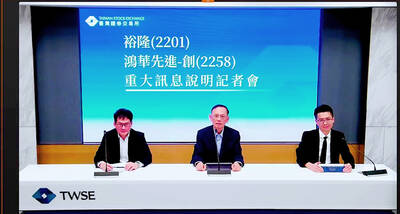
TAIWAN VALUE CHAIN: Foxtron is to fully own Luxgen following the transaction and it plans to launch a new electric model, the Foxtron Bria, in Taiwan next year Yulon Motor Co (裕隆汽車) yesterday said that its board of directors approved the disposal of its electric vehicle (EV) unit, Luxgen Motor Co (納智捷汽車), to Foxtron Vehicle Technologies Co (鴻華先進) for NT$787.6 million (US$24.98 million). Foxtron, a half-half joint venture between Yulon affiliate Hua-Chuang Automobile Information Technical Center Co (華創車電) and Hon Hai Precision Industry Co (鴻海精密), expects to wrap up the deal in the first quarter of next year. Foxtron would fully own Luxgen following the transaction, including five car distributing companies, outlets and all employees. The deal is subject to the approval of the Fair Trade Commission, Foxtron said. “Foxtron will be
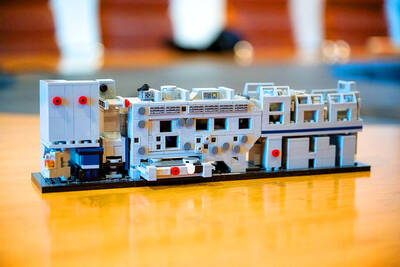
In a high-security Shenzhen laboratory, Chinese scientists have built what Washington has spent years trying to prevent: a prototype of a machine capable of producing the cutting-edge semiconductor chips that power artificial intelligence (AI), smartphones and weapons central to Western military dominance, Reuters has learned. Completed early this year and undergoing testing, the prototype fills nearly an entire factory floor. It was built by a team of former engineers from Dutch semiconductor giant ASML who reverse-engineered the company’s extreme ultraviolet lithography (EUV) machines, according to two people with knowledge of the project. EUV machines sit at the heart of a technological Cold


 RSS
RSS