


Taiwan Semiconductor Manufacturing Co (TSMC, 台積電) yesterday said it planned to increase capital spending this year to as much as US$10 billion to ensure its technological superiority, after posting another record-breaking annual net profit last year.
The new capital spending budget would represent more than a 23 percent increase from last year’s US$8.1 billion, the firm said.
TSMC, which supplies chips for Apple Inc’s iPhone 6, said that about 70 percent of the capital expenditure would be used to build capacities for next-generation 10-nanometer (nm) technology, while 5 percent is earmarked for its new 16nm production line in China.
Despite simmering competition in 10nm technology, “we intend to begin with a very high market share [of 10nm technology] and we intend not to lose it,” TSMC chairman Morris Chang (張忠謀) said.
The company lagged behind major rival Samsung Electronics Co in offering 16nm technology, but it expects rising customer demand to help expand its foundry market share in the 16nm segment to increase to more than 70 percent this year from last year’s 50 percent.
In addition, Chang said he expects an annual growth rate of 5 percent to 10 percent for the company’s operating profits and revenues this year.
The international semiconductor industry is likely to only grow 2 percent this year in terms of revenue.
“Intel, Cisco, Microsoft, Qualcomm, they will all grow 5 percent, or less. Amid recent expectations of a slow-growing environment, 10 percent is the new 20 percent,” HSBC analyst Steven Pelayo said. “Given the strong profit growth, the margin is going to be a surprise in 2016 for TSMC.”
In the short term, TSMC expects a second-straight quarterly decline in revenue, the firm said.
Revenues are expected to fall 1.24 percent to 2.7 percent sequentially in the current quarter to between NT$198 billion and NT$201 billion, (US$5.87 billion and US$5.96 billion) from NT$203.52 billion last quarter, the firm said.
Gross margin is expected to be in the range from 47 percent to 49 percent in the current quarter, from last quarter’s 48.6 percent, TSMC said.
“Customers remain cautious and keep inventory levels to seasonal levels in the first quarter,” company co-chief executive officer Mark Liu (劉德音) said.
“Semiconductor supply chain inventory has reduced significantly to slightly below seasonal levels,” Liu said.
“We have seen reduction in high-end smartphone demand, but demand in China and some emerging markets shows signs of recovery, with upward momentum,” he said.
Liu expects TSMC to resume growth the following quarters.
In the final quarter of last year, net profits shrank 3.3 percent to NT$72.84 billion, compared with NT$75.33 billion in the previous quarter.
The quarterly net profit exceeds the forecast of NT$66.7 billion made by JPMorgan analyst Gokul Hariharan and NT$69.12 billion estimated Daiwa Capital Markets analyst Rick Hsu (徐稦成).
Last year, as a whole, net profits expanded 16.18 percent to a new record high of NT$306.57 billion, or NT$11.82 per share, from NT$263.88 billion, or NT$10.18 per share, in 2014, TSMC said.
TSMC plans to increase cash dividends this year, as the chipmaker more than doubled its free cash to NT$272.37 billion last year from NT$132.99 billion the previous year.

Ryanair, Transavia, Volotea and other low-cost airlines are feeling the financial pain from high jet fuel prices as a result of the Middle East war and are cutting flights. The closure of the Strait of Hormuz has taken a huge chunk of oil supplies off the market, sending the price of jet fuel soaring and triggering fears of shortages that could force airlines to cancel flights. Airlines are not waiting for a lack of supplies to react. “Travel alert: Airlines are cutting thousands of flights right now,” Travel Therapy host Karen Schaler said in an Instagram reel this past weekend.
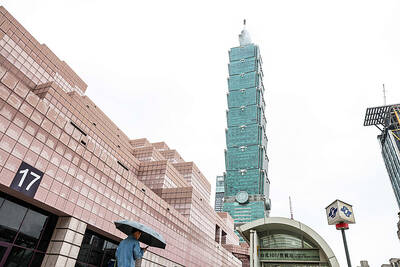
MANAGING RISKS: Taiwan has secured LNG sufficient to cover 95 percent of electricity demand for next month, UBS said, describing the government’s approach as proactive UBS Group AG has raised its forecast for Taiwan’s economic growth this year to 8 percent, up from 6.9 percent previously, and said expansion could reach as high as 8.6 percent if external energy shocks are avoided. The upgrade reflects a stronger-than-expected first-quarter performance and sustained momentum in artificial intelligence (AI)-driven exports, which UBS said are providing a firm foundation for growth despite geopolitical and energy risks. Taiwan’s GDP expanded 13.69 percent year-on-year in the first quarter, the fastest growth since the second quarter of 1987, the Directorate-General of Budget, Accounting and Statistics (DGBAS) reported on Thursday. On a seasonally
Shares of Taiwan Semiconductor Manufacturing Co (TSMC, 台積電) have repeatedly hit new highs, but an equity analyst said the stock’s valuation remains within a reasonable range and any pullback would likely be technical. The contract chipmaker’s historical price-to-earnings (P/E) ratio has ranged between 20 and 30, Cathay Futures Consultant Co (國泰證期) analyst Tsai Ming-han (蔡明翰) told Central News Agency. With market consensus projecting that TSMC would post earnings per share of about NT$100 (US$3.17) this year, supported by strong global demand for artificial intelligence (AI) applications, and the stock currently trading at a P/E ratio of below 25, Tsai said the valuation
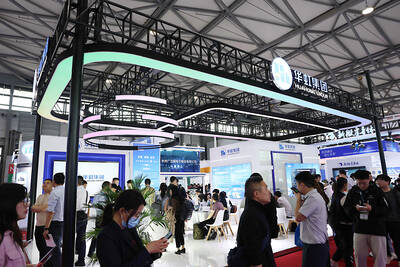
The US Department of Commerce last week ordered multiple chip equipment companies to halt shipments of certain tools to China’s second-largest chipmaker, Hua Hong Semiconductor Ltd (華虹半導體), its latest action to slow the country’s development of advanced chips, two people familiar with the matter said. The department sent letters to at least a handful of companies informing them of restrictions on tools and other materials destined for two Hua Hong facilities US officials believe make China’s most sophisticated chips, the people said. Top US chip equipment companies Lam Research Corp, Applied Materials Inc and KLA Corp, each of which has significant


 RSS
RSS