


Taiwan’s economy is currently in a U-shaped turnaround and is likely to slowly recover this year, National Development Council (NDC) Deputy Minister Kao Shien-quey (高仙桂) said yesterday, rejecting a Bloomberg News forecast that the nation is headed toward a recession.
“This year should not be so bad,” Kao said, responding to the Bloomberg report on Monday that said Taiwan has a 55 percent chance of falling into recession, compared with 30 percent for Japan and South Korea’s 18 percent.
She said recent leading indicators and purchasing manager’s indexes have shown that the economy is likely to bottom out in the first and second quarters of this year and begin to recover in the second half of the year.
Taiwan’s recovery would be gradual, she said, adding that she was not sure what criteria Bloomberg used to make its prediction since the company presented the results of surveys by its economists, but did not give any in-depth analysis.
Kao, an economist, said the three main factors impacting the nation’s economy are the pace of recovery of the US and European economies, China’s economic performance and the development of Taiwan’s information communication technology industry.
China’s performance is the most important factor and needs to be closely monitored, Kao said, adding that a further downturn in China could profoundly affect other Asian economies, including Singapore and South Korea.
However, Beijing has several policies that can be used, including interest rate cuts and an expansionary fiscal policy, Kao said.
Based on a series of surveys conducted between October and December last year, Bloomberg compiled a report on the outlook for 93 economies, with Taiwan in a category called the “Recession Club.”
“Among the nations with a 50-50 chance of two quarters of contraction is Taiwan,” the report said. “Its annual growth rate slowed dramatically from 4 percent in the first quarter of 2015 to minus 0.6 percent in the second quarter due to a slowdown in exports to China.”
Bloomberg predicted Taiwan’s full year GDP growth this year to be 2 percent, with a 55 percent chance of recession.
It forecast a 2.9 percent growth rate for South Korea, 2.3 percent for Singapore and 1 percent for Japan.
Taiwan’s economy is likely to show 0.49 percent growth for the fourth quarter of last year and 1.06 percent annual growth for the whole of last year, the Directorate-General of Budget, Accounting and Statistics said.

Elon Musk’s lieutenants have reached out to chip industry suppliers, including Applied Materials Inc, Tokyo Electron Ltd and Lam Research Corp, for his envisioned Terafab, early steps in an audacious and likely arduous attempt to break into the production of cutting-edge chips. Staff working for the joint venture between Tesla Inc and Space Exploration Technologies Corp (SpaceX) have sought price quotes and delivery times for an array of chipmaking gear, people familiar with the matter said. In past weeks, they’ve contacted makers of photomasks, substrates, etchers, depositors, cleaning devices, testers and other tools, according to the people, who asked not to
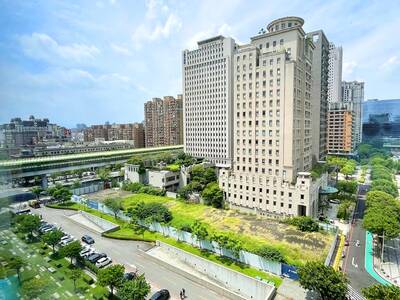
Taichung reported the steepest fall in completed home prices among the six special municipalities in the first quarter of this year, data compiled by Taiwan Realty Co (台灣房屋) showed yesterday. From January through last month, the average transaction price for completed homes in Taichung fell 8 percent from a year earlier to NT$299,000 (US$9,483) per ping (3.3m²), said Taiwan Realty, which compiled the data based on the government’s price registration platform. The decline could be attributed to many home buyers choosing relatively affordable used homes to live in themselves, instead of newly built homes in the city’s prime property market, Taiwan Realty
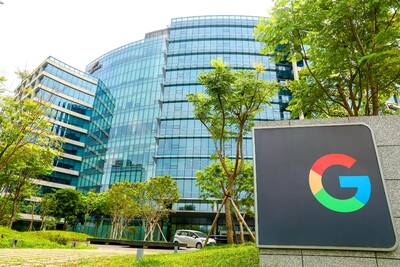
The government yesterday approved applications by Alphabet Inc’s Google to invest NT$27.08 billion (US$859.98 million) in Taiwan, the Ministry of Economic Affairs said in a statement. The Department of Investment Review approved two investments proposed by Google, with much of the funds to be used for data processing and electronic information supply services, as well as inventory procurement businesses in the semiconductor field, the ministry said. It marks the second consecutive year that Google has applied to increase its investment in Taiwan. Google plans to infuse NT$25.34 billion into Charter Investments Ltd (特許投資顧問) through its Singapore-based subsidiary Fructan Holdings Singapore Pte Ltd, and

JET JUICE: The war on Iran’s secondary effects have seen fuel prices skyrocket, knocking flight schedules down to earth in return as airlines struggle with costs Airline passengers should brace for more irritation in the next few months as carriers worldwide cancel flights and ground planes to cope with stratospheric increases in jet-fuel prices. Dutch flag carrier KLM is the latest company to cut its schedule, saying on Thursday that it would scrap 80 return flights at Amsterdam’s Schiphol Airport in the coming month. That puts it in the same league as United Airlines Holdings Inc, Deutsche Lufthansa AG and Cathay Pacific Airways Ltd, which have all pruned itineraries to mitigate costs. Global capacity for next month has been reduced by about 3 percentage points, with all


 RSS
RSS