

MediaTek Inc (聯發科) yesterday said it expects its mobile chip shipments to grow by a low double-digit-percentage at best next year, backed by rising demand for 4G chips in emerging markets such as India.
However, MediaTek, which mainly supplies chips to Chinese phone brands, including Huawei Technologies Co (華為), said that intensifying competition from Qualcomm Inc and Spreadtrum Communications Co (展訊通信) would undermine its profitability next year and drive its profit growth to the slowest in three years.
“As [price] competition will continue to be stiff in 2016, gross margins will be under even more pressure compared with this year,” MediaTek vice chairman and president Hsieh Ching-jiang (謝清江) told a media briefing.
“Our mobile phone [chip] business will continue to make a profit” this year, but it will be softer than this year and last year, he added.
MediaTek could see gross margins dip to about 44 percent this year and to 42 percent next year, from last year’s 49 percent, Daiwa Capital Markets analyst Rick Hsu (徐稦成) said.
Hsu is one of a few analysts who have a “buy” rating on MediaTek.
Hsieh also expects to see an expansion in revenue, market share and shipments of the company’s high-end mobile phone chip business next year, backed by rising demand for 4G chips.
Hsieh expects 4G long-term evolution (LTE) chips to account for 60 to 70 percent of the company’s overall handset chip shipments next year, up from an estimated 40 percent this year.
Mobile phone chips make up about 55 percent of MediaTek’s revenue, he said.
Overall, MediaTek said it is on track to hit its shipment target of 400 million smartphone chips this year, accounting for 26 percent of 1.5 billion mobile phones worldwide.
In China, the chipmaker expects to grab a 40 percent share of its LTE chip market this year.
Next year, global mobile phone chip shipment growth is expected to decelerate to about 10 percent annually, MediaTek co-chief operating officer Jeffrey Ju (朱尚祖) said.
The growth will primarily come from LTE chip demand in emerging markets, including India, Southeast Asia, Eastern Europe and Latin America, with shipments of LTE chips surging to almost 85 percent of its overall sales this year from about 20 percent last year, Ju said.
The global economy will be a key factor affecting mobile phone sales next year, Ju said.
A strong US dollar in the first half dealt a blow to handset sales in emerging markets, he said.
Commenting on Tsinghua Unigroup Inc’s (清華紫光) interest in pursuing a merger-and-acquisition (M&A) deal with MediaTek, Hsieh said that “industry consolidation is a trend.”
“We are open-minded about any M&A and joint venture [deals],” he added.
Hsieh said that the two companies’ leaders had not met to discuss a deal.
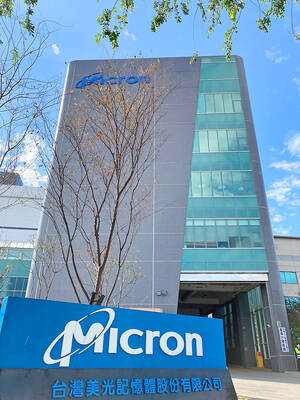
STOCK, CASH: Quarterly profit-sharing bonuses would supplement payments under the Incentive Pay Plan, offering ‘transparency’ and ‘predictability,’ an executive said Micron Memory Taiwan Co (台灣美光) yesterday unveiled a new profit-sharing program and structural wage hikes as part of its efforts to build a predictable and transparent compensation framework in response to feedback from unions. The memorychip maker, a subsidiary of US-based Micron Technology Inc, announced the major compensation structural overhaul during an online news conference following a milestone agreement with the union representing more than 10,000 workers at its Taichung facility. Under the new framework, quarterly profit-sharing bonuses would supplement payments under the Incentive Pay Plan (IPP), the company said. The IPP formula has also been substantially enhanced, it said. “Profit-sharing mechanisms are common

Micron Memory Taiwan and a union representing workers at its Taichung operations today said they had signed a labor-management agreement covering multiple issues, prompting both sides to withdraw from mediation scheduled for tomorrow. The joint statement did not disclose the terms of the agreement, saying the company and the union would separately communicate details to affected employees in the coming days. Idaho-based Micron, the world's third-largest memory chipmaker, employs about 15,000 people in Taiwan, a key manufacturing base where it produces DRAM and high-bandwidth memory chips used in artificial intelligence (AI) servers. Any disruption to Micron's Taiwan operations could affect already strained global
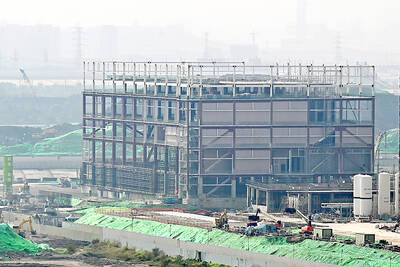
Taiwan Semiconductor Manufacturing Co (TSMC, 台積電) is suspending some construction work after an accident at one of its building sites in southern Taiwan led to the deaths of four workers. The incident took place on Tuesday during steel structure construction at TSMC’s Fab 22 in Kaohsiung, the company said. Workers fell from a height while performing steel structure hoisting and installation, a report from the Central News Agency said. A cause might be aged bolts, it said, citing a preliminary assessment by the Southern Taiwan Science Park Bureau. The bureau said that work would only resume after Shang Hao Machinery Co (上昊機械),
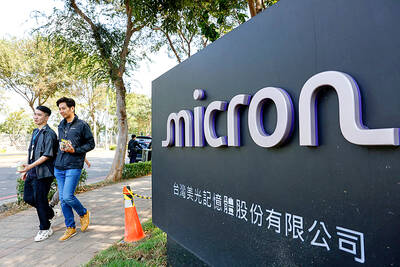
AGREEMENT REACHED: The joint statement did not disclose the details of the deal, which comes a day before the Taoyuan union is to hold a strike Micron Memory Taiwan Co (台灣美光) and a union representing workers at its Taichung operations yesterday said that they had signed a labor-management agreement covering multiple issues, prompting both sides to withdraw from mediation scheduled for today. The joint statement did not disclose the terms of the agreement, saying the company and the union would separately communicate details to affected employees in the coming days. Idaho-based Micron, the world’s third-largest memory maker, employs about 15,000 people in Taiwan, a key manufacturing base where it produces DRAM and high-bandwidth memory chips used in artificial intelligence (AI) servers. Any disruption to Micron’s Taiwan operations could affect


 RSS
RSS