


There is unlikely to be a breakthrough in the negotiation on a cross-strait trade in goods agreement before the end of the year, as the two sides have differences on tariff reductions, a Ministry of Economic Affairs source said yesterday.
“We previously thought we could hold the 13th round of formal talks on the pact in the middle or before the end of this month, but the closer we got to the scheduled dates, the more we found out that both Taiwan and China still could not make a concession on core issues in a short period of time,” a source in the Bureau of Foreign Trade, who is familiar with the negotiation progress, told the Taipei Times.
The source said the ministry has not set a timeframe for the next round of talks.
Given the large gap in the proposed tariff reduction terms between Taipei and Beijing, the ministry might seek to hold smaller informal negotiations before the next formal talks are held.
Minister of Economic Affairs John Deng (鄧振中) on Thursday declined to confirm that the scheduled talk would not be held by this coming Friday.
“Setting the timeframe is not what matters when one is hosting a negotiation because it is more important to fight for the interests of Taiwan’s industries,” Deng said, a change from his previous stance that a major breakthrough would be achieved this month.
According to people familiar with the matter, the negotiations have stalled on China’s request that Taiwan should lift its ban on more than 800 Chinese agricultural and aquatic products because the government is still discussing the issue with the nation’s agricultural and fisheries industries.
In an effort to get local agricultural and fisheries industries on board, the ministry is considering opening a select number of agricultural and aquatic product categories to Chinese imports, and then utilize the tariff benefits gained from Taiwan’s industrial products to assist the agricultural and fisheries sectors, the people said.
Taiwan wants China to extend the sunset clause for Taiwanese machine tool makers so they can continue to use foreign-made controllers and enjoy zero import tariffs on products using such controllers for another five years as the Taiwanese manufacturers work to develop their own controllers, the people said.
Taipei’s negotiators are also trying to reach better tariff-reduction treatment for Taiwanese panel makers, while China is determined to protect its own panel industry, the people said.
Last week, Deng said the ministry and the Council of Agriculture were mulling the possibility of allowing the import of some Chinese agricultural items that Taiwan largely imports, which could include apples, grapefruits, cherries, avocados and rambutan.
Imports of sensitive items such as rice and peanuts from China would remain banned, the people said.
The source said that if the government could offer Beijing’s negotiators the possibility of allowing the import of a limited number of Chinese agricultural products, it would help the Industrial Development Bureau, which is seeking better tariff terms for industrial goods such as flat panels, machine tools and petrochemicals.

Elon Musk’s lieutenants have reached out to chip industry suppliers, including Applied Materials Inc, Tokyo Electron Ltd and Lam Research Corp, for his envisioned Terafab, early steps in an audacious and likely arduous attempt to break into the production of cutting-edge chips. Staff working for the joint venture between Tesla Inc and Space Exploration Technologies Corp (SpaceX) have sought price quotes and delivery times for an array of chipmaking gear, people familiar with the matter said. In past weeks, they’ve contacted makers of photomasks, substrates, etchers, depositors, cleaning devices, testers and other tools, according to the people, who asked not to
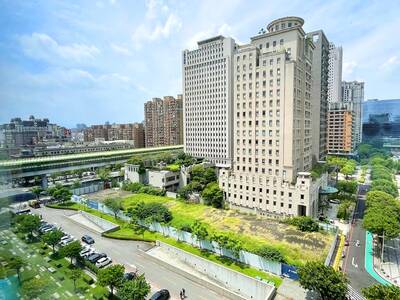
Taichung reported the steepest fall in completed home prices among the six special municipalities in the first quarter of this year, data compiled by Taiwan Realty Co (台灣房屋) showed yesterday. From January through last month, the average transaction price for completed homes in Taichung fell 8 percent from a year earlier to NT$299,000 (US$9,483) per ping (3.3m²), said Taiwan Realty, which compiled the data based on the government’s price registration platform. The decline could be attributed to many home buyers choosing relatively affordable used homes to live in themselves, instead of newly built homes in the city’s prime property market, Taiwan Realty

JET JUICE: The war on Iran’s secondary effects have seen fuel prices skyrocket, knocking flight schedules down to earth in return as airlines struggle with costs Airline passengers should brace for more irritation in the next few months as carriers worldwide cancel flights and ground planes to cope with stratospheric increases in jet-fuel prices. Dutch flag carrier KLM is the latest company to cut its schedule, saying on Thursday that it would scrap 80 return flights at Amsterdam’s Schiphol Airport in the coming month. That puts it in the same league as United Airlines Holdings Inc, Deutsche Lufthansa AG and Cathay Pacific Airways Ltd, which have all pruned itineraries to mitigate costs. Global capacity for next month has been reduced by about 3 percentage points, with all

Taiwan is attracting a growing number of foreign jobseekers as companies increasingly recruit overseas talent to ease labor shortages and expand global reach, recruitment platform 104 Job Bank (104人力銀行) said yesterday. More than 40,000 foreign nationals searched for jobs in Taiwan through the platform last year, a 28 percent increase from a year earlier, the company said. Malaysians accounted for the largest share of overseas jobseekers at 12.2 percent, followed by Indonesians at 11.9 percent and Vietnamese at 10.8 percent. Indonesian applicants surged more than 50 percent year-on-year, while Vietnamese jobseekers rose by more than 30 percent. Applicants from the


 RSS
RSS