


Most Taiwanese solar companies under investigation by the EU are likely to be exempted from anti-circumvention measures, as they do not help Chinese firms re-export cheap solar products to avoid EU import quotas, the Ministry of Economic Affairs (MOEA) said yesterday.
Chinese solar panel and cell manufacturers are suspected of exporting near-finished solar products to third nations, including Taiwan and Malaysia, where local firms assemble the final products before exporting them to Europe.
A total of 80 companies from Taiwan and Malaysia are under an anti-circumvention probe and could face heavy fines, according to market researcher TrendForce Corp (集邦科技).
“Most Taiwanese companies are actually [solar cell and module] manufacturers based on the preliminary conclusion made by the EU investigators,” the ministry said in a statement released yesterday.
That would help clear their position in the anti-circumvention investigations launched by EU, it said.
About 28 Taiwanese solar companies are under the EU probe as they were suspected of assisting Chinese companies ship cheap solar cells or solar panels to Europe to avoid minimal import prices and customs duties imposed on Chinese solar manufacturers, the ministry said.
Investigators from the EU’s anti-circumvention task force visited the manufacturers from October to last month and requested them to fill in questionnaires to clear certain matters.
“The EU sent notifications to only a few of the Taiwanese firms being probed, requesting them to submit additional information,” the ministry said.
The EU is scheduled to make a final ruling in February after releasing a report in the middle of this month regarding its investigation.
Last year, about 30 percent of solar modules made by Taiwanese solar makers were exported to European clients, while more than half went to the Asia-Pacific region, mostly China, according to TrendForce.
Chinese solar wafer, cell and module makers are taxed punitive import tariffs as a result of anti-dumping and anti-subsidy probes.
The anti-circumvention probes began in June this year and aim to close any loopholes after the EU imposed minimal import prices and quantity restrictions on Chinese solar companies in an effort to settle trade disputes between China and Europe.
The ministry’s comments came as the European Commission said over the weekend that it has agreed to maintain the import quotas on Chinese solar firms during a review period of 15 months.
The announcement came before the measures end this month.
If the EU decides to terminate the anti-dumping and anti-subsidy measures on Chinese solar companies, it would also halt the anti-circumvention probe, the ministry said.
Separately, local solar cell maker Gintech Energy Corp (昱晶) said its revenue fell by 0.6 percent to NT$1.39 billion (US$42.35 million) last month from NT$1.4 billion in October.
Gintech attributed the decrease to a temporary production disruption due to a capacity transfer to a plant in Thailand.
The company plans to shift an annual capacity of 350MW to the Thailand plant.
“Due to strong demand, average selling prices continued to increase,” Gintech said in a statement released on Friday.
The Thailand factory ramped up production this month, ahead of a scheduled increase in the first quarter of next year. The plant delivers about 15 to 20 percent higher average selling prices for the firm, Gintech said.
Local rival Neo Solar Power Corp (新日光) said that its factory was fully utilized due to robust demand and order visibility was good.

SECOND-RATE: Models distilled from US products do not perform the same as the original and undo measures that ensure the systems are neutral, the US’ cable said The US Department of State has ordered a global push to bring attention to what it said are widespread efforts by Chinese companies, including artificial intelligence (AI) start-up DeepSeek (深度求索), to steal intellectual property from US AI labs, according to a diplomatic cable. The cable, dated Friday and sent to diplomatic and consular posts around the world, instructs diplomatic staff to speak to their foreign counterparts about “concerns over adversaries’ extraction and distillation of US AI models.” Distillation is the process of training smaller AI models using output from larger, more expensive ones to lower the costs of training a powerful new
Micron Technology Inc is a driving force pushing the US Congress to pass legislation that would put new export restrictions on equipment its Chinese competitors use to make their chips, according to people familiar with the matter. A US House of Representatives panel yesterday was to vote on the “MATCH Act,” a bill designed to close gaps in restrictions on chipmaking equipment. It would also pressure foreign companies that sell equipment to Chinese chipmaking facilities to align with export curbs on US companies like Lam Research Corp and Applied Materials Inc. The bill targets facilities operated by China’s ChangXin Memory Technologies Inc

Singapore-based ride-hailing and delivery giant Grab Holdings’ planned acquisition of Foodpanda’s Taiwan operations has yet to enter the formal review stage, as regulators await supplementary documents, the Fair Trade Commission (FTC) said yesterday. Acting FTC Chairman Chen Chih-min (陳志民) told the legislature’s Economics Committee that although Grab submitted its application on March 27, the case has not been officially accepted because required materials remain incomplete. Once the filing is finalized, the FTC would launch a formal probe into the deal, focusing on issues such as cross-shareholding and potential restrictions on market competition, Chen told lawmakers. Grab last month announced that it would acquire
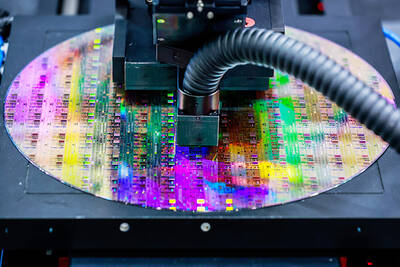
The artificial intelligence (AI) boom has triggered a seismic reshuffling of global equity markets, with Taiwan and South Korea muscling past European nations one by one. With its stock market now valued at nearly US$4.3 trillion, Taiwan surpassed the UK, Europe’s biggest market, earlier this month, data compiled by Bloomberg showed. South Korea is about US$140 billion away from doing the same. The tech-heavy Asian markets have shot past Germany and France in the past seven months. The shift is largely down to massive gains in shares of three companies that provide essential hardware for AI: Taiwan Semiconductor Manufacturing Co (TSMC, 台積電),


 RSS
RSS