


Carlyle Group LP has agreed to sell control of Eastern Broadcasting Co (EBC, 東森電視) to a US film producer for about US$370 million, allowing the private-equity firm to exit the last of its Taiwanese media investments, a person with knowledge of the matter said.
Carlyle is selling its entire 62 percent stake in a deal valuing the Taiwanese broadcaster at about US$600 million, the person said, asking not to be identified before the transaction is completed.
Dan Mintz, chief executive officer of Los Angeles-based DMG Entertainment, on Sunday said in a statement that he is buying Carlyle’s shares, but did not disclose any terms regarding the deal.
The sale still needs regulatory approval, Mintz said.
The buyer’s funding sources will have to to be disclosed, the Ministry of Economic Affairs said in a statement yesterday.
A Beijing-based spokesman for Carlyle declined to comment.
The Washington-based private-equity firm is selling its stake in EBC after an initial investment in 2006 that was built into a majority holding two years later.
If the sale is approved by Taiwanese regulators, it would complete Carlyle’s exit from a competitive cable television industry that offers 277 channels via 56 operators to the about 5 million subscribers in Taiwan.
EBC owns seven channels featuring news, movies, soap operas and children’s programs. The company’s ETTV (東森新聞) is among the “most watched” news channels, according to the Cabinet.
Carlyle’s first investment in Taiwan’s cable television industry was through a stake in Taiwan Broadband Communications Co (台灣寬頻)in 1999. It sold out of that in 2006, the same year it paid US$1.5 billion to acquire Eastern Multimedia Co (東森媒體集團), owner of the Kbro (凱擘) cable television business.
That deal was the largest-ever buyout transaction in Asia, excluding Japan, at the time. Carlyle sold that investment in 2010.
Mintz said in his statement that he plans to use EBC as an “anchor platform” for global Mandarin-language entertainment, citing the “tremendous growth potential” of content in that language around the world.
Reports of the purchase helped drive shares of DMG’s Chinese partner, DMG Entertainment & Media Co, up by the 10 percent daily limit at the close in Shenzhen trading yesterday.
Mintz does not own any equity in the Chinese company, more commonly known as DMG Yinji (銀基), and the acquisition has nothing to do with it, a spokesman for DMG Entertainment said, asking not to be named due to company policy.
Mintz’s DMG and Yinji, which was listed this year following a reorganization of the DMG brand, are separate companies that continue to work together through a strategic partnership, according to Mintz’s statement on Sunday.
The Ministry of Economic Affairs said in a statement that it had heard of reports about Mintz’s acquisition plan.
While Mintz is a US citizen, because DMG Yinji chairman Xiao Wenge (肖文閣) is from a family with a Chinese military background, regulators are to “strictly scrutinize” funding sources and shareholder backgrounds if an application is made to acquire EBC, the ministry said.
Xiao is not involved in the acquisition, DMG Entertainment’s spokesman said.
Carlyle’s exit from Taiwan is in step with other international private-equity firms.
MBK Partners Ltd this year sold China Network Systems Co (中嘉網路)for US$1 billion, a person with knowledge of the matter said in July, after an almost nine-year investment. EQT Partners AB sold its Gala TV Corp (八大電視), a smaller Taiwanese cable operator, in July last year, three years after acquiring the investment.


Taiwan’s foreign exchange reserves fell below the US$600 billion mark at the end of last month, with the central bank reporting a total of US$596.89 billion — a decline of US$8.6 billion from February — ending a three-month streak of increases. The central bank attributed the drop to a combination of factors such as outflows by foreign institutional investors, currency fluctuations and its own market interventions. “The large-scale outflows disrupted the balance of supply and demand in the foreign exchange market, prompting the central bank to intervene repeatedly by selling US dollars to stabilize the local currency,” Department of Foreign

Intel Corp is joining Elon Musk’s long-shot effort to develop semiconductors for Tesla Inc, Space Exploration Technologies Corp and xAI, marking a surprising twist in the chipmaker’s comeback bid. Intel would help the Terafab project “refactor” the technology in a chip factory, the company said on Tuesday in a post on X, Musk’s social media platform. That is a stage in the development process that typically helps make chips more powerful or reliable. The chipmaker’s shares jumped 4.2 percent to US$52.91 in New York trading on Tuesday. The Terafab project is a grand plan by Musk to eventually manufacture his own chips for

ENERGY ISSUES: The TSIA urged the government to increase natural gas and helium reserves to reduce the impact of the Middle East war on semiconductor supply stability Chip testing and packaging service provider ASE Technology Holding Co (日月光投控) yesterday said it planned to invest more than NT$100 billion (US$3.15 billion) in building a new advanced chip testing facility in Kaohsiung to keep up with customer demand driven by the artificial intelligence (AI) boom. That would be included in the company’s capital expenditure budget next year, ASE said. There is also room to raise this year’s capital spending budget from a record-high US$7 billion estimated three months ago, it added. ASE would have six factories under construction this year, another record-breaking number, ASE chief operating officer Tien Wu
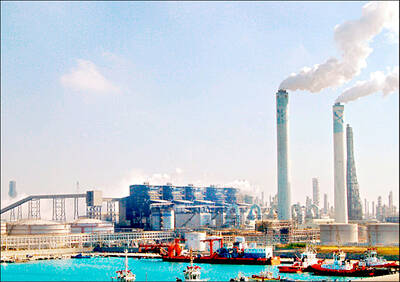
Taiwan Power Co (Taipower, 台電) yesterday said it plans to resume operations at two coal-fired power generators for three months to boost security of electricity supply as liquefied natural gas (LNG) supply risks are running high due to the Middle East conflict. The two coal-fired power generators are at Mailiao Power Plant in Yunlin County’s Mailiao Township (麥寮). The plant, operated by Formosa Plastics Group (台塑集團), supplied electricity to Taipower’s power grid until the end of last year. Taipower’s decision came about one month after Minister of Economic Affairs Kung Ming-hsin (龔明鑫) on March 10 said that the nation had no imminent


 RSS
RSS