


Property transactions are likely to slump more than 30 percent this year, though developers have lowered asking prices by between 10 percent and 20 percent to spur buying interest, but to little avail, online research body HouseFun (好房網) said yesterday.
Property transfers — including homes, commercial space and land deals — might shrink 32.43 percent to NT$2.5 trillion (US$76.91 billion) this year, based on HouseFun’s forecast, compared with NT$3.7 trillion last year, according to the government’s Web site.
HouseFun head Ni Tze-jen (倪子仁) attributed the downturn to property tax hikes and expectations of deep price falls.
To facilitate transactions, builders have lowered asking prices by up to 20 percent in different parts of the nation, a HouseFun survey found.
Beitou Eco Garden, a pre-sale project in Taipei’s Beitou District (北投) by Goodman Group (國美建設), is priced at NT$700,000 per ping (3.3m2), 20 percent less than similar products by Farglory Land Development Co (遠雄建設), Huaku Development Co (華固建) and Hung Sheng Construction Ltd (宏盛建設) a year earlier, HouseFun said.
Wei Cheung Construction Co’s (偉祥建設) newly completed project in Nangang District (南港) is sold at NT$800,000 per ping, 20 percent cheaper than during the pre-sale period in 2013, HouseFun said.
“Though builders have lowered asking prices, buyers remain unaffected and are looking for steeper corrections,” Ni said by telephone.
A 10 percent or more adjustment over what is published on the government’s real-price registration Web site is necessary to motivate prospective buyers, Ni said.
The finding is consistent with an earlier survey by Evertrust Rehouse Co (永慶房屋), the nation’s largest broker by number of offices, that 70 percent of the public expects housing prices to decline in the coming six months and only 31 percent consider it right to enter the market.
While the economic slowdown is unfavorable for the market, the increasing unaffordability is cited as the biggest concern among potential buyers, the Evertrust survey showed.
A pre-sale project in New Taipei City’s Banciao District (板橋) by Chin-Pu Development (勤樸開發) has slashed asking prices from NT$750,000 per ping in February to NT$580,000 per ping after hiring a new broker, Ni said.
The adjustments widen to 25 percent in areas with heavy supply such as New Taipei City’s Tamsui (淡水), Linkuo (林口) and Wugu (五股) districts, Ni said.
The property market is sluggish in central and southern Taiwan too, said Ni, who had just returned from a trip to Taichung.
A luxury housing project by Shining Building Business Co (鄉林建設) has an asking price of NT$390,000 per ping, down 26 percent from NT$530,000 per ping in 2011, Ni said.
“Relative affordability no longer appeals to home buyers,” Ni said.


Taiwan’s foreign exchange reserves fell below the US$600 billion mark at the end of last month, with the central bank reporting a total of US$596.89 billion — a decline of US$8.6 billion from February — ending a three-month streak of increases. The central bank attributed the drop to a combination of factors such as outflows by foreign institutional investors, currency fluctuations and its own market interventions. “The large-scale outflows disrupted the balance of supply and demand in the foreign exchange market, prompting the central bank to intervene repeatedly by selling US dollars to stabilize the local currency,” Department of Foreign

Intel Corp is joining Elon Musk’s long-shot effort to develop semiconductors for Tesla Inc, Space Exploration Technologies Corp and xAI, marking a surprising twist in the chipmaker’s comeback bid. Intel would help the Terafab project “refactor” the technology in a chip factory, the company said on Tuesday in a post on X, Musk’s social media platform. That is a stage in the development process that typically helps make chips more powerful or reliable. The chipmaker’s shares jumped 4.2 percent to US$52.91 in New York trading on Tuesday. The Terafab project is a grand plan by Musk to eventually manufacture his own chips for
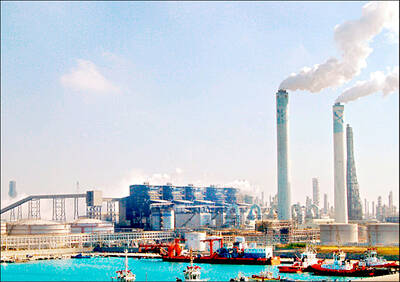
Taiwan Power Co (Taipower, 台電) yesterday said it plans to resume operations at two coal-fired power generators for three months to boost security of electricity supply as liquefied natural gas (LNG) supply risks are running high due to the Middle East conflict. The two coal-fired power generators are at Mailiao Power Plant in Yunlin County’s Mailiao Township (麥寮). The plant, operated by Formosa Plastics Group (台塑集團), supplied electricity to Taipower’s power grid until the end of last year. Taipower’s decision came about one month after Minister of Economic Affairs Kung Ming-hsin (龔明鑫) on March 10 said that the nation had no imminent

Some robotaxi passengers were left stranded in the middle of fast-moving traffic in a major Chinese city after their driverless vehicles stopped running, according to police and media reports on Wednesday. A preliminary investigation indicates more than 100 robotaxis came to a halt because of a “system malfunction,” police in the city of Wuhan said in a statement, without elaborating. No injuries were reported. One passenger told Chinese media that their robotaxi stopped after turning a corner. An instruction on a screen read: “Driving system malfunction. Staff are expected to arrive in 5 minutes.” After no one showed up, the passenger pushed


 RSS
RSS