


Semiconductor inspection tool and equipment maker Hermes Microvision Inc (HMI, 漢微科), which counts Intel Corp as a major customer, yesterday posted a 32 percent sequential decline in quarterly net profit for last quarter, but it expects growth momentum to recover this quarter to drive revenue higher.
Hermes expects the upturn to extend into next year.
“We are optimistic about 2016, which will be a better year than this year,” company chairman Shu Chin-yung (許金榮) told an investors’ conference.
The growth is to come from rising demand for its e-beam inspection tools, as its customers migrate to advanced 10-nanometer (nm) technology, coupled with orders and shipments postponed from this year, Shu said.
“Demand from our key customers looks ok,” HMI president Pan Chung-shih (潘中石) said.
In addition to microprocessor makers like Intel, memory chipmakers are going to need more e-beam inspection tools next year, when companies upgrade technologies to 20nm and 10nm technologies, Shu said.
Based on that optimism, HMI expects an annual growth in revenue in the first quarter.
Hermes is the world’s biggest e-beam inspection tool supplier, commanding an 85 percent market share.
During the quarter ended Sept. 30, net profits plunged to NT$466 million (US$14.34 million), compared with NT$690 million in the second quarter.
Revenue dipped 55 percent sequentially last quarter to NT$1.05 billion as customers delayed deliveries.
Overall this year, revenue is expected to be flat, or slide by a single-digit percentage from last year’s NT$7.21 billion, as the world’s major semiconductor companies have reduced spending on new equipment, Shu said.
However, gross margin is expected to be sustainable at 70 percent this year, Shu said.
“Weak end demand and low visibility has [negatively] impacted global semiconductor companies’ capital budgets. Our customers have also become more cautious about spending, which lends short-term uncertainty to our shipments and revenue,” Shu said.
However, “the impact is on the wane,” he said.
Addressing investors’ concerns that customers’ reusing old equipment for new technology development could curtail demand, Pan said the “chance is very little. Every new technology involves some tailor-made features, which is unlikely to be used in different technologies.”
The worry came after Intel and Taiwan Semiconductor Manufacturing Co (TSMC, 台積電) said reusing older equipment would help them save on capital spending, which is also considered by chipmakers as an important factor behind their capital spending cut this year.
TSMC is also one of HMI’s major customers.
To cope with industry volatility, HMI said it is developing inspection tools that can be used during high-volume manufacturing procedures.
Most existing inspection tools are used in research and development stages, it said.
HMI shares plummeted 8.09 percent to NT$1,080 yesterday after TSMC slashed its capital expenditure budget by as much as 27 percent.
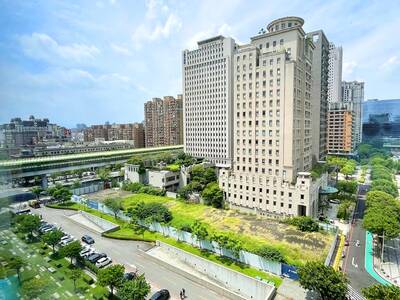
Taichung reported the steepest fall in completed home prices among the six special municipalities in the first quarter of this year, data compiled by Taiwan Realty Co (台灣房屋) showed yesterday. From January through last month, the average transaction price for completed homes in Taichung fell 8 percent from a year earlier to NT$299,000 (US$9,483) per ping (3.3m²), said Taiwan Realty, which compiled the data based on the government’s price registration platform. The decline could be attributed to many home buyers choosing relatively affordable used homes to live in themselves, instead of newly built homes in the city’s prime property market, Taiwan Realty
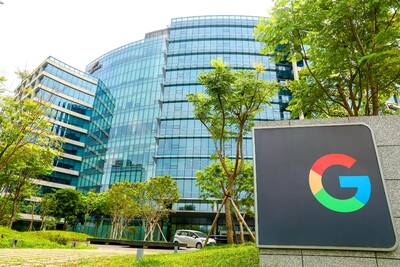
The government yesterday approved applications by Alphabet Inc’s Google to invest NT$27.08 billion (US$859.98 million) in Taiwan, the Ministry of Economic Affairs said in a statement. The Department of Investment Review approved two investments proposed by Google, with much of the funds to be used for data processing and electronic information supply services, as well as inventory procurement businesses in the semiconductor field, the ministry said. It marks the second consecutive year that Google has applied to increase its investment in Taiwan. Google plans to infuse NT$25.34 billion into Charter Investments Ltd (特許投資顧問) through its Singapore-based subsidiary Fructan Holdings Singapore Pte Ltd, and

JET JUICE: The war on Iran’s secondary effects have seen fuel prices skyrocket, knocking flight schedules down to earth in return as airlines struggle with costs Airline passengers should brace for more irritation in the next few months as carriers worldwide cancel flights and ground planes to cope with stratospheric increases in jet-fuel prices. Dutch flag carrier KLM is the latest company to cut its schedule, saying on Thursday that it would scrap 80 return flights at Amsterdam’s Schiphol Airport in the coming month. That puts it in the same league as United Airlines Holdings Inc, Deutsche Lufthansa AG and Cathay Pacific Airways Ltd, which have all pruned itineraries to mitigate costs. Global capacity for next month has been reduced by about 3 percentage points, with all

The US said it plans to help build a first-of-its-kind industrial hub in the Philippines to boost production of inputs crucial to US supply chains. The 4,000-acre hub is intended to be “a purpose-built platform for allied manufacturing” and “an investment acceleration hub where the specific industrial activities are shaped by market demand,” the US Department of State said on Thursday. The project — touted as an “economic security zone” — would be within the Luzon Economic Corridor, a flagship economic project backed by the US and Japan on the main Philippine island. The project was also described as “the first artificial intelligence


 RSS
RSS