


Solar power companies yesterday suggested that the government should relax restrictions related to the use of idle agricultural land to facilitate the development of the nation’s solar industry.
Taiwanese solar cell makers and solar wafer supplies rely on exports to generate profit, leaving them vulnerable to global trade disputes and political tussles, Neo Solar Power Corp (新日光能源) CEO Sam Hong (洪傳獻) said.
In an effort to the reduce the impact of negative factors overseas, domestic firms have turned to their home market to explore more stable growth and are urging the government to relax a number of regulations to help promote green energy in the nation.
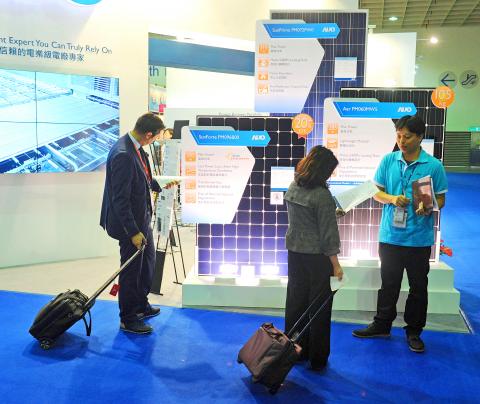
Photo: CNA
“The government has imposed some restrictions on the use of land and the installation of rooftop solar panels. Deregulation would help boost demand [for solar panel installations],” said SEMI Taiwan PV Committee (台灣光電委員會) chairman Chang Ping-heng (張秉衡), who is also CEO of Motech Industries Inc (茂迪), the nation’s largest solar cell maker by capacity.
“It is inevitable that green energy will become a major power source over the next century, and it is undeniable that solar will be the next stellar industry,” Chang said.
By 2100, more than 60 percent of the world’s energy will be derived from solar power, up from 0.7 percent this year, Chang said, citing statistics from research house Renewable Energy Policy Network for the 21st Century.
“Taiwanese firms play a crucial part in the world’s solar supply chain in terms of its capacity market share,” Chang said.
Taiwanese solar companies employ advanced solar cell manufacturing technologies and saw their global market share by capacity rise from 17.5 percent in 2012 to 21.3 percent last year, he said.
However, before the solar power industry can take off, local firms need stronger support and more favorable policies from the government to facilitate their development, Chang added.
“A recent government initiative encouraging the installation of rooftop solar panels is not enough,” Hong said.
The government should relax rules on the use of idle agricultural land and allow farmers to install solar panels on underutilized farmland, which would help increase the contribution by green energy to the nation’s energy grid, as well as help boost demand for solar products, Hong said.
There are about 160,000 hectares of idle agricultural land nationwide, which could be used to generate as much as 16 gigawatts of solar power every day — the equivalent of the total capacity of nine nuclear power plants, he said.
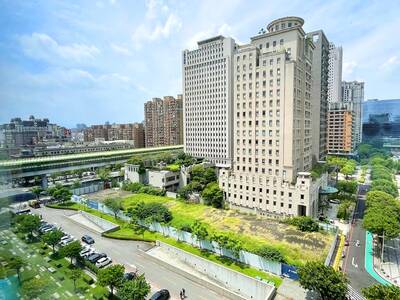
Taichung reported the steepest fall in completed home prices among the six special municipalities in the first quarter of this year, data compiled by Taiwan Realty Co (台灣房屋) showed yesterday. From January through last month, the average transaction price for completed homes in Taichung fell 8 percent from a year earlier to NT$299,000 (US$9,483) per ping (3.3m²), said Taiwan Realty, which compiled the data based on the government’s price registration platform. The decline could be attributed to many home buyers choosing relatively affordable used homes to live in themselves, instead of newly built homes in the city’s prime property market, Taiwan Realty
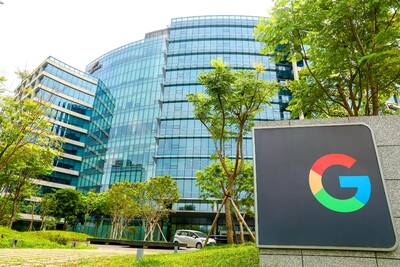
The government yesterday approved applications by Alphabet Inc’s Google to invest NT$27.08 billion (US$859.98 million) in Taiwan, the Ministry of Economic Affairs said in a statement. The Department of Investment Review approved two investments proposed by Google, with much of the funds to be used for data processing and electronic information supply services, as well as inventory procurement businesses in the semiconductor field, the ministry said. It marks the second consecutive year that Google has applied to increase its investment in Taiwan. Google plans to infuse NT$25.34 billion into Charter Investments Ltd (特許投資顧問) through its Singapore-based subsidiary Fructan Holdings Singapore Pte Ltd, and

JET JUICE: The war on Iran’s secondary effects have seen fuel prices skyrocket, knocking flight schedules down to earth in return as airlines struggle with costs Airline passengers should brace for more irritation in the next few months as carriers worldwide cancel flights and ground planes to cope with stratospheric increases in jet-fuel prices. Dutch flag carrier KLM is the latest company to cut its schedule, saying on Thursday that it would scrap 80 return flights at Amsterdam’s Schiphol Airport in the coming month. That puts it in the same league as United Airlines Holdings Inc, Deutsche Lufthansa AG and Cathay Pacific Airways Ltd, which have all pruned itineraries to mitigate costs. Global capacity for next month has been reduced by about 3 percentage points, with all

The US said it plans to help build a first-of-its-kind industrial hub in the Philippines to boost production of inputs crucial to US supply chains. The 4,000-acre hub is intended to be “a purpose-built platform for allied manufacturing” and “an investment acceleration hub where the specific industrial activities are shaped by market demand,” the US Department of State said on Thursday. The project — touted as an “economic security zone” — would be within the Luzon Economic Corridor, a flagship economic project backed by the US and Japan on the main Philippine island. The project was also described as “the first artificial intelligence


 RSS
RSS