


China Steel Corp (中鋼), the nation’s biggest steelmaker, yesterday said it has invested in Tesla Inc’s local engine supplier, but denied media reports that it had improperly intervened in the Taiwanese supplier’s operation.
In October last year, China Steel invested an unspecified amount of capital for a 20 percent share in Tesla’s major engine supplier, Fukuta Electric and Machinery Co Ltd (富田電機). Through the investment, the Kaohsiung-based steelmaker secured two seats on the engine maker’s seven-seat board.
“China Steel supplies high-end steel to Fukuta Electric. It is the only steel product that has received certification from Tesla for its electric cars,” China Steel said in a company statement yesterday.
“The investment aims to help foster the nation’s electric car supply chain,” it said.
To bolster Fukuta Electric’s corporate governance and fend off growing competition, China Steel said it proposed adopting a better management mechanism to shore up the company’s fundamentals.
“All of those proposals were approved by the board, not only by some board directors,” the steelmaker said.
Its comment came after the Chinese-language Commercial Times reported yesterday that Fukuta Electric chairman Gordon Chang (張金峰) said that China Steel had intervened excessively in the company’s operations.
China Steel replaced Fukuta Electric’s chief financial officer and its accountant without discussing the changes beforehand with Chang, the report cited him as saying.
In addition, China Steel cut the payroll of Fukuta Electric employees and overhauled the company’s workflow, which affected employee morale, the report alleged.
Unlisted Fukuta Electric has been supplying electric engines to Tesla since 2007. Currently, the US electric car brand contributes about 30 percent of the Taiwanese firm’s total revenue.
Fukuta Electric also supplies engines to auto brands in Europe and Japan as well as Taiwan’s Luxgen Motor Co (納智捷汽車).
The engine manufacturer invested NT$1 billion (US$30.6 million) in a new engine plant in central Taiwan in October last year to cope with rising demand from Tesla. The plant is expected to be completed in three years.

The domestic unit of the Chinese-owned, Dutch-headquartered chipmaker Nexperia BV will soon be able to produce semiconductors locally within China, according to two company sources. Nexperia is at the center of a global tug-of-war over critical semiconductor technology, with a Dutch court in February ordering a probe into alleged mismanagement at the company. The geopolitical tussle has disrupted supply chains, with some carmakers reportedly forced to cut production due to chip shortages. Local production would allow Nexperia’s domestic arm, Nexperia Semiconductors (China) Ltd (安世半導體中國), to bypass restrictions in place since October on the supply of silicon wafers — etched with tiny components to

Singapore-based ride-hailing and delivery giant Grab Holdings Ltd has applied for regulatory approval to acquire the Taiwan operations of Germany-based Delivery Hero SE's Foodpanda in a deal valued at about US$600 million. Grab submitted the filing to the Fair Trade Commission on Friday last week, with the transaction subject to regulatory review and approval, the company said in a statement yesterday. Its independent governance structure would help foster a healthy and competitive market in Taiwan if the deal is approved, Grab said. Grab, which is listed on the NASDAQ, said in the filing that US-based Uber Technologies Inc holds about 13 percent of
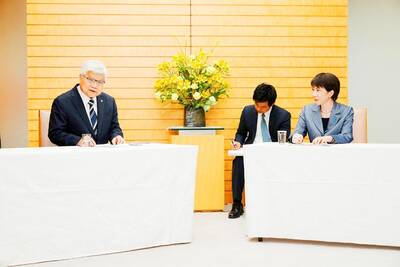
Taiwan Semiconductor Manufacturing Co (TSMC, 台積電) yesterday received government approval to deploy its advanced 3-nanometer (3nm) process at its second fab currently under construction in Japan, the Ministry of Economic Affairs said in a news release. The ministry green-lit the plan for the facility in Kumamoto, which is scheduled to start installing equipment and come online in 2028 with a monthly production capacity of 15,000 12-inch wafers, the ministry said. The Department of Investment Review in June 2024 authorized a US$5.26 billion investment for the facility, slated to manufacture 6- to 12nm chips, significantly less advanced than 3nm process. At a meeting with
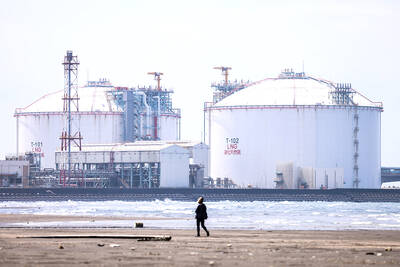
Taiwan is open to joining a global liquefied natural gas (LNG) program if one is created, but on the condition that countries provide delivery even in a scenario where there is a conflict with China, an energy department official said yesterday. While Taiwan’s priority is to have enough LNG at home, the nation is open to exploring potential strategic reserves in other countries such as Japan or South Korea, Energy Administration Deputy Director-General Chen Chung-hsien (陳崇憲) said. While the LNG market does not have a global reserve for emergencies like that of oil, the concept has been raised a few times —


 RSS
RSS