


Allianz Taiwan Life Insurance Co (安聯人壽) is already more than halfway toward its goal of 20 percent growth in total premiums this year, owing to fast-growing sales of unit-linked policies, company executives said last week.
As of last month, gross written premiums (GWP) reached NT$50 billion (US$1.6 billion), more than its target of NT$46 billion, Danny Lam (林順才), chief executive of the local branch of the German insurance giant, told a news conference in Taipei on Thursday.
Allianz Taiwan plans to increase its GWP by 20 percent this year from NT$80 billion last year, as continued global economic recovery lends support to insurance policy sales, especially investment-linked policies, Lam said.
Unit-linked insurance policies generally promise higher yields than time savings deposits, whose annual interest rates hover at about 1.3 percent in Taiwan, and carry lower risks associated with stock or fund investments, statistics show.
Mandate insurance policies — where subscribers agree to allow fund houses to manage their investments — have quickly gained popularity in Taiwan, with sales hitting NT$100 billion last year and expected to surge to NT$150 billion this year, Lam said.
Such policies account for 80 percent of unit-linked policy sales, official statistics show.
Allianz Taiwan has reclaimed its leadership position among unit-link insurance policy providers in Taiwan for the first five months of this year and Lam attributed the comeback to sales of mandate policies featuring semi-blanket fund qualities.
Mandate policies usually guarantee a monthly coupon rate of 5 percent to 6 percent, making them like fixed income tools, but with the risk of principal erosion.
Taiwan ranks first worldwide in terms of insurance policy penetration with each insurance buyers owning more than two policies intended mainly as investment vehicles rather than as a hedge against old age or emergencies.
Unit-linked insurance policies account for more than 90 percent of Allianz Taiwan’s revenues, with mandate policies underpinning the showing, Lam said.
Global financial markets have seen drastic volatility over the past year due to sharp declines in the price of oil and expectations of interest rate hikes by the US Federal Reserve as major US economic barometers improve.
Mandate policies allow portfolio managers to respond quickly, with relatively low entry requirements on the part of clients, Lam said.
Global bourses might swing more wildly as a hike in US rates draws near — in September at the earliest — while “lingering uncertainty will benefit the sales of mandate policies,” he said.
While remaining focused on unit-link policies, Allianz Taiwan would seek to raise the sales of protection policies from 5 percent to 10 percent by 2020, the company said.
It plans to increase its number of sales agents by about 30 percent this year from 1,300 last year.
Taiwan’s rapidly aging population suggests need for retirement planning and pension insurance, the company said.
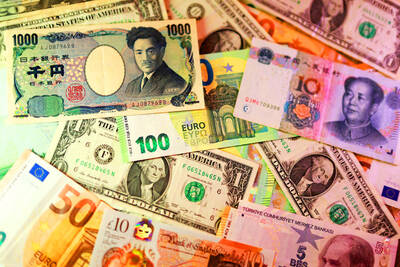
Taiwan’s foreign exchange reserves fell below the US$600 billion mark at the end of last month, with the central bank reporting a total of US$596.89 billion — a decline of US$8.6 billion from February — ending a three-month streak of increases. The central bank attributed the drop to a combination of factors such as outflows by foreign institutional investors, currency fluctuations and its own market interventions. “The large-scale outflows disrupted the balance of supply and demand in the foreign exchange market, prompting the central bank to intervene repeatedly by selling US dollars to stabilize the local currency,” Department of Foreign

ENERGY ISSUES: The TSIA urged the government to increase natural gas and helium reserves to reduce the impact of the Middle East war on semiconductor supply stability Chip testing and packaging service provider ASE Technology Holding Co (日月光投控) yesterday said it planned to invest more than NT$100 billion (US$3.15 billion) in building a new advanced chip testing facility in Kaohsiung to keep up with customer demand driven by the artificial intelligence (AI) boom. That would be included in the company’s capital expenditure budget next year, ASE said. There is also room to raise this year’s capital spending budget from a record-high US$7 billion estimated three months ago, it added. ASE would have six factories under construction this year, another record-breaking number, ASE chief operating officer Tien Wu
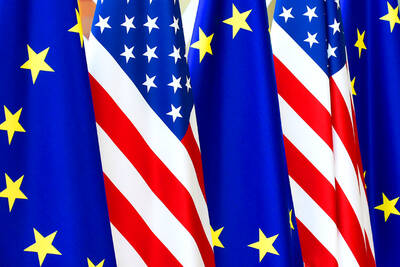
The EU and US are nearing an agreement to coordinate on producing and securing critical minerals, part of a push to break reliance on Chinese supplies. The potential deal would create incentives, such as minimum prices, that could advantage non-Chinese suppliers, according to a draft of an “action plan” seen by Bloomberg. The EU and US would also cooperate on standards, investments and joint projects, as well as coordinate on any supply disruptions by countries like China. The two sides are additionally seeking other “like-minded partners” to join a multicountry accord to help create these new critical mineral supply chains, which feed into

For weeks now, the global tech industry has been waiting for a major artificial intelligence (AI) launch from DeepSeek (深度求索), seen as a benchmark for China’s progress in the fast-moving field. More than a year has passed since the start-up put Chinese AI on the map in early last year with a low-cost chatbot that performed at a similar level to US rivals. However, despite reports and rumors about its imminent release, DeepSeek’s next-generation “V4” model is nowhere in sight. Speculation is also swirling over the geopolitical implications of which computer chips were chosen to train and power the new


 RSS
RSS