


Commercial property transactions totaled NT$9.1 billion (US$292.9 million) in the second quarter, falling 69 percent from a year earlier and 24 percent from the first quarter, as a new property tax weighed on the market, brokers said yesterday.
“The property market apparently has yet to hit bottom, although the new property tax has settled,” said Gordon Kao (高銘頂), general manager at Savills Taiwan Ltd, the local branch of a British property consultancy.
Kao voiced concern that the local commercial property market could further deteriorate with the impending imposition of new income taxes on property gains starting next year.
The new integrated house and land sales tax requires foreign property investors to pay income taxes of between 35 and 45 percent on gains from property transactions, depending on the length of holding period, much higher than that in Japan, Hong Kong, the UK and Australia, Kao said.
The heavy tax burden could make commercial properties in Taiwan less attractive and the local market could become increasingly marginalized, Kao said, adding that soaring property prices have already squeezed rental yields.
As a result, self-occupancy purchases drove transactions during the April-to-June period, with factory office and buildings accounting for 85 percent of total transactions, Savills Taiwan said.
Advanced Semiconductor Engineering Inc (ASE, 日月光半導體), the world’s largest chip testing and packaging service provider, acquired a new factory from an affiliated developer for NT$2.47 billion (US$79.5 million), making it the largest property deal last quarter.
Domestic life insurers, the major players for commercial properties, stayed on the sidelines, constrained by the minimum yield requirement of 2.875 percent, Savills Taiwan said.
The only exception was China Life Insurance Co’s (中國人壽) purchase of factory space in Taipei’s Nangang District (南港) for NT$460 million, the broker said.
China Life’s peers, such as Shin Kong Life Insurance Co (新光人壽) and Nan Shan Life Insurance Co (南山人壽), opted to buy undeveloped plots of land that are to be turned into office space.
Buying interest for office space remained low last quarter, as companies chose to lease rather than own, given high prices and risks that they could take a downturn going forward, said CB Richard Ellis Ltd (CBRE) Taiwan, the local office of a US property consultancy.
Commercial property transactions could retreat below the NT$60 billion level this year, the lowest since the global financial crisis in 2008, CBRE Taiwan managing director Joseph Lin (林俊銘) said.
On the other hand, property fund outflows might accelerate in the second half after hitting NT$42.7 billion in the first half, Lin said.


Taiwan’s foreign exchange reserves fell below the US$600 billion mark at the end of last month, with the central bank reporting a total of US$596.89 billion — a decline of US$8.6 billion from February — ending a three-month streak of increases. The central bank attributed the drop to a combination of factors such as outflows by foreign institutional investors, currency fluctuations and its own market interventions. “The large-scale outflows disrupted the balance of supply and demand in the foreign exchange market, prompting the central bank to intervene repeatedly by selling US dollars to stabilize the local currency,” Department of Foreign

Intel Corp is joining Elon Musk’s long-shot effort to develop semiconductors for Tesla Inc, Space Exploration Technologies Corp and xAI, marking a surprising twist in the chipmaker’s comeback bid. Intel would help the Terafab project “refactor” the technology in a chip factory, the company said on Tuesday in a post on X, Musk’s social media platform. That is a stage in the development process that typically helps make chips more powerful or reliable. The chipmaker’s shares jumped 4.2 percent to US$52.91 in New York trading on Tuesday. The Terafab project is a grand plan by Musk to eventually manufacture his own chips for
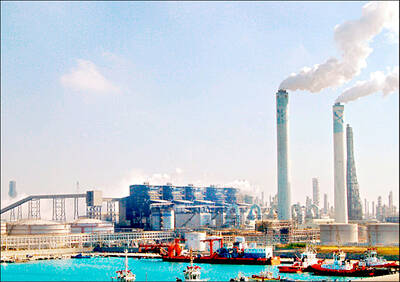
Taiwan Power Co (Taipower, 台電) yesterday said it plans to resume operations at two coal-fired power generators for three months to boost security of electricity supply as liquefied natural gas (LNG) supply risks are running high due to the Middle East conflict. The two coal-fired power generators are at Mailiao Power Plant in Yunlin County’s Mailiao Township (麥寮). The plant, operated by Formosa Plastics Group (台塑集團), supplied electricity to Taipower’s power grid until the end of last year. Taipower’s decision came about one month after Minister of Economic Affairs Kung Ming-hsin (龔明鑫) on March 10 said that the nation had no imminent
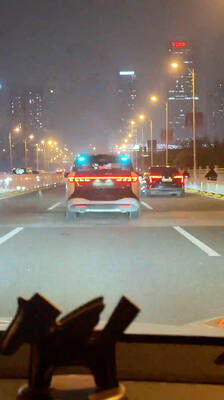
Some robotaxi passengers were left stranded in the middle of fast-moving traffic in a major Chinese city after their driverless vehicles stopped running, according to police and media reports on Wednesday. A preliminary investigation indicates more than 100 robotaxis came to a halt because of a “system malfunction,” police in the city of Wuhan said in a statement, without elaborating. No injuries were reported. One passenger told Chinese media that their robotaxi stopped after turning a corner. An instruction on a screen read: “Driving system malfunction. Staff are expected to arrive in 5 minutes.” After no one showed up, the passenger pushed


 RSS
RSS