


Asustek Computer Inc (華碩) chairman Jonney Shih (施崇棠) yesterday said the company does not rule out acquiring smartphone maker HTC Corp (宏達電), which last week said it might post a loss this quarter.
“We had an informal internal discussion regarding this matter [acquisition]... However, to make a decision, we need to consider [both companies’] intentions and evaluate whether it is the correct strategy,” Shih told reporters after the company’s annual general meeting.
Shih said he believed HTC was seeking and analyzing countermeasures to solve its problems, and he hoped the company would be able to turn its business around.
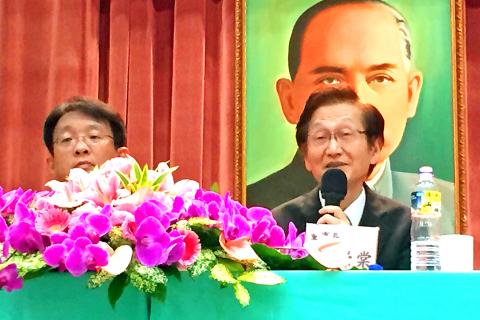
Photo: CNA
In contrast to HTC’s cloudy outlook, Asustek remains upbeat about its smartphone business.
Asustek CEO Jerry Shen (沈振來) told shareholders that the company is confident that annual smartphone shipments would grow to between 17 million and 25 million units from last year’s 8.5 million, backed by strong Chinese demand.
While Xiaomi Corp (小米) also focuses on mid-priced, high-performance smartphones, Asustek still has the edge over its Chinese rival in overseas markets, Shen said.
“Xiaomi is doing well in the domestic market, but it needs to think of new ways to secure a position in the international market,” he said.
Asustek has more experience marketing its brand overseas and knows how to engage with consumers in different regions, Shih said.
PC maker Lenovo Group Ltd (聯想) tried to operate its smartphone business in the same way it managed its PC business, but that did not work out, he said.
Lenovo’s recent announcement of a management reshuffle suggests that it requires more creative thinking to run a smartphone business, Shih said.
“With the right strategy, Asustek would not face a situation similar to Lenovo’s,” Shih said.
Apart from smartphones and computers, Asustek is exploring new businesses, such as robots.
Shih said he would personally monitor the progress of robot development on a weekly basis, to ensure that its design development is on the “right track.”
He declined to elaborate because the project is still in an early stage, but said the company plans to initially focus on consumer service robots.
For this quarter, Asustek chief financial officer David Chang (張偉明) said the company expects better performance than in the last quarter, citing strong sales in the past two months.
“As we recorded foreign exchange gains in the past two months, it is unlikely we would post a foreign exchange loss again this quarter,” Chang told shareholders.
The company booked NT$349 million (US$11.18 million) in foreign exchange losses during the first quarter.

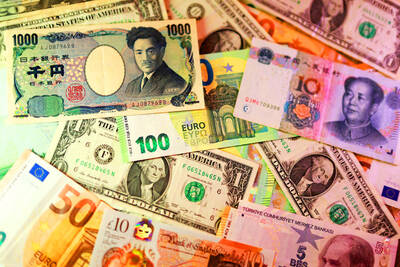
Taiwan’s foreign exchange reserves fell below the US$600 billion mark at the end of last month, with the central bank reporting a total of US$596.89 billion — a decline of US$8.6 billion from February — ending a three-month streak of increases. The central bank attributed the drop to a combination of factors such as outflows by foreign institutional investors, currency fluctuations and its own market interventions. “The large-scale outflows disrupted the balance of supply and demand in the foreign exchange market, prompting the central bank to intervene repeatedly by selling US dollars to stabilize the local currency,” Department of Foreign
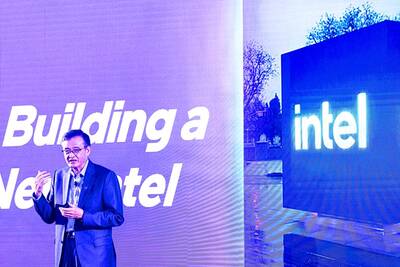
Intel Corp is joining Elon Musk’s long-shot effort to develop semiconductors for Tesla Inc, Space Exploration Technologies Corp and xAI, marking a surprising twist in the chipmaker’s comeback bid. Intel would help the Terafab project “refactor” the technology in a chip factory, the company said on Tuesday in a post on X, Musk’s social media platform. That is a stage in the development process that typically helps make chips more powerful or reliable. The chipmaker’s shares jumped 4.2 percent to US$52.91 in New York trading on Tuesday. The Terafab project is a grand plan by Musk to eventually manufacture his own chips for
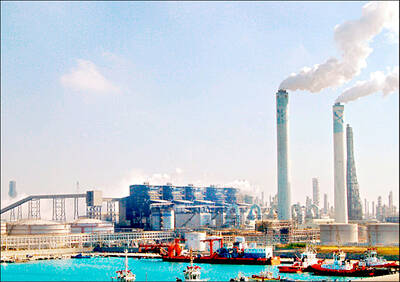
Taiwan Power Co (Taipower, 台電) yesterday said it plans to resume operations at two coal-fired power generators for three months to boost security of electricity supply as liquefied natural gas (LNG) supply risks are running high due to the Middle East conflict. The two coal-fired power generators are at Mailiao Power Plant in Yunlin County’s Mailiao Township (麥寮). The plant, operated by Formosa Plastics Group (台塑集團), supplied electricity to Taipower’s power grid until the end of last year. Taipower’s decision came about one month after Minister of Economic Affairs Kung Ming-hsin (龔明鑫) on March 10 said that the nation had no imminent
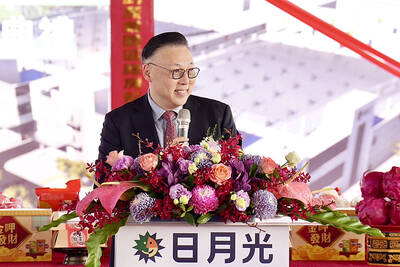
ENERGY ISSUES: The TSIA urged the government to increase natural gas and helium reserves to reduce the impact of the Middle East war on semiconductor supply stability Chip testing and packaging service provider ASE Technology Holding Co (日月光投控) yesterday said it planned to invest more than NT$100 billion (US$3.15 billion) in building a new advanced chip testing facility in Kaohsiung to keep up with customer demand driven by the artificial intelligence (AI) boom. That would be included in the company’s capital expenditure budget next year, ASE said. There is also room to raise this year’s capital spending budget from a record-high US$7 billion estimated three months ago, it added. ASE would have six factories under construction this year, another record-breaking number, ASE chief operating officer Tien Wu


 RSS
RSS