


HTC Corp (宏達電) shares plummeted by the 10 percent daily limit to NT$83.6 in Taipei trading yesterday, hitting the lowest level in the company’s history, after the firm unexpectedly forecast a quarterly loss.
A total of NT$7.61 billion (US$243.32 million) of the smartphone maker’s market value evaporated, leaving NT$69.13 billion yesterday, from NT$76.74 billion on Friday last week.
The firm said in a statement released on Friday that it would lose between NT$9.7 and NT$9.94 per share this quarter, rather than earnings of NT$0.06 and NT$0.34 per share as estimated earlier this year.
HTC also slashed its sales guidance by nearly 30 percent to between NT$33 billion and NT$36 billion from the previous estimate of between NT$46 billion and NT$51 billion, citing rising competition, a change to the product mix and reduced scale.
Following the change of guidance, some brokerages lowered their target prices for HTC, citing the firm’s deeper-than-expected financial forecast cut.
“This quarter’s guidance cut might not come as a surprise for a weak brand, but the magnitude and timing are unexpected and will deepen worries of deteriorating fundamentals and management credibility,” Morgan Stanley analyst Jasmine Lu (呂智穎) said in a note released on Sunday.
The company just held a general shareholders’ meeting on Tuesday, three days prior to the quarterly guidance revision, Lu added.
Lu slashed HTC’s target price from NT$105 to NT$57, a reduction of 45.71 percent.
UBS Securities Pte Ltd analyst Arthur Hsieh (謝宗文) said the main reason behind the significant financial revision was management’s overconfidence in their abilities and failure to acknowledge the stiff competition in the smartphone market.
Hsieh has almost halved UBS’ target price for HTC from NT$100 to NT$52.
He expects HTC’s revenue and profit to further deteriorate due to intensifying competition in the market.
Yuanta Securities Investment Consulting Co (元大投顧) warned that there is little chance of a comeback for HTC when the company misses consumer demand and product cycles, citing the firm’s disappointing sales of its flagship smartphone, the One M9, and weak sales performance in the Chinese market.
The One M9 and its variations are apparently vulnerable, not just to Apple Inc and Samsung Electronics Co’s smartphones, but also to products from Chinese brands Huawei Technologies (華為) and Xiaomi Corp (小米), Yuanta analyst Jeff Pu (蒲得宇) said in a note yesterday.
The analyst said he lowered the price target for HTC to NT$68 from NT$115 to reflect the extremely poor earnings visibility and concerns of further earnings downside.
“To stage a turnaround, we still believe HTC will need to be more connected to non-handset devices, such as virtual reality headsets,” Pu said.


The domestic unit of the Chinese-owned, Dutch-headquartered chipmaker Nexperia BV will soon be able to produce semiconductors locally within China, according to two company sources. Nexperia is at the center of a global tug-of-war over critical semiconductor technology, with a Dutch court in February ordering a probe into alleged mismanagement at the company. The geopolitical tussle has disrupted supply chains, with some carmakers reportedly forced to cut production due to chip shortages. Local production would allow Nexperia’s domestic arm, Nexperia Semiconductors (China) Ltd (安世半導體中國), to bypass restrictions in place since October on the supply of silicon wafers — etched with tiny components to
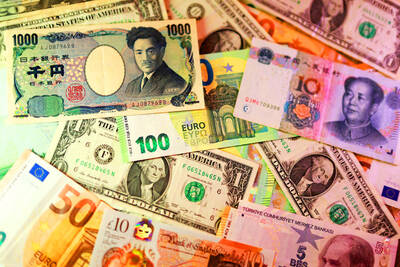
Taiwan’s foreign exchange reserves fell below the US$600 billion mark at the end of last month, with the central bank reporting a total of US$596.89 billion — a decline of US$8.6 billion from February — ending a three-month streak of increases. The central bank attributed the drop to a combination of factors such as outflows by foreign institutional investors, currency fluctuations and its own market interventions. “The large-scale outflows disrupted the balance of supply and demand in the foreign exchange market, prompting the central bank to intervene repeatedly by selling US dollars to stabilize the local currency,” Department of Foreign

Taiwan is open to joining a global liquefied natural gas (LNG) program if one is created, but on the condition that countries provide delivery even in a scenario where there is a conflict with China, an energy department official said yesterday. While Taiwan’s priority is to have enough LNG at home, the nation is open to exploring potential strategic reserves in other countries such as Japan or South Korea, Energy Administration Deputy Director-General Chen Chung-hsien (陳崇憲) said. While the LNG market does not have a global reserve for emergencies like that of oil, the concept has been raised a few times —
AI-FUELED DEMAND: The company has been benefiting from the skyrocketing prices for DRAM chips amid the AI frenzy, especially its core product — DDR4 DRAM chips DRAM chipmaker Nanya Technology Corp (南亞科技) yesterday reported that its revenue for the first quarter surged 582.91 percent to NT$49.09 billion (US$1.54 billion) from NT$7.19 billion a year earlier, as the supply crunch caused chip price spikes. Last quarter’s figure is the highest on record. On a quarterly basis, revenue jumped 63.14 percent from NT$30.09 billion, the company said. In January, Nanya Technology expected global DRAM supply scarcity to continue through the first half of 2028, thanks to strong demand for artificial intelligence (AI) applications. Market researcher TrendForce Corp (集邦科技) forecast prices of standard DRAM chips would rise between 58 percent and 63


 RSS
RSS