


In a bid to maintain market order and improve the financial industry’s quality, the Financial Supervisory Commission (FSC) is set to amend the Banking Act (銀行法) to add penalty provisions on domestic banks that launch price wars.
The move is part of a plan proposed by the commission yesterday to strengthen the nation’s financial infrastructure and raise the industry’s competitiveness.
“Under the fast-changing external environment, domestic financial institutions have to improve their conditions to further develop in Asia,” commission Chairman William Tseng (曾銘宗) told a news conference in Taipei.
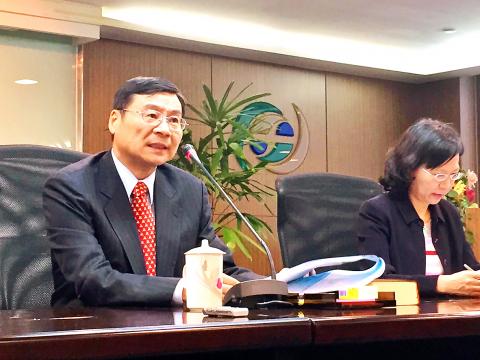
Photo: Wang Menglun, Taipei Times
The commission’s plan has 12 initiatives, which include various expectations for local players and a few mandatory regulations.
One of the initiatives is to ask domestic financial institutions to set reasonable prices for their products and services to avoid a destructive competition in the market and to enhance their risk management capability, Tseng said.
After reviewing current laws and discussions with the Fair Trade Commission, the FSC found there are punitive provisions for insurance companies and brokerage houses, but not for banks, Tseng said.
As a result, the FSC said it decided to draft an amendment to the Banking Act and develop a clear standard to punish companies that have engaged in unreasonable price-cutting, he said.
Tseng also reiterated his commission’s plan to adjust some regulations to allow private financial institutions to buy their peers through public tenders.
However, it will only allow tender offers for the purpose of mergers and acquisitions (M&A), with an interested player having to promise to receive a 50 percent stake in the merged company.
The FSC will also consider provisions to protect small retail shareholders’ rights, the eligibility of the players, freedom from shareholding controversies and the transparent funding resources, Tseng added.
Tseng said he hoped local players would be able to expand thei capital and asset scale through M&A, which may effectively reduce the number of financial institutions in Taiwan and resolving the over-banking issue.
In the meantime, the government is targeting 15 percent in return on equity (ROE) and 1 percent in return on assets (ROA) averagely for the financial industry in the long term, as the effect driven by these initiatives, Tseng said.
Although the financial industry saw its profitability rise to a record-high level last year, the sector’s ROE and ROA averaged 11.65 percent and 0.79 percent, respectively, FSC data showed.

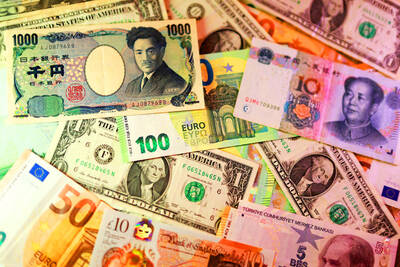
Taiwan’s foreign exchange reserves fell below the US$600 billion mark at the end of last month, with the central bank reporting a total of US$596.89 billion — a decline of US$8.6 billion from February — ending a three-month streak of increases. The central bank attributed the drop to a combination of factors such as outflows by foreign institutional investors, currency fluctuations and its own market interventions. “The large-scale outflows disrupted the balance of supply and demand in the foreign exchange market, prompting the central bank to intervene repeatedly by selling US dollars to stabilize the local currency,” Department of Foreign

Intel Corp is joining Elon Musk’s long-shot effort to develop semiconductors for Tesla Inc, Space Exploration Technologies Corp and xAI, marking a surprising twist in the chipmaker’s comeback bid. Intel would help the Terafab project “refactor” the technology in a chip factory, the company said on Tuesday in a post on X, Musk’s social media platform. That is a stage in the development process that typically helps make chips more powerful or reliable. The chipmaker’s shares jumped 4.2 percent to US$52.91 in New York trading on Tuesday. The Terafab project is a grand plan by Musk to eventually manufacture his own chips for
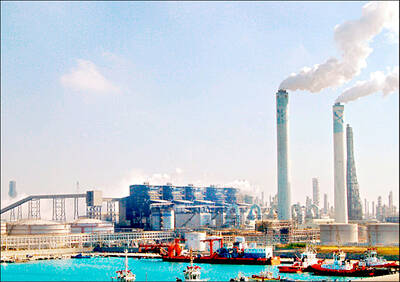
Taiwan Power Co (Taipower, 台電) yesterday said it plans to resume operations at two coal-fired power generators for three months to boost security of electricity supply as liquefied natural gas (LNG) supply risks are running high due to the Middle East conflict. The two coal-fired power generators are at Mailiao Power Plant in Yunlin County’s Mailiao Township (麥寮). The plant, operated by Formosa Plastics Group (台塑集團), supplied electricity to Taipower’s power grid until the end of last year. Taipower’s decision came about one month after Minister of Economic Affairs Kung Ming-hsin (龔明鑫) on March 10 said that the nation had no imminent

Some robotaxi passengers were left stranded in the middle of fast-moving traffic in a major Chinese city after their driverless vehicles stopped running, according to police and media reports on Wednesday. A preliminary investigation indicates more than 100 robotaxis came to a halt because of a “system malfunction,” police in the city of Wuhan said in a statement, without elaborating. No injuries were reported. One passenger told Chinese media that their robotaxi stopped after turning a corner. An instruction on a screen read: “Driving system malfunction. Staff are expected to arrive in 5 minutes.” After no one showed up, the passenger pushed


 RSS
RSS