


Developers and builders launched NT$137.6 billion (US$4.47 billion) worth of presale housing projects during the just-concluded spring sales season, 55.5 percent lower than expected, as the grim sentiment extended to the supply side, although few would cut prices significantly to attract buyers, a survey by online property researcher HouseFun (好房網) showed.
The figure accounted for just 44.5 percent of a NT$230.9 billion HouseFun forecast before the sales season that runs from late March to the end of last month.
“The result reflects a downturn in sentiment among developers and builders, but is not all negative for the market,” HouseFun head Ni Tze-jen (倪子仁) said.
Companies are advised to digest inventory, especially in areas with heavy supply, given the prevalent expectations of a bear market, Ni said.
They can employ a more aggressive strategy when policy uncertainty settles and buyers regain confidence, the analyst added.
Still, the conservative strategy drove HouseFun to cut its presale market forecast by 21.8 percent to NT$860 billion for this year, from the previous estimate of NT$1.1 trillion.
A survey last week by Cathay Real Estate Development Co (國泰建設) confirmed the bleak showing, where presale and newly completed housing projects dropped by 34.7 percent annually to NT$205.8 billion last quarter.
VOLUME
Judging by volume, builders and developers put 11,907 new homes on the market during the January-to-March period, a reduction of 25.1 percent from a year earlier, the Cathay survey found.
The decline was nationwide, with New Taipei City reporting a contraction of 53.6 percent, Taoyuan and Hsinchu 55.2 percent and Kaohsiung 46.1 percent, in terms of sales amounts, the survey said.
The strategy of selling small, affordable houses in less popular locations is losing its appeal, as housing tax hikes and planned income levies on property gains scared away buyers, Takming University of Science and Technology real-estate professor Hua Ching-chun (花敬群) said.
The market is expected to soften further in the second half, when builders are expected to lie low for fear that presidential and legislative campaigns will drown out promotions.
NO BARGAINS
Regardless, major builders have showed little willingness to lower prices, thanks to their deep pockets and low interest rates, observers said.
Increasing land costs and limited land supply also diminish room for price adjustments, Cathay Real Estate said, expecting the sluggish market to persist for at least two years.
Hua held a grimmer view, saying the soft patch could last for five years.
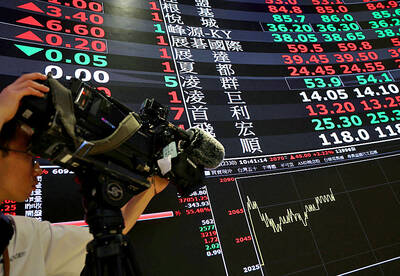
After several years flying high as Asia’s best Nvidia Corp proxy, Taiwan Semiconductor Manufacturing Co (TSMC, 台積電) is increasingly vying with other artificial intelligence (AI) stocks for investor attention. Stock traders are chasing a wider array of beneficiaries as mainstream usage of AI creates demand for hardware beyond the most-advanced chips TSMC makes for Nvidia. Subthemes from the deepening memory crunch to advances in robotics are also luring bids. At the same time, investment caps on single stocks are pushing funds to diversify, while retail investors long familiar with TSMC through its US depositary receipts are being offered a broader set of
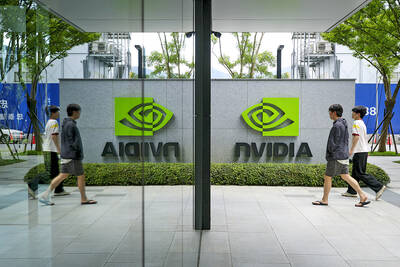
UNDER MICROSCOPE: Taiwan detained three people who allegedly conspired to buy servers in Taiwan and export them using fraudulent documentation, prosecutors said Nvidia Corp chief executive officer Jensen Huang (黃仁勳) on Saturday urged Super Micro Computer Inc to tighten up on compliance after Taiwan detained three people this week for allegedly making fraudulent declarations about artificial intelligence (AI) servers made by its US partner. The development marked the nation’s first crackdown on semiconductor smuggling, which grew after the US slapped restrictions on exports of high-end chips such as Nvidia AI accelerators to China. Nvidia is “rigorous” in explaining regulations to all of its partners, Huang told reporters after arriving in Taipei. “Ultimately Super Micro has to run their own company,” he said in response to
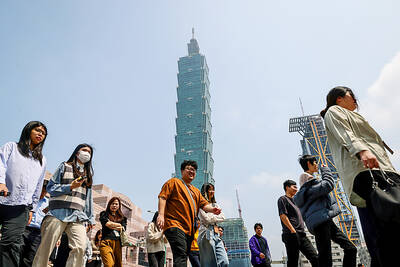
TECH RELIANCE: Growth is increasingly reflecting an unequal K-shaped distribution, where technology sectors outperform and other industries struggle, an expert said Standard Chartered Bank has significantly raised its forecast for Taiwan’s economic growth to 9.5 percent this year, up from 7.6 percent previously, citing surging artificial intelligence (AI) demand driving exports, semiconductor production and investment. The upgrade reflects a sustained AI supercycle that continues to fuel demand for advanced chips and technology infrastructure, which form the backbone of Taiwan’s exports, the bank said in a report this week. “We raise our 2026 growth forecast to reflect a much stronger-than-expected first-quarter GDP figure,” Standard Chartered senior economist for greater China and Asia Tommy Wu (胡東安) said in the report. Driven largely by a 35.3 percent
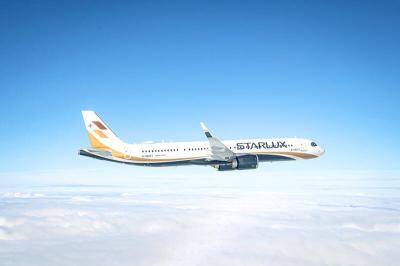
Two of Taiwan’s international carriers, Starlux Airlines Co (星宇航空) and EVA Airways Corp (長榮航空), have retained the five-star airline rating awarded by international airline review organization Skytrax. Starlux was awarded the distinction for a second consecutive year, while EVA Air received it for the 11th straight year, Skytrax said in statements released yesterday and on Thursday last week, respectively. The five-star rating is considered one of the airline industry's highest honors and is awarded following professional audits of airline product and frontline service standards, Skytrax said. The ratings are based on in-depth assessments using unified global quality standards rather than customer review scores


 RSS
RSS