


Taiwanese video game developer Soft-World International Corp (智冠科技) is targeting the Chinese Internet protocol television (IPTV) market this year, which has seen a surge in subscribers since 2011.
“China’s IPTV market is the next growth driver for Soft-World,” general manager Chung Hsing-po (鍾興博) told reporters on Thursday on the sidelines of an investors’ conference.
IPTV subscribers in China jumped from 13.5 million in 2011 to 33.4 million last year and the number is expected to reach more than 40 million by the end of this year, Chung said, citing data from the Chinese Ministry of Industry and Information Technology.
Soft-World, which developed the martial arts role-playing video game Huang Yi Online (黃易群俠傳), on Thursday said that it has partnered with Chinese IPTV broadcast network operators to install educational, puzzle and board games in set-top boxes, beginning this quarter.
“Our goal is to bring Soft-World games to every living room via IPTV,” Chung said.
Soft-World’s IPTV business is set to start generating revenue this quarter and become a significant source of profit next year, Chung said, without elaborating.
Soft-World is the nation’s top online video game developer by sales and is involved in upstream game development, midstream service provision and downstream distribution.
The company’s net profits rose 36.32 percent to NT$520.56 million (US$16.63 million) last year from NT$381.85 million the previous year, with earnings per share of NT$4.09.
Consolidated sales totaled NT$14.99 billion last year, up 35.73 percent from the previous year.
Chung said the firm is upbeat about its new role-playing mobile game, featuring the same character as Huang Yi Online, which is due to be launched this month.
“We expect to see more gamers go for this mobile game on the back of the popularity of Huang Yi Online,” he said.
Mobile games generally have higher margins than online games and the company plans to launch more mobile games to cash in on the high penetration rate of smartphones.
A popular mobile game in China can generate revenue of between NT$50 million and NT$60 million per month for at least six months, Chung said.
Last year, the company’s mobile game business saw sales of NT$6.14 billion, representing 41 percent of total sales, with the sales contribution this year expected to keep growing on the back of new mobile game launches, he said.
The company’s annual sales this year are forecast to grow by a double-digit percentage from last year, fueled by the planned launches of at least 13 mobile, PC and browser games, he added.
Separately, Chung said Soft-World subsidiary Pay2Go Technology Corp (智付寶) would raise NT$500 million this month and file an application with the Financial Supervisory Commission next month for permission to provide third-party payment services.
“We expect to receive a license this August and we hope the value of transactions via Pay2Go can reach NT$100 million within a year,” Chung said.
After last year’s strong performance, the company’s board decided to pay a NT$2.3 cash dividend to shareholders.
The proposed dividend represents a payout ratio of 56.23 percent and the yield is 2.57 percent, based on the company’s closing share price of NT$89.4 on Thursday.
The stock has declined 10.6 percent since the beginning of the year, while the over-the-counter benchmark index has increased 2.51 percent over the same period.

Shares of contract chipmaker Taiwan Semiconductor Manufacturing Co (TSMC, 台積電) came under pressure yesterday after a report that Apple Inc is looking to shift some orders from the Taiwanese company to Intel Corp. TSMC shares fell NT$55, or 2.4 percent, to close at NT$2,235 on the local main board, Taiwan Stock Exchange data showed. Despite the losses, TSMC is expected to continue to benefit from sound fundamentals, as it maintains a lead over its peers in high-end process development, analysts said. “The selling was a knee-jerk reaction to an Intel-Apple report over the weekend,” Mega International Investment Services Corp (兆豐國際投顧) analyst Alex Huang
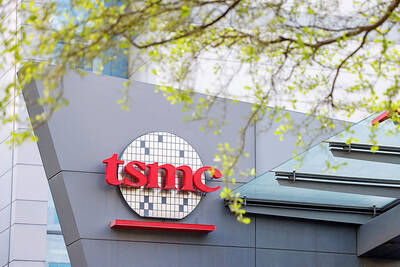
Taiwan Semiconductor Manufacturing Co (TSMC, 台積電) is expected to remain Apple Inc’s primary chip manufacturing partner despite reports that Apple could shift some orders to Intel Corp, industry experts said yesterday. The comments came after The Wall Street Journal reported on Friday that Apple and Intel had reached a preliminary agreement following more than a year of negotiations for Intel to manufacture some chips for Apple devices. Taiwan Institute of Economic Research (台灣經濟研究院) economist Arisa Liu (劉佩真) said TSMC’s advanced packaging technologies, including integrated fan-out and chip-on-wafer-on-substrate, remain critical to the performance of Apple’s A-series and M-series chips. She said Intel and Samsung
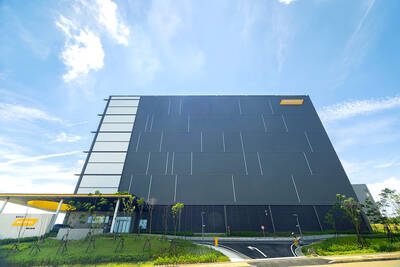
POWER BUILDUP: Powered by Nvidia’s B200 Blackwell chips, the data center would support MediaTek’s computing power demand and business growth, the company said Smartphone chip designer MediaTek Inc (聯發科) yesterday launched a new artificial intelligence (AI) data center with a maximum capacity of 45 megawatts to meet its rising demand for computing power required to develop new advanced chips for AI applications. The company has completed the first-phase computing power buildup at the data center in Miaoli County’s Tongluo Township (銅鑼), providing 15 megawatts of capacity to support its research and development (R&D) capabilities, despite an industrywide shortage of key components, MediaTek said. Supply constraints have plagued a wide range of key components, including memory chips, solid-state drives, power supply units and central
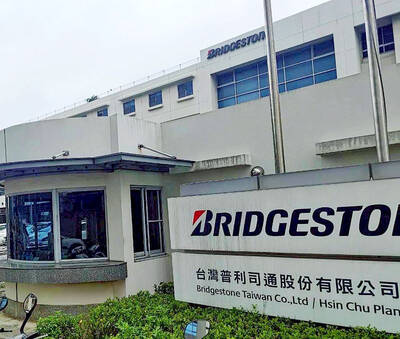
TRANSITION: With the closure, the company would reorganize its Taiwanese unit to a sales and service-focused model, Bridgestone said Bridgestone Corp yesterday announced it would cease manufacturing operations at its tire plant in Hsinchu County’s Hukou Township (湖口), affecting more than 500 workers. Bridgestone Taiwan Co (台灣普利司通) said in a statement that the decision was based on the Tokyo-based tire maker’s adjustments to its global operational strategy and long-term market development considerations. The Taiwanese unit would be reorganized as part of the closure, effective yesterday, and all related production activities would be concluded, the statement said. Under the plan, Bridgestone would continue to deepen its presence in the Taiwanese market, while transitioning to a sales and service-focused business model, it added. The Hsinchu


 RSS
RSS