


South Africa is no longer the destination of choice for private equity investors seeking to tap returns on the continent.
Buyout firms are increasingly targeting markets such as Kenya and Nigeria, Africa’s largest economy, where expansion this year is forecast by the IMF to be more than double that of South Africa.
“Almost all the growth is outside South Africa’s borders,” Andrew Dewar, managing partner of Johannesburg-based Rockwood Private Equity (Pty) Ltd, which was spun out of Barclays Africa Group Ltd in 2013, said in an interview on Feb. 13. “The shift from South Africa to the rest of Africa also means the way exits happen will change. You could use listings in London if you get to scale in Africa.”
South Africa’s economy is being hobbled by power shortages, with the state-run utility rationing electricity for 11 days so far this month, helping to push the rand to a 13-year low. Returns for buyout firms in the country have been shrinking for a decade and lag behind the benchmark stock index.
“We used to get a net IRR of 30 percent; now it’s about 18 to 20 percent,” Andre Roux, who founded Ethos Private Equity Ltd in Johannesburg, said at a conference on Feb. 13.
He was referring to the annual net internal rate of return, buyout firms’ benchmark for measuring the success of deals.
Southern Africa is now the third-most attractive region for buyout firms after West Africa and sub-Saharan Africa, according to an African Private Equity and Venture Capital Association report released last year.
Nigeria has attracted US private equity firm Carlyle Group LP, the world’s second-largest manager of investment alternatives to stocks and bonds, which invested US$147 million for an 18 percent stake in Diamond Bank PLC and said it would spend as much as US$200 million in a second Nigerian company this year. Other targets for the firm include Ghana and Ivory Coast in West Africa, Carlyle said in November.
Swiss Re AG was lured to Kenya in October when LeapFrog Investments, a private equity firm that focuses on Africa and Asia, sold a minority stake in Kenya’s Apollo Investments Ltd. LeapFrog paid 1.68 billion shillings (US$18 million) in November to gain control of Kenya’s Resolution Insurance and tap growth in health coverage in that country.
Nigeria, Kenya, Ghana, Zambia, Mozambique and Angola are the countries Ethos is looking to for expansion opportunities for its investments, Ethos chief executive officer Stuart MacKenzie said in an interview on Feb. 13 at the conference in Stellenbosch, near Cape Town.
“South African corporates are going north in search of growth and part of our strategy is to take our investments there,” MacKenzie said.
Ethos is targeting logistics, consumer, business and industrial services companies, he said.
AutoZone, an automotive-parts retailer sold by RMB Corvest and Zico Capital to Ethos last month, has expanded into Namibia, Zimbabwe, Swaziland and Botswana.
Tsebo Outsourcing Group Ltd, controlled by Rockwood, has expanded from South Africa into countries including Namibia, Botswana and in 2013 won its first pan-African contact from Barclays PLC to manage 2,000 sites across 12 countries.
EnviroServ Holdings Ltd, Rockwood’s waste-management company, has expanded into 15 countries outside of South Africa.
“Our portfolio is 90 percent outside of South Africa,” Peter Baird, head of Standard Chartered PLC’s buyout unit in Africa, said at last week’s conference. “We’re finding loads of good investments outside of South Africa. There’s lots of talk of a wave of capital washing over African private equity.”
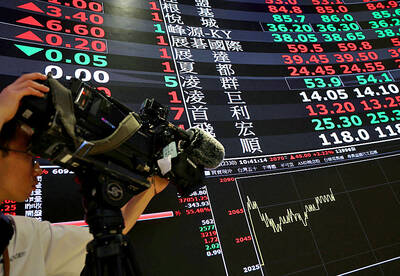
After several years flying high as Asia’s best Nvidia Corp proxy, Taiwan Semiconductor Manufacturing Co (TSMC, 台積電) is increasingly vying with other artificial intelligence (AI) stocks for investor attention. Stock traders are chasing a wider array of beneficiaries as mainstream usage of AI creates demand for hardware beyond the most-advanced chips TSMC makes for Nvidia. Subthemes from the deepening memory crunch to advances in robotics are also luring bids. At the same time, investment caps on single stocks are pushing funds to diversify, while retail investors long familiar with TSMC through its US depositary receipts are being offered a broader set of
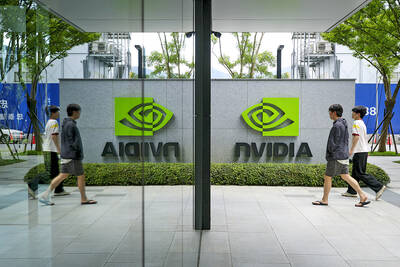
UNDER MICROSCOPE: Taiwan detained three people who allegedly conspired to buy servers in Taiwan and export them using fraudulent documentation, prosecutors said Nvidia Corp chief executive officer Jensen Huang (黃仁勳) on Saturday urged Super Micro Computer Inc to tighten up on compliance after Taiwan detained three people this week for allegedly making fraudulent declarations about artificial intelligence (AI) servers made by its US partner. The development marked the nation’s first crackdown on semiconductor smuggling, which grew after the US slapped restrictions on exports of high-end chips such as Nvidia AI accelerators to China. Nvidia is “rigorous” in explaining regulations to all of its partners, Huang told reporters after arriving in Taipei. “Ultimately Super Micro has to run their own company,” he said in response to
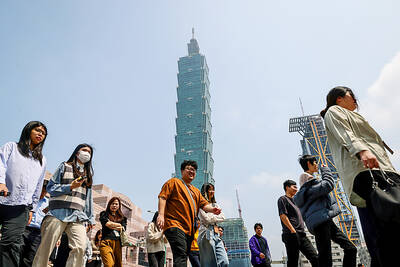
TECH RELIANCE: Growth is increasingly reflecting an unequal K-shaped distribution, where technology sectors outperform and other industries struggle, an expert said Standard Chartered Bank has significantly raised its forecast for Taiwan’s economic growth to 9.5 percent this year, up from 7.6 percent previously, citing surging artificial intelligence (AI) demand driving exports, semiconductor production and investment. The upgrade reflects a sustained AI supercycle that continues to fuel demand for advanced chips and technology infrastructure, which form the backbone of Taiwan’s exports, the bank said in a report this week. “We raise our 2026 growth forecast to reflect a much stronger-than-expected first-quarter GDP figure,” Standard Chartered senior economist for greater China and Asia Tommy Wu (胡東安) said in the report. Driven largely by a 35.3 percent
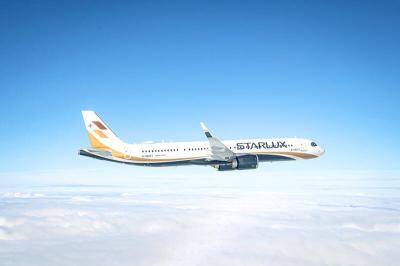
Two of Taiwan’s international carriers, Starlux Airlines Co (星宇航空) and EVA Airways Corp (長榮航空), have retained the five-star airline rating awarded by international airline review organization Skytrax. Starlux was awarded the distinction for a second consecutive year, while EVA Air received it for the 11th straight year, Skytrax said in statements released yesterday and on Thursday last week, respectively. The five-star rating is considered one of the airline industry's highest honors and is awarded following professional audits of airline product and frontline service standards, Skytrax said. The ratings are based on in-depth assessments using unified global quality standards rather than customer review scores


 RSS
RSS