


Delta Electronics Inc (台達電), the nation’s top power supply unit maker, is expected to gain a foothold in Europe and Africa, aided by the newly announced acquisition of Norwegian telecom equipment power supply maker Eltek SAS, analysts said.
The 3.9 billion Norwegian krone (US$530.6 million) deal is the first acquisition case by Delta in more than a decade, but analysts expect more such deals are in the pipeline. Companies related to industrial automation, electric vehicles and data centers could be potential Delta targets, they said.
Due to Eltek having a high level of exposure in Europe, the Middle East and Africa (EMEA) and the US, JPMorgan analyst Gokul Hariharan said that this “is quite complementary to Delta’s exposure in telecom power [supply segment], which is predominantly Asia-focused,” according to a report released on Wednesday.
Eltek has generated 46 percent of its revenue from EMEA and 28 percent from the US, he said.
On top of that, the acquisition will help lift Delta’s ranking to the No. 1 in the telecom equipment power supply sector, seizing more than 20 percent market share, Hariharan said.
Hariharan expects the deal to boost Delta’s earnings per share after the transaction is completed in the middle of next year, with meaningful synergies to happen in the long term.
JPMorgan has retained its “overweight” rating on Delta with target price set at NT$220, implying a 38 percent upside from Delta’s closing price of NT$182 yesterday, which rose 2.82 percent from Wednesday.
UBS analyst Arthur Hsieh (謝宗文) said he agreed that the Eltek deal could help Delta expand its reach to EMEA and the US, but the contribution from the deal is likely limited, citing slow growth in the telecoms equipment power supply market.
Eltek said the overall telecom power market could see an average growth of 3 or 4 percent next year, while UBS’ global telecom equipment team estimates that capital spending in the telecom sector will contract by 6 percent next year, as 4G coverage spending could peak, Hsieh said in a report released on Wednesday.
Eltek’s telecom and data center power business contributed to about 89 percent of its overall revenue in the third quarter of this year, while the remaining 11 percent came from industrial applications, the report said.
However, Hsieh said that “Delta’s acquisition of Eltek is an optimal use of its cash position.”
As of the end of last quarter, Delta has a cash and cash equivalent balance of roughly NT$63 billion (US$2 billion).
UBS has a “neutral” rating on Delta, given slow growth across the company’s power supplies for PCs, game consoles and telecoms equipment segments, along with a target price of NT$188.
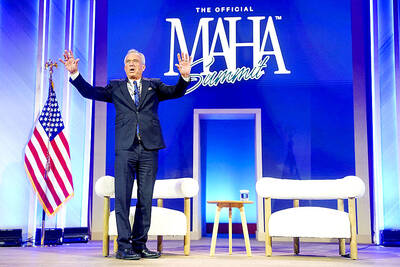
Sweeping policy changes under US Secretary of Health and Human Services Robert F. Kennedy Jr are having a chilling effect on vaccine makers as anti-vaccine rhetoric has turned into concrete changes in inoculation schedules and recommendations, investors and executives said. The administration of US President Donald Trump has in the past year upended vaccine recommendations, with the country last month ending its longstanding guidance that all children receive inoculations against flu, hepatitis A and other diseases. The unprecedented changes have led to diminished vaccine usage, hurt the investment case for some biotechs, and created a drag that would likely dent revenues and
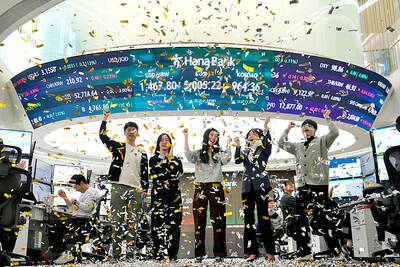
Global semiconductor stocks advanced yesterday, as comments by Nvidia Corp chief executive officer Jensen Huang (黃仁勳) at Davos, Switzerland, helped reinforce investor enthusiasm for artificial intelligence (AI). Samsung Electronics Co gained as much as 5 percent to an all-time high, helping drive South Korea’s benchmark KOSPI above 5,000 for the first time. That came after the Philadelphia Semiconductor Index rose more than 3 percent to a fresh record on Wednesday, with a boost from Nvidia. The gains came amid broad risk-on trade after US President Donald Trump withdrew his threat of tariffs on some European nations over backing for Greenland. Huang further
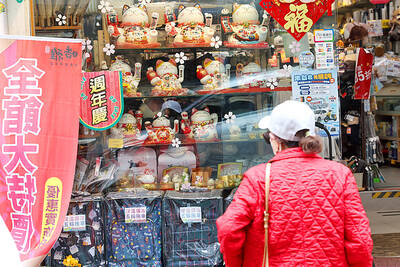
CULPRITS: Factors that affected the slip included falling global crude oil prices, wait-and-see consumer attitudes due to US tariffs and a different Lunar New Year holiday schedule Taiwan’s retail sales ended a nine-year growth streak last year, slipping 0.2 percent from a year earlier as uncertainty over US tariff policies affected demand for durable goods, data released on Friday by the Ministry of Economic Affairs showed. Last year’s retail sales totaled NT$4.84 trillion (US$153.27 billion), down about NT$9.5 billion, or 0.2 percent, from 2024. Despite the decline, the figure was still the second-highest annual sales total on record. Ministry statistics department deputy head Chen Yu-fang (陳玉芳) said sales of cars, motorcycles and related products, which accounted for 17.4 percent of total retail rales last year, fell NT$68.1 billion, or
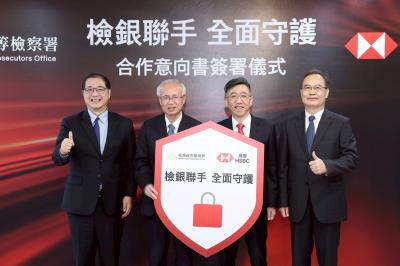
HSBC Bank Taiwan Ltd (匯豐台灣商銀) and the Taiwan High Prosecutors Office recently signed a memorandum of understanding (MOU) to enhance cooperation on the suspicious transaction analysis mechanism. This landmark agreement makes HSBC the first foreign bank in Taiwan to establish such a partnership with the High Prosecutors Office, underscoring its commitment to active anti-fraud initiatives, financial inclusion, and the “Treating Customers Fairly” principle. Through this deep public-private collaboration, both parties aim to co-create a secure financial ecosystem via early warning detection and precise fraud prevention technologies. At the signing ceremony, HSBC Taiwan CEO and head of banking Adam Chen (陳志堅)


 RSS
RSS