


Inotera Memories Inc (華亞科技), which supplies DRAM chips solely to US memorychip giant Micron Technology Inc, yesterday posted a record-high net profit for last quarter as rising demand boosted chip prices and shipments.
Inotera’s net profit soared 52 percent to NT$11.05 billion (US$363 million) in the quarter ended on Dec. 31 last year, compared with NT$7.29 billion in the third quarter. During that period, wafer prices rose 15 percent and shipments expanded 6 percent, Inotera said.
That brings the chipmaker’s full-year net profit to a record NT$21.2 billion, reversing the net loss of NT$3.72 billion it posted in 2012.
Inotera president Scott Meikle attributed the strong results to improving demand for chips, rising shipments of high-margin chips and better cost structure due to technological migration.
To migrate to next-generation 20-nanometer technology, Inotera plans to more than double its capital spending this year to NT$15 billion from the NT$6.4 billion it spent last year.
Inotera chairman Charles Kau (高啟全) said he expects the DRAM industry “will be quite stable in terms of supply and demand” this year.
This quarter, Inotera expects its gross margin to slip to between 42 and 45 percent, compared with last quarter’s 53 percent. The downward prediction is based primarily on new pricing rules the company agreed to with Micron,
Separately, Nanya Technology Inc (南亞科技), which holds a 26-percent stake in Inotera, yesterday posted sequential growth of 17 percent in net profit last quarter, taking its results to NT$3.99 billion, compared with NT$1.98 billion in the previous quarter.
Thanks to improvement in supply and demand resulting from market consolidation, Nanya Technology returned to the black last year by turning a NT$8.17 billion net profit, compared with a net loss of NT$36.03 billion in 2012.
Healthy industry demand has boosted average chip prices up 37.4 percent year-on-year, Nanya Technology spokesman Lee Pei-ing (李培瑛) told reporters.
Lee expects DRAM chip prices to hold steady this quarter, dismissing speculation that there will be a drastic decline after South Korean DRAM chipmaker SK Hynix Inc in September resumes production at a Chinese plant that has been offline due to a fire.
Market researcher TrendForce Corp (集邦科技) said contract prices for mainstream 4Gb DRAM modules declined 3 percent to US$34 in the first two weeks of this month, as an increase in supply from SK Hynix alleviated earlier constraints.
The Taipei-based researcher said it sees prices falling by about 20 percent to approximately US$27 per module this quarter, the level before the fire at SK Hynix’s plant halted production. It expected the price to drop further next quarter, citing fragile PC demand.
“We expect DRAM chip prices to be stable this quarter and maybe even for the whole year,” Lee said. “We do not foresee heavy pricing pressure in the first quarter.”
Lee expects brisk demand for mobile devices and consumer electronics such as game consoles later this year to help buoy chip prices. PC DRAM chips made up less than one-third of Nanya Technology’s global DRAM chip output last year, he said.
Nanya Technology has reduced the percentage that PC DRAM chips contribute to its revenue to about 30 percent, while DRAM chips used in consumer electronics and mobile devices make up the remaining 70 percent, according to Lee. This year, non-PC DRAM chips could contribute up to 80 percent of revenue, he said.
Another memory chipmaker, Macronix International Co (旺宏電子), yesterday posted its eighth straight quarterly loss last quarter, as its product prices plunged on weak demand.
Last quarter, the company’s net losses widened to NT$1.5 billion from minus-NT$897 million in the third quarter. However, the figures were an improvement from the net loss of NT$1.78 billion that Macronix recorded a year ago.
Macronix, which supplies chips to Japanese video game console maker Nintendo Co, might have a difficult time this quarter due to seasonally slow demand, with its factory utilization rate likely dropping below last quarter’s 91 percent, company president Lu Chih-yuan (盧志遠) told a media briefing.
To break even, Macronix will have to make NT$2.5 billion in monthly revenue, Lu said.

Cairo’s new monorail slices across the city skyline, running above the familiar chaos of blaring horns and aging buses’ exhaust fumes that mark rush hour below. The US$4.5 billion monorail, opened this month, is among Egypt’s most prominent new transport projects, part of a debt-funded infrastructure drive criticized for sapping state finances while bringing limited benefits to most of the country’s 109 million people. “It feels like you’re in a different country,” said Ramy Sayed, a restaurant manager, aboard a driverless Innovia 300 train. “No noise, no traffic, we’re not used to this.” The eastern line runs 56km from the bustling middle-class
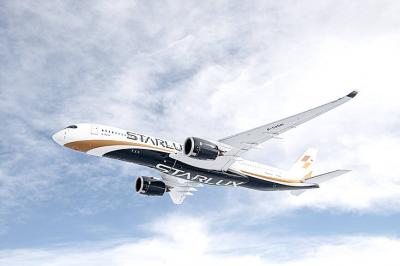
Starlux Airlines Co (星宇航空) today unveiled a long-haul network expansion plan at a shareholders’ meeting in Taipei, including direct flights to Barcelona, Spain, and Zurich, Switzerland, as well as a service connecting Taipei, Sydney and New Zealand. Starlux is to become the first Taiwanese carrier to offer non-stop services to the two European cities, while the inaugural oceanic route is expected to expand transit opportunities within the Australia-New Zealand market, Starlux said. Flight services to Chicago, Dallas, Washington and New York are under evaluation, the airline added. Prior to the shareholders’ meeting, the airline earlier this year announced that it would be
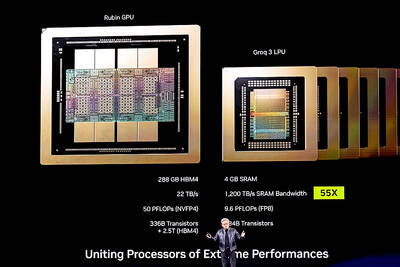
Taiwanese prosecutors suspect that three people successfully smuggled at least one shipment of Nvidia Corp artificial intelligence (AI) chips to China after first exporting them to Japan, people familiar with the matter said. The trio was detained last week by the Keelung District Prosecutors’ Office for allegedly falsifying documents related to exports of Super Micro Computer Inc servers containing advanced Nvidia chips, which the US has barred from sale to China without a license from Washington. The move marked Taiwan’s first public crackdown on AI chip diversion after years of pressure from the US to take a more active role in curtailing
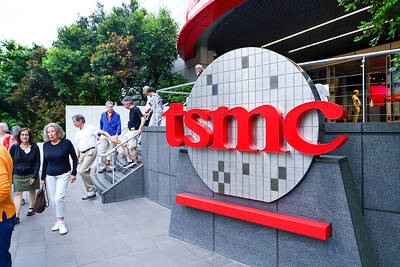
Taiwan Semiconductor Manufacturing Co (TSMC, 台積電) employee bonuses are likely to grow more than 30 percent this year, in line with the past few years as the company’s profits continue to set new records, an anonymous source cited TSMC chairman C.C. Wei (魏哲家) as saying yesterday. TSMC, the world’s largest contract chipmaker, is committed to taking care of its workers, the source said, citing Wei’s meeting with employees yesterday morning. Wei also expressed gratitude to employees for their contribution to the company’s improving bottom line, the source added. Since 2023, TSMC’s employee bonuses have grown at an annual rate of


 RSS
RSS