


Priced at just US$499, XYZprinting Inc’s (三緯) new 3D printer, the da Vinci 1.0, caused a stir at this year’s Consumer Electronics Show (CES) in Las Vegas, Nevada, wowing the editors of Reviewed.com, who selected it for an Editor’s Choice Award.
The firm’s entry-level 3D printer beat out 27 other products to earn the endorsement from the Web site, which presented the awards in partnership with show organizer the Consumer Electronics Association.
Judges praised the da Vinci 1.0 as an “affordable and approachable 3D printing” device, comparing it to products from other brands that use the same fused filament fabrication (FFF) technology, but generally cost more than US$1,400.
XYZprinting, a unit of Taiwanese electronics conglomerate Kinpo Group (金仁寶集團), is scheduled to start shipping its da Vinci 1.0 printers to China this month, with the product to debut in Japan and the US next month, and in Europe in March, chairman Simon Shen (沈軾榮) said last month.
The company has set a 100,000-unit global sales target for printers for this year and 1 million over the next three years, Shen said.
Last year, there were only a handful of 3D printing companies at the CES gadget expo, but this year, there were 30 and there would have been more if organizers had not turned others away because they could not fit them in.
The 3D printing area of the show floor drew dense crowds that gawked at the devices and their creations, which ranged from toys to tea cups to cases for Apple Inc’s iPhones.
With 3D printing, “we’re moving to a world of mass customization,” Consumer Electronics Association analys Shawn Dubravac said.
What started with custom-printed T-shirts in the style of CafePress can now happen in all kinds of industries, he said, but added that it is still a small field and he expects that just fewer than 100,000 3D printers will be sold this year.
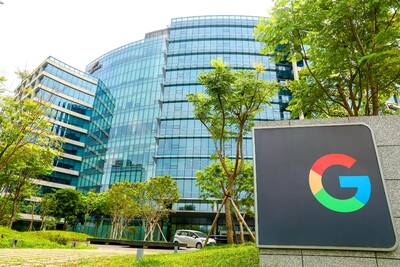
The government yesterday approved applications by Alphabet Inc’s Google to invest NT$27.08 billion (US$859.98 million) in Taiwan, the Ministry of Economic Affairs said in a statement. The Department of Investment Review approved two investments proposed by Google, with much of the funds to be used for data processing and electronic information supply services, as well as inventory procurement businesses in the semiconductor field, the ministry said. It marks the second consecutive year that Google has applied to increase its investment in Taiwan. Google plans to infuse NT$25.34 billion into Charter Investments Ltd (特許投資顧問) through its Singapore-based subsidiary Fructan Holdings Singapore Pte Ltd, and

Micron Technology Inc is a driving force pushing the US Congress to pass legislation that would put new export restrictions on equipment its Chinese competitors use to make their chips, according to people familiar with the matter. A US House of Representatives panel yesterday was to vote on the “MATCH Act,” a bill designed to close gaps in restrictions on chipmaking equipment. It would also pressure foreign companies that sell equipment to Chinese chipmaking facilities to align with export curbs on US companies like Lam Research Corp and Applied Materials Inc. The bill targets facilities operated by China’s ChangXin Memory Technologies Inc

Singapore-based ride-hailing and delivery giant Grab Holdings’ planned acquisition of Foodpanda’s Taiwan operations has yet to enter the formal review stage, as regulators await supplementary documents, the Fair Trade Commission (FTC) said yesterday. Acting FTC Chairman Chen Chih-min (陳志民) told the legislature’s Economics Committee that although Grab submitted its application on March 27, the case has not been officially accepted because required materials remain incomplete. Once the filing is finalized, the FTC would launch a formal probe into the deal, focusing on issues such as cross-shareholding and potential restrictions on market competition, Chen told lawmakers. Grab last month announced that it would acquire

SECOND-RATE: Models distilled from US products do not perform the same as the original and undo measures that ensure the systems are neutral, the US’ cable said The US Department of State has ordered a global push to bring attention to what it said are widespread efforts by Chinese companies, including artificial intelligence (AI) start-up DeepSeek (深度求索), to steal intellectual property from US AI labs, according to a diplomatic cable. The cable, dated Friday and sent to diplomatic and consular posts around the world, instructs diplomatic staff to speak to their foreign counterparts about “concerns over adversaries’ extraction and distillation of US AI models.” Distillation is the process of training smaller AI models using output from larger, more expensive ones to lower the costs of training a powerful new


 RSS
RSS