


The US auto industry limped to its best year since the boom times before 2008 as results came up short last month as a late Thanksgiving holiday robbed sales from the year’s final month.
The tough sledding last month does not suggest difficulty this year, however, as several executives and analysts expect auto industry growth to continue outpacing the overall US economy as it has since the recession.
In addition to the late US Thanksgiving holiday weekend, last month’s sales were hurt by snow and ice storms that kept consumers away from dealerships, automakers and analysts said.
“Sales were pulled into November, but also people were more impacted by the compressed shopping season, most of which was in December,” Kelley Blue Book senior analyst Karl Brauer said. “People were doing more Christmas shopping than car shopping.”
He added that industry-watchers should not be overly concerned by a December that was affected by the timing of a holiday in the previous month. Last month included Jan. 2 due to a quirk in the calendar that affected how automakers typically report monthly sales.
US industry sales last year finished at 15.6 million vehicles, up 7.6 percent from 2012, while last month’s results inched up 0.3 percent. The annualized sales rate in the final month was 15.4 million vehicles, well below the 16 million expected by economists surveyed by Thomson Reuters.
The timing of the Thanksgiving weekend had a greater impact on December sales than in recent years, causing automakers to miss expectations, General Motors Co chief economist Mustafa Mohatarem said.
The late December holiday season is generally one of the heaviest sales periods at US auto dealerships. GM, Ford Motor Co and Volkswagen AG all said the weather was less of a negative factor than the timing of the Thanksgiving holiday.
For all of last year, industry sales were 50 percent higher than 2009 when they slumped to 10.4 million vehicles during the height of the recession. It was the best full-year performance since 2007, when sales hit 16.1 million vehicles.
While some economists and analysts expect sales this year to rise to between 16 million and 16.5 million vehicles, there is growing concern that competition will intensify, leading to higher incentives and lower profit for companies.
Research firm TrueCar.com said vehicle transaction prices fell by an year-on-year average of US$200 per vehicle last month, or 0.6 percent, while incentives were up US$103 per vehicle, or 4 percent.
The gradually improving economy, including stronger job and housing markets, will drive future growth, as opposed to consumers’ need to replace aging vehicles, which the industry has described as pent-up demand, said Bill Fay, US head of the Toyota brand.
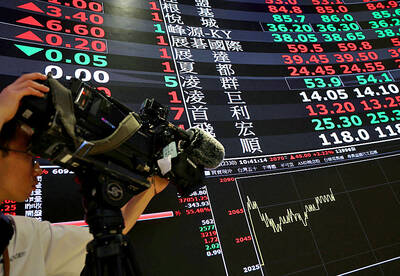
After several years flying high as Asia’s best Nvidia Corp proxy, Taiwan Semiconductor Manufacturing Co (TSMC, 台積電) is increasingly vying with other artificial intelligence (AI) stocks for investor attention. Stock traders are chasing a wider array of beneficiaries as mainstream usage of AI creates demand for hardware beyond the most-advanced chips TSMC makes for Nvidia. Subthemes from the deepening memory crunch to advances in robotics are also luring bids. At the same time, investment caps on single stocks are pushing funds to diversify, while retail investors long familiar with TSMC through its US depositary receipts are being offered a broader set of
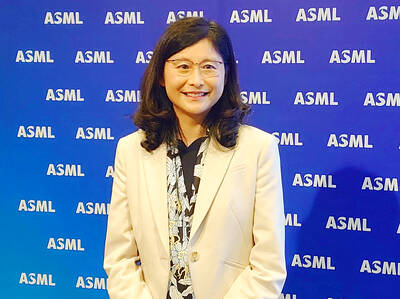
Netherlands-based semiconductor equipment supplier ASML Holding NV yesterday said that it is planning to hire an additional 1,000 people in Taiwan this year in response to growing demand from clients. ASML had previously planned to recruit 600 people this year, but that the plan has been adjusted upward, ASML vice president and ASML Taiwan general manager Grace Wang (汪佳慧) told reporters. ASML has a workforce of more than 4,500 in Taiwan, accounting for about 10 percent of its global total, Wang said. This year’s recruitment campaign would focus on adding people in the customer support, manufacturing and supply chain domains to assist ASML
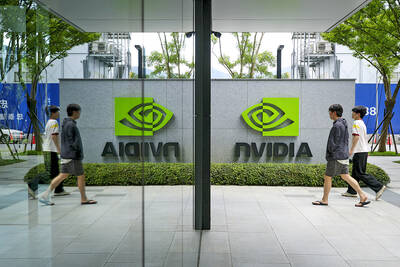
UNDER MICROSCOPE: Taiwan detained three people who allegedly conspired to buy servers in Taiwan and export them using fraudulent documentation, prosecutors said Nvidia Corp chief executive officer Jensen Huang (黃仁勳) on Saturday urged Super Micro Computer Inc to tighten up on compliance after Taiwan detained three people this week for allegedly making fraudulent declarations about artificial intelligence (AI) servers made by its US partner. The development marked the nation’s first crackdown on semiconductor smuggling, which grew after the US slapped restrictions on exports of high-end chips such as Nvidia AI accelerators to China. Nvidia is “rigorous” in explaining regulations to all of its partners, Huang told reporters after arriving in Taipei. “Ultimately Super Micro has to run their own company,” he said in response to
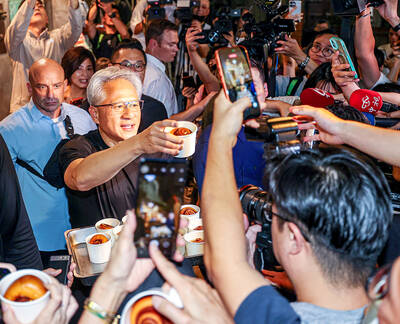
Nvidia Corp yesterday announced that CEO Jensen Huang (黃仁勳) would attend an employee meeting in Taipei tomorrow to celebrate the launch of the company’s Taiwan headquarters project. Huang would attend a gathering at the site of Nvidia’s planned headquarters in Beitou Shilin Technology Park (北投士林科技園區), the company said in a statement. After arriving in Taiwan on Saturday last week, Huang told reporters that he plans to meet with Quanta Computer Inc (廣達) chairman Barry Lam (林百里) and Taiwan Semiconductor Manufacturing Co (TSMC, 台積電) chairman C.C. Wei (魏哲家), and would attend the groundbreaking ceremony for Nvidia’s Taiwan headquarters tomorrow. Nvidia has not yet applied


 RSS
RSS