


Global technology giants Microsoft, Apple and Adobe were yesterday ordered to appear before a pricing inquiry examining the often higher cost of tech goods in Australia compared with other economies.
The lower house committee holding the probe, which was launched in May last year, said it had summoned the trio to appear at a public hearing next month to explain why Australian customers paid more for the same products.
“The committee is looking at the impacts of prices charged to Australian consumers for IT products,” it said in a statement. “Australian consumers often pay much higher prices for hardware and software than people in other countries.”
The inquiry was set up to examine claims by consumer advocacy groups of price discrimination for Australians on technology, with music, games, software, and gaming and computer hardware costing substantially more than elsewhere.
According to consumer lobby group Choice, Australians pay on average 73 percent more on iTunes downloads than consumers in the US, 69 percent more on computer products and 232 percent more on PC game downloads.
Office software was on average 34 percent more expensive in Australia compared with the US, Choice said in its submission to the inquiry, with hardware coming in at 41 percent more expensive.
One software package was A$8,665 (US$8,939) more expensive to buy in Australia than the US — a gap that Choice described as “particularly unreasonable.”
“For this amount, it would be cheaper to employ someone for 46 hours at the price of US$21.30 per hour and fly them to the US and back at your expense — twice,” Choice said.
Choice only did comparisons to the US and Britain; the inquiry is examining discrepancies with these countries as well as with Asia-Pacific economies.
Apple and Microsoft have both made their own submissions to the committee, arguing that prices differed across jurisdictions due to a range of factors including freight, local taxes and duties, and foreign exchange rates.
The Australian Information Industry Association, which represents Adobe and other major information and communications technology firms, has submitted to the committee that the “costs of doing business in Australia are higher than in many other countries.”
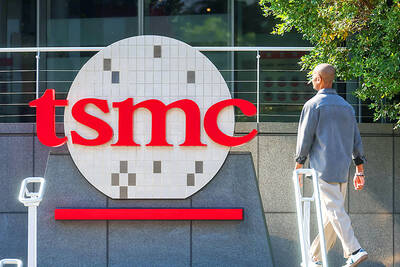
Shares of contract chipmaker Taiwan Semiconductor Manufacturing Co (TSMC, 台積電) came under pressure yesterday after a report that Apple Inc is looking to shift some orders from the Taiwanese company to Intel Corp. TSMC shares fell NT$55, or 2.4 percent, to close at NT$2,235 on the local main board, Taiwan Stock Exchange data showed. Despite the losses, TSMC is expected to continue to benefit from sound fundamentals, as it maintains a lead over its peers in high-end process development, analysts said. “The selling was a knee-jerk reaction to an Intel-Apple report over the weekend,” Mega International Investment Services Corp (兆豐國際投顧) analyst Alex Huang
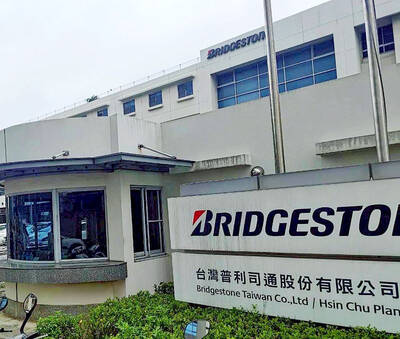
TRANSITION: With the closure, the company would reorganize its Taiwanese unit to a sales and service-focused model, Bridgestone said Bridgestone Corp yesterday announced it would cease manufacturing operations at its tire plant in Hsinchu County’s Hukou Township (湖口), affecting more than 500 workers. Bridgestone Taiwan Co (台灣普利司通) said in a statement that the decision was based on the Tokyo-based tire maker’s adjustments to its global operational strategy and long-term market development considerations. The Taiwanese unit would be reorganized as part of the closure, effective yesterday, and all related production activities would be concluded, the statement said. Under the plan, Bridgestone would continue to deepen its presence in the Taiwanese market, while transitioning to a sales and service-focused business model, it added. The Hsinchu
Taiwan Semiconductor Manufacturing Co (TSMC, 台積電) has approved a capital budget of US$31.28 billion for production expansion to meet long-term development needs during the artificial intelligence (AI) boom. The company’s board meeting yesterday approved the capital appropriation plan for purposes such as the installation of advanced technology capacity and fab construction, the world’s largest contract chipmaker said in a statement. At an earnings conference last month, TSMC forecast that its capital expenditure for this year would be at the higher end of the US$52 billion to US$56 billion range it forecast in January in response to robust demand for 5G, AI and
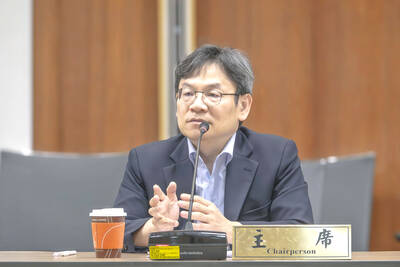
Taiwan Semiconductor Manufacturing Co’s (TSMC, 台積電) investment project in Arizona has progressed better than expected, but it still faces challenges such as water and labor shortages, National Development Council (NDC) Minister Yeh Chun-hsien (葉俊顯) said yesterday. Speaking with reporters after visiting TSMC’s Arizona hub and attending the SelectUSA Investment Summit in Maryland last week, Yeh said TSMC’s Arizona site turned a profit of NT$16.14 billion (US$514 million) last year in its first full year of mass production. “TSMC told me it was surprised by the smooth trial run of the first fab, which has left the company optimistic about the project’s outlook,”


 RSS
RSS