


France’s top constitutional body on Saturday struck down a 75 percent upper income tax rate, dealing a major blow to French Socialist President Francois Hollande, who had made it his centerpiece tax measure.
The government vowed to push ahead with the tax rate, which would apply to incomes over 1 million euros (US$1.3 million) a year, and propose a new measure that would conform with the constitution.
The tax rate had angered business leaders and prompted some wealthy French citizens to seek tax exile abroad, including actor Gerard Depardieu, who recently took up residency in Belgium.
The Constitutional Council said in its ruling that the temporary two-year tax rate, due to take effect next year, was unconstitutional because unlike other forms of income tax it applied to individuals instead of whole households.
As a result, the council said, the tax rate “failed to recognize equality before public burdens.”
Though largely symbolic — it would have applied to only about 1,500 individuals — the Socialists said the tax rate was aimed at making the ultra-rich contribute more to tackling France’s budget deficit.
The move was welcomed by the French Football League (LFP) which had expressed concern at the impact on top soccer players such as Paris Saint Germain’s Swedish star striker Zlatan Ibrahomovic.
LFP chairman Frederic Thiriez said if the measure had reached the statute book there could have been an “exodus of the best players” in the French league.
The 75 percent tax rate was a flagship promise of the election campaign that saw Hollande defeat right-winger Nicolas Sarkozy in May.
French Prime Minister Jean-Marc Ayrault said the ruling was a “symbolic, but not severe censure” and pledged to ensure the measure was adopted.
“The government will propose a new system that conforms with the principles laid down by the decision of the Constitutional Council. It will be presented in the framework of the next Finance Act,” he said in a statement.
“We want to maintain” the measure “because it symbolizes the need for the effort to be more fairly shared,” he added.
The French Constitutional Council also rejected new methods for calculating a separate wealth tax, striking down a provision that would have increased the amount of taxable revenues and capital gains.
Other new measures in the budget were approved, however, including an increase in some upper tax rates to 45 percent and the addition of capital gains to taxable income.
French Finance Minister Pierre Moscovici said the ruling “does not compromise” budget efforts and said the council had approved “the essential” of the government’s economic policies.
However, government critics hailed the ruling as proof the Socialists are pursuing unfair tax policies.
“While the whole world watched us in dismay, Francois Hollande deceived the French into believing that ‘taxing the rich’ would be enough to solve our country’s problems,” the head of the right-wing opposition UMP, Jean-Francois Cope said.
“In reality, discouraging entrepreneurs and punishing the most wealthy until they leave our country inevitably puts the tax burden on the middle class. This moral error was sanctioned today,” he said.
France is struggling to plug a 37 billion euro hole in its public finances to meet its target of reducing the budget deficit to the EU ceiling of 3 percent next year.
The 2013 budget included 12.5 billion euros in spending cuts and 20 billion euros in new taxes on individuals and businesses.
Critics have said the new tax measures will stifle economic growth, with the French economy already expected to contract by 0.2 percent in the final quarter of this year.
The 2013 budget is based on a government forecast of 0.8 percent economic growth next year — a figure many economists consider too optimistic.
Shares of contract chipmaker Taiwan Semiconductor Manufacturing Co (TSMC, 台積電) came under pressure yesterday after a report that Apple Inc is looking to shift some orders from the Taiwanese company to Intel Corp. TSMC shares fell NT$55, or 2.4 percent, to close at NT$2,235 on the local main board, Taiwan Stock Exchange data showed. Despite the losses, TSMC is expected to continue to benefit from sound fundamentals, as it maintains a lead over its peers in high-end process development, analysts said. “The selling was a knee-jerk reaction to an Intel-Apple report over the weekend,” Mega International Investment Services Corp (兆豐國際投顧) analyst Alex Huang
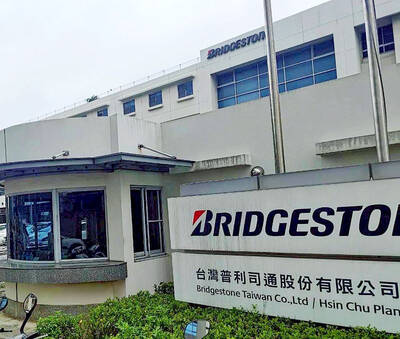
TRANSITION: With the closure, the company would reorganize its Taiwanese unit to a sales and service-focused model, Bridgestone said Bridgestone Corp yesterday announced it would cease manufacturing operations at its tire plant in Hsinchu County’s Hukou Township (湖口), affecting more than 500 workers. Bridgestone Taiwan Co (台灣普利司通) said in a statement that the decision was based on the Tokyo-based tire maker’s adjustments to its global operational strategy and long-term market development considerations. The Taiwanese unit would be reorganized as part of the closure, effective yesterday, and all related production activities would be concluded, the statement said. Under the plan, Bridgestone would continue to deepen its presence in the Taiwanese market, while transitioning to a sales and service-focused business model, it added. The Hsinchu
Taiwan Semiconductor Manufacturing Co (TSMC, 台積電) has approved a capital budget of US$31.28 billion for production expansion to meet long-term development needs during the artificial intelligence (AI) boom. The company’s board meeting yesterday approved the capital appropriation plan for purposes such as the installation of advanced technology capacity and fab construction, the world’s largest contract chipmaker said in a statement. At an earnings conference last month, TSMC forecast that its capital expenditure for this year would be at the higher end of the US$52 billion to US$56 billion range it forecast in January in response to robust demand for 5G, AI and
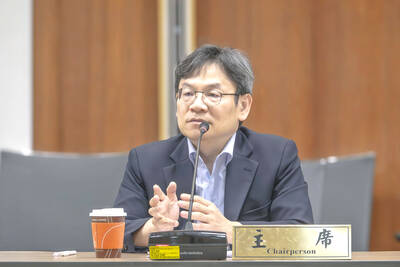
Taiwan Semiconductor Manufacturing Co’s (TSMC, 台積電) investment project in Arizona has progressed better than expected, but it still faces challenges such as water and labor shortages, National Development Council (NDC) Minister Yeh Chun-hsien (葉俊顯) said yesterday. Speaking with reporters after visiting TSMC’s Arizona hub and attending the SelectUSA Investment Summit in Maryland last week, Yeh said TSMC’s Arizona site turned a profit of NT$16.14 billion (US$514 million) last year in its first full year of mass production. “TSMC told me it was surprised by the smooth trial run of the first fab, which has left the company optimistic about the project’s outlook,”


 RSS
RSS