


Smartphone vendor HTC Corp (宏達電) yesterday announced Benjamin Ho (何永生) would replace John Wang (王景弘) as chief marketing officer in January.
The key personnel change comes as the world’s No. 5 smartphone brand has recently ended a patent fight with Apple Inc, but still faces intensified competition from Apple and Samsung Electronics Co.
HTC’s stock price rose 3.02 percent to close at NT$256 in Taipei trading, after local media reported earlier in the day that Ho would leave Far EasTone Telecommunications Co (遠傳電信) to join HTC.
So far this year, the stock has plunged 48.49 percent, according to Taiwan Stock Exchange data.
At HTC, Ho, a Singaporean, will be responsible for worldwide marketing and branding, and his first assignment will be to lead a project, dubbed “Marketing 2.0,” to refocus the company’s efforts around marketing and mass-market brand outreach, while Jason Mackenzie, currently president of global sales and marketing, will focus on global sales strategy, the company said.
On Oct. 26, HTC told an investors’ conference that it planned to continue marketing investment in a bid to increase its brand awareness in developed and emerging countries in Europe, the Middle East and Africa, after revenue declined for a second consecutive quarter to NT$70.2 billion (US$2.41 billion) in the third quarter, which was the lowest in 11 quarters.
“We welcome Benjamin to HTC and look forward to integrating the global marketing capabilities he brings to the company,” HTC chief executive officer Peter Chou (周永明) said in a statement.
Ho is currently vice president of business strategy and marketing at Far EasTone, the statement said.
He previously served as vice president and chief marketing officer at Motorola Asia Pacific Ltd for eight years, as well as a working as a director at BBDO Greater China, Dentsu and Young and Rubicam International, the statement said.
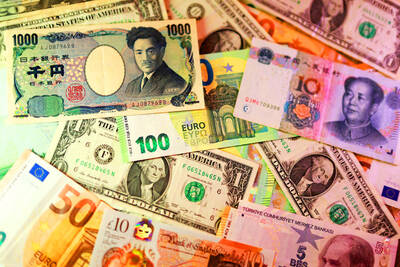
Taiwan’s foreign exchange reserves fell below the US$600 billion mark at the end of last month, with the central bank reporting a total of US$596.89 billion — a decline of US$8.6 billion from February — ending a three-month streak of increases. The central bank attributed the drop to a combination of factors such as outflows by foreign institutional investors, currency fluctuations and its own market interventions. “The large-scale outflows disrupted the balance of supply and demand in the foreign exchange market, prompting the central bank to intervene repeatedly by selling US dollars to stabilize the local currency,” Department of Foreign

ENERGY ISSUES: The TSIA urged the government to increase natural gas and helium reserves to reduce the impact of the Middle East war on semiconductor supply stability Chip testing and packaging service provider ASE Technology Holding Co (日月光投控) yesterday said it planned to invest more than NT$100 billion (US$3.15 billion) in building a new advanced chip testing facility in Kaohsiung to keep up with customer demand driven by the artificial intelligence (AI) boom. That would be included in the company’s capital expenditure budget next year, ASE said. There is also room to raise this year’s capital spending budget from a record-high US$7 billion estimated three months ago, it added. ASE would have six factories under construction this year, another record-breaking number, ASE chief operating officer Tien Wu
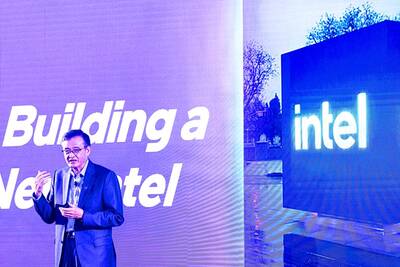
Intel Corp is joining Elon Musk’s long-shot effort to develop semiconductors for Tesla Inc, Space Exploration Technologies Corp and xAI, marking a surprising twist in the chipmaker’s comeback bid. Intel would help the Terafab project “refactor” the technology in a chip factory, the company said on Tuesday in a post on X, Musk’s social media platform. That is a stage in the development process that typically helps make chips more powerful or reliable. The chipmaker’s shares jumped 4.2 percent to US$52.91 in New York trading on Tuesday. The Terafab project is a grand plan by Musk to eventually manufacture his own chips for

For weeks now, the global tech industry has been waiting for a major artificial intelligence (AI) launch from DeepSeek (深度求索), seen as a benchmark for China’s progress in the fast-moving field. More than a year has passed since the start-up put Chinese AI on the map in early last year with a low-cost chatbot that performed at a similar level to US rivals. However, despite reports and rumors about its imminent release, DeepSeek’s next-generation “V4” model is nowhere in sight. Speculation is also swirling over the geopolitical implications of which computer chips were chosen to train and power the new


 RSS
RSS