


Microsoft said on Tuesday its new Surface tablet computer — designed to challenge Apple’s iPad — will be sold at roughly the same price as the market leader.
Microsoft began taking pre-orders for the Surface, which will start at US$499 for US customers for a tablet with 32 gigabytes of memory. A 64GB version bundled with a black touch cover is priced at US$699.
The prices are in line with the iPad, which begins at US$499, but with less memory. Apple is expected to unveil a low-priced “iPad Mini” next week.
Surface will be available on Oct. 26 at Microsoft Store locations in the US and Canada and will be sold online in eight markets: Australia, Canada, China, France, Germany, Hong Kong, Britain and the US.
Microsoft chief executive Steve Ballmer has described the iPad challenger — complete with a built-in stand and ultra thin covers which double as keyboards in a range of colors — as a tablet that “works and plays.”
The tablet will run on the Windows 8 operating system, which is also being released on Oct. 26.
Analysts said Microsoft was walking a fine line in not pricing the Surface too low, which could upset its partners, or too high, to discourage buyers.
At that price level, Citi analyst Walter Pritchard said, “we are not sure there is sufficient motivation to lure consumers away from the iPad.”
“We believe by pricing Surface in line with iPad, Microsoft may be indicating that it feels good about the product and that the addition of Office more than justifies the price parity,” the analyst added.
Morgan Stanley’s Adam Holt called Surface “a compelling value” because it includes the Office software suite, which includes the widely used word-processor Word, which may be key for business users.
As Microsoft announced prices of its tablet, Apple sent out invitations on Tuesday for an event in exactly one week’s time where the company is widely expected to unveil a new “iPad Mini,” a smaller version of its market-leading tablet computer.
“We’ve got a little more to show you,” said the invitations for Tuesday’s event in San Jose, California.
Some blogs that closely monitor Apple say the new tablet could be priced from US$249 to US$399, which could pressure rivals such as the Amazon Kindle Fire.
Various reports have cited the specifications of the new tablet and some pictures have also leaked.
The new tablet is also expected to have a screen of 7.85 inches, compared with 9.7 inches for the current iPad.
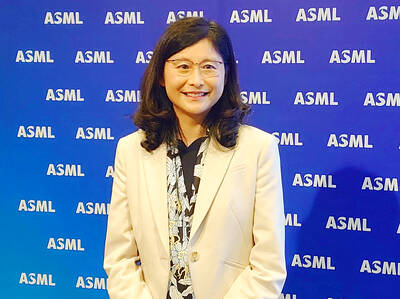
Netherlands-based semiconductor equipment supplier ASML Holding NV yesterday said that it is planning to hire an additional 1,000 people in Taiwan this year in response to growing demand from clients. ASML had previously planned to recruit 600 people this year, but that the plan has been adjusted upward, ASML vice president and ASML Taiwan general manager Grace Wang (汪佳慧) told reporters. ASML has a workforce of more than 4,500 in Taiwan, accounting for about 10 percent of its global total, Wang said. This year’s recruitment campaign would focus on adding people in the customer support, manufacturing and supply chain domains to assist ASML
UNDER MICROSCOPE: Taiwan detained three people who allegedly conspired to buy servers in Taiwan and export them using fraudulent documentation, prosecutors said Nvidia Corp chief executive officer Jensen Huang (黃仁勳) on Saturday urged Super Micro Computer Inc to tighten up on compliance after Taiwan detained three people this week for allegedly making fraudulent declarations about artificial intelligence (AI) servers made by its US partner. The development marked the nation’s first crackdown on semiconductor smuggling, which grew after the US slapped restrictions on exports of high-end chips such as Nvidia AI accelerators to China. Nvidia is “rigorous” in explaining regulations to all of its partners, Huang told reporters after arriving in Taipei. “Ultimately Super Micro has to run their own company,” he said in response to

Nvidia Corp yesterday announced that CEO Jensen Huang (黃仁勳) would attend an employee meeting in Taipei tomorrow to celebrate the launch of the company’s Taiwan headquarters project. Huang would attend a gathering at the site of Nvidia’s planned headquarters in Beitou Shilin Technology Park (北投士林科技園區), the company said in a statement. After arriving in Taiwan on Saturday last week, Huang told reporters that he plans to meet with Quanta Computer Inc (廣達) chairman Barry Lam (林百里) and Taiwan Semiconductor Manufacturing Co (TSMC, 台積電) chairman C.C. Wei (魏哲家), and would attend the groundbreaking ceremony for Nvidia’s Taiwan headquarters tomorrow. Nvidia has not yet applied
Huawei Technologies Co (華為) said it has come up with a new pathway to shorten its gap with industry leader Taiwan Semiconductor Manufacturing Co (TSMC, 台積電), potentially achieving a breakthrough in making advanced semiconductors without cutting-edge equipment. Right now there is about a five-year gap between what TSMC is capable of and what Huawei, together with its manufacturing partner Semiconductor Manufacturing International Corp (中芯), can produce. Huawei is to start making 1.4-nanometer chips by 2031 with its own “LogicFolding” technology, Huawei semiconductor chief He Tingbo (何庭波) said in a rare public appearance during a chip conference yesterday, while TSMC has


 RSS
RSS