


Starbucks is betting on big returns as it seeks to lure an expanding legion of coffee lovers in India — primarily a tea-drinking nation where lifestyle changes have spawned a booming market for cafes.
After eyeing the Indian market for years, the world’s largest coffee chain is planning its foray into the country later this year, with an initial US$78 million investment to tap the country’s fast-growing appetite for the drink.
“Coffee has changed from being a traditional beverage, consumed mainly in south India, to a mainstream beverage with a national presence,” Starbucks’ China and Asia-Pacific president John Culver said.
“Given the size of the Indian economy, the growth of cafe culture and the rising spending power, India will be a very large market over the long term,” he told reporters in an e-mailed interview.
In a traditionally tea-drinking nation, India’s annual per capita coffee consumption of 82g is far below that of 6.79kg in Germany and 5.87kg in Brazil, according to data from the International Coffee Organization.
Yet appetite for the bitter brew is growing amid an explosion of hip Western-style cafes catering to the country’s young consuming class who offer significant opportunities for investment with their rising disposable incomes.
In addition to the Indian-owned Cafe Coffee Day chain which dominates the market, foreign chains such as Britain’s Costa Coffee and US brand Coffee Bean and Tea Leaf are well-established in major Indian cities.
Along with its distinctive green siren logo cups, Starbucks has vowed to tackle competition with “locally relevant” flavors as it adapts its menu to suit local tastebuds, following similar moves by other large chains in India.
US outlets such as Pizza Hut and McDonald’s have “Indianized” their offerings, selling Indian cottage cheese pizzas and spicy potato burgers to woo subcontinental consumers.
However, analysts offer mixed forecasts for the Seattle-based brand which is teaming up with local player Tata Global Beverages to enter the Indian market.
“The Tatas have tea and coffee plantations, but little experience in operating coffee chains,” said P. Phani Sekhar, fund manager at Angel Broking, adding the alliance would have to “be streetsmart and nimble in decisionmaking.”
Sekhar said spiraling real-estate costs could also be problematic, with Indian cities such as Mumbai recording a sharp rise in property prices in recent years.
“The prohibitive costs ... could affect store profitability and make [achieving] break even more challenging,” he said, adding that this could complicate Starbucks’ expansion plans into smaller Indian cities and towns.
It also remains to be seen whether Starbucks can bank on its brand appeal to charge higher prices in India’s inflation-prone economy.
With India’s GDP growth having fallen to 6.5 percent in the year to March, after near double-digit expansion for much of the past decade, the growth in demand for premium coffee may be slower than hoped.
The key issue will therefore be of “penetration and network chains rather than of Indians drinking more coffee,” said Vijay Chugh, consumer and auto analyst with BNP Paribas Securities.
Starbucks had promised a simultaneous launch of stores in New Delhi and Mumbai at some point between last month and this month.

SECOND-RATE: Models distilled from US products do not perform the same as the original and undo measures that ensure the systems are neutral, the US’ cable said The US Department of State has ordered a global push to bring attention to what it said are widespread efforts by Chinese companies, including artificial intelligence (AI) start-up DeepSeek (深度求索), to steal intellectual property from US AI labs, according to a diplomatic cable. The cable, dated Friday and sent to diplomatic and consular posts around the world, instructs diplomatic staff to speak to their foreign counterparts about “concerns over adversaries’ extraction and distillation of US AI models.” Distillation is the process of training smaller AI models using output from larger, more expensive ones to lower the costs of training a powerful new

Micron Technology Inc is a driving force pushing the US Congress to pass legislation that would put new export restrictions on equipment its Chinese competitors use to make their chips, according to people familiar with the matter. A US House of Representatives panel yesterday was to vote on the “MATCH Act,” a bill designed to close gaps in restrictions on chipmaking equipment. It would also pressure foreign companies that sell equipment to Chinese chipmaking facilities to align with export curbs on US companies like Lam Research Corp and Applied Materials Inc. The bill targets facilities operated by China’s ChangXin Memory Technologies Inc

Singapore-based ride-hailing and delivery giant Grab Holdings’ planned acquisition of Foodpanda’s Taiwan operations has yet to enter the formal review stage, as regulators await supplementary documents, the Fair Trade Commission (FTC) said yesterday. Acting FTC Chairman Chen Chih-min (陳志民) told the legislature’s Economics Committee that although Grab submitted its application on March 27, the case has not been officially accepted because required materials remain incomplete. Once the filing is finalized, the FTC would launch a formal probe into the deal, focusing on issues such as cross-shareholding and potential restrictions on market competition, Chen told lawmakers. Grab last month announced that it would acquire
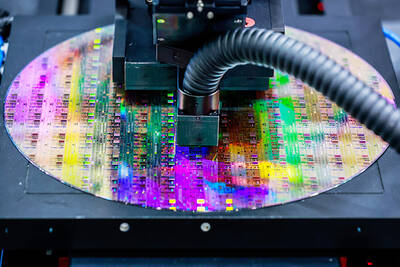
The artificial intelligence (AI) boom has triggered a seismic reshuffling of global equity markets, with Taiwan and South Korea muscling past European nations one by one. With its stock market now valued at nearly US$4.3 trillion, Taiwan surpassed the UK, Europe’s biggest market, earlier this month, data compiled by Bloomberg showed. South Korea is about US$140 billion away from doing the same. The tech-heavy Asian markets have shot past Germany and France in the past seven months. The shift is largely down to massive gains in shares of three companies that provide essential hardware for AI: Taiwan Semiconductor Manufacturing Co (TSMC, 台積電),


 RSS
RSS