


Google is poised to pay a US$22.5 million fine to resolve allegations that it broke a privacy promise by secretly tracking millions of Web surfers who rely on Apple’s Safari browser, according to a person familiar with settlement.
The person on Tuesday asked not to be identified, because the fine has yet to be approved by the Federal Trade Commission (FTC), which oversees online privacy issues in the US.
If approved by the FTC’s five commissioners, the US$22.5 million penalty would be the largest the agency has ever imposed on a single company.
The fine will not cause Google Inc much financial pain. With US$49 billion in the bank, the Internet’s search and advertising leader is expected to generate revenue this year of about US$46 billion, which means the company should bring in enough money to cover the fine in slightly more than four hours.
However, the circumstances surrounding the case may renew questions about the sincerity of Google’s “Don’t be evil” motto and raise doubts about the company’s credibility as it grapples with broader regulatory investigations into whether it has been abusing its influential position on the Internet to stifle competition.
“We do set the highest standards of privacy and security for our users,” Google said in a statement on Tuesday.
The FTC opened its investigation five months ago after a researcher at Stanford University published a study revealing that Google Inc had overridden Safari safeguards that are supposed to prevent outside parties from monitoring Web surfing activity without a user’s permission.
The tracking occurs through snippets of computer coding, known as “cookies,” that help Internet services and advertisers target marketing pitches based on an analysis of the interests implied by a person’s Web surfing activity.
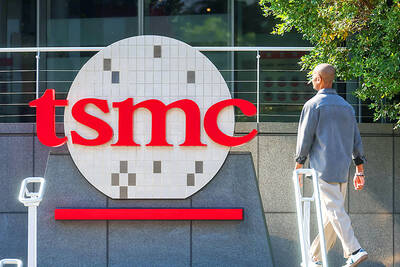
Shares of contract chipmaker Taiwan Semiconductor Manufacturing Co (TSMC, 台積電) came under pressure yesterday after a report that Apple Inc is looking to shift some orders from the Taiwanese company to Intel Corp. TSMC shares fell NT$55, or 2.4 percent, to close at NT$2,235 on the local main board, Taiwan Stock Exchange data showed. Despite the losses, TSMC is expected to continue to benefit from sound fundamentals, as it maintains a lead over its peers in high-end process development, analysts said. “The selling was a knee-jerk reaction to an Intel-Apple report over the weekend,” Mega International Investment Services Corp (兆豐國際投顧) analyst Alex Huang
Taiwan Semiconductor Manufacturing Co (TSMC, 台積電) is expected to remain Apple Inc’s primary chip manufacturing partner despite reports that Apple could shift some orders to Intel Corp, industry experts said yesterday. The comments came after The Wall Street Journal reported on Friday that Apple and Intel had reached a preliminary agreement following more than a year of negotiations for Intel to manufacture some chips for Apple devices. Taiwan Institute of Economic Research (台灣經濟研究院) economist Arisa Liu (劉佩真) said TSMC’s advanced packaging technologies, including integrated fan-out and chip-on-wafer-on-substrate, remain critical to the performance of Apple’s A-series and M-series chips. She said Intel and Samsung
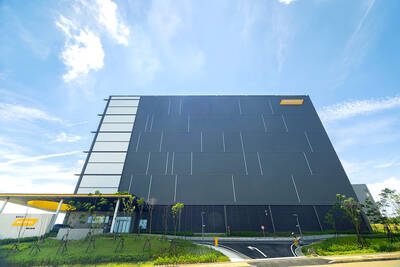
POWER BUILDUP: Powered by Nvidia’s B200 Blackwell chips, the data center would support MediaTek’s computing power demand and business growth, the company said Smartphone chip designer MediaTek Inc (聯發科) yesterday launched a new artificial intelligence (AI) data center with a maximum capacity of 45 megawatts to meet its rising demand for computing power required to develop new advanced chips for AI applications. The company has completed the first-phase computing power buildup at the data center in Miaoli County’s Tongluo Township (銅鑼), providing 15 megawatts of capacity to support its research and development (R&D) capabilities, despite an industrywide shortage of key components, MediaTek said. Supply constraints have plagued a wide range of key components, including memory chips, solid-state drives, power supply units and central
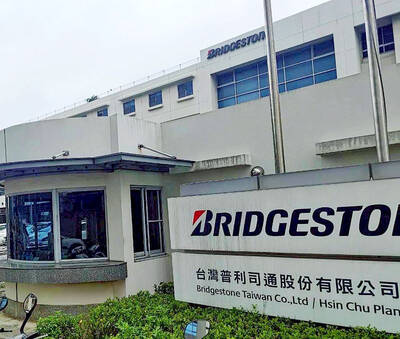
TRANSITION: With the closure, the company would reorganize its Taiwanese unit to a sales and service-focused model, Bridgestone said Bridgestone Corp yesterday announced it would cease manufacturing operations at its tire plant in Hsinchu County’s Hukou Township (湖口), affecting more than 500 workers. Bridgestone Taiwan Co (台灣普利司通) said in a statement that the decision was based on the Tokyo-based tire maker’s adjustments to its global operational strategy and long-term market development considerations. The Taiwanese unit would be reorganized as part of the closure, effective yesterday, and all related production activities would be concluded, the statement said. Under the plan, Bridgestone would continue to deepen its presence in the Taiwanese market, while transitioning to a sales and service-focused business model, it added. The Hsinchu


 RSS
RSS