


Yahoo dangled a US$27 million pay package to lure new Yahoo chief executive Scott Thompson away from PayPal.
The struggling Internet company disclosed the details of Thompson’s compensation in a regulatory filing late on Friday. Thompson starts his new job tomorrow after spending the past four years running eBay Inc’s PayPal service, where revenue more than doubled during his tenure. PayPal took in an estimated US$4.4 billion last year.
That kind of robust growth is a fuzzy memory for Yahoo Inc, a one-time Internet star whose revenue has sagged as online advertising flowed increasingly to rivals Google Inc and Facebook.
Yahoo has promised better times under three new chief executives in less than five years, only to frustrate investors each time. They have been especially disenchanted since the company squandered an opportunity to sell itself to Microsoft Corp for US$47.5 billion, or US$33 per share, in May 2008. The stock has not traded above US$20 in more than three years, with the shares closing on Friday at US$15.52. The last time it closed above US$33 was 2006.
Thompson, 54, is highly regarded in Internet circles, although some analysts question whether he is the right fit for Yahoo because he has no experience in online content or advertising, the firm’s lifeblood.
Yahoo offered Thompson a deal that includes a US$1 million salary and a bonus of up to US$2 million this year. Yahoo is guaranteeing to pay him US$1 million of the bonus; the remaining US$1 million will hinge on Yahoo’s financial results.
Thompson will also receive stock incentives valued at US$22.5 million. The stock awards could be worth more or less, depending how Yahoo’s long-slumping shares fare under Thompson’s leadership.
To top it off, Yahoo is paying Thompson US$1.5 million to offset money he forfeited by leaving PayPal. A US$6.5 million chunk of the stock awards are also meant to offset some of the compensation Thompson would have gotten at PayPal, according to the filing.
Thompson received a US$10.4 million compensation package at PayPal in 2010. It included a US$645,000 salary. EBay has not yet revealed how much it paid Thompson last year.
Unless more money and stock is added later in the year, Yahoo will not be paying Thompson as much as former Yahoo chief executive Carol Bartz, who was hired three years ago and fired four months ago. Yahoo chief financial officer Tim Morse has been running Yahoo since Bartz’s ouster.
Bartz’s compensation package during her first year on the job was valued at US$47.2 million. Much of that, though, included stock incentives that are not as valuable as the original calculations envisioned.

The EU and US are nearing an agreement to coordinate on producing and securing critical minerals, part of a push to break reliance on Chinese supplies. The potential deal would create incentives, such as minimum prices, that could advantage non-Chinese suppliers, according to a draft of an “action plan” seen by Bloomberg. The EU and US would also cooperate on standards, investments and joint projects, as well as coordinate on any supply disruptions by countries like China. The two sides are additionally seeking other “like-minded partners” to join a multicountry accord to help create these new critical mineral supply chains, which feed into

For weeks now, the global tech industry has been waiting for a major artificial intelligence (AI) launch from DeepSeek (深度求索), seen as a benchmark for China’s progress in the fast-moving field. More than a year has passed since the start-up put Chinese AI on the map in early last year with a low-cost chatbot that performed at a similar level to US rivals. However, despite reports and rumors about its imminent release, DeepSeek’s next-generation “V4” model is nowhere in sight. Speculation is also swirling over the geopolitical implications of which computer chips were chosen to train and power the new
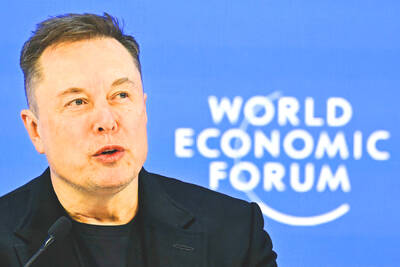
Elon Musk’s lieutenants have reached out to chip industry suppliers, including Applied Materials Inc, Tokyo Electron Ltd and Lam Research Corp, for his envisioned Terafab, early steps in an audacious and likely arduous attempt to break into the production of cutting-edge chips. Staff working for the joint venture between Tesla Inc and Space Exploration Technologies Corp (SpaceX) have sought price quotes and delivery times for an array of chipmaking gear, people familiar with the matter said. In past weeks, they’ve contacted makers of photomasks, substrates, etchers, depositors, cleaning devices, testers and other tools, according to the people, who asked not to

Japan approved ¥631.5 billion (US$3.97 billion) in additional subsidies to hasten Rapidus Corp’s entry into the high-stakes artificial intelligence (AI) chipmaking arena, ramping up support for a project widely regarded as a long shot. The capital is intended to bankroll Rapidus’ work for information technology firm Fujitsu Ltd, one of the initial customers that Tokyo hopes would get the signature endeavor off the ground. The new money raises the fees and investments that the government is injecting into the start-up to ¥2.6 trillion by the end of the current fiscal year to March next year, the Japanese Ministry of Economy, Trade and


 RSS
RSS