


Far EasTone Telecommunications Co (遠傳電信), the nation’s No. 3 telecoms operator, expects to accelerate integration with other companies owned by Far Eastern Group (遠東集團) to create synergy in the development of its mobile payment service, company officials said yesterday.
The company may seek partners in the retail and financial sectors in the early stages of this integration, the officials said, an indication that Far Eastern Geant Co (愛買量販) and Far Eastern International Bank (遠東國際商銀), which both belong to Far Eastern, might be two possible options.
“The idea of mobile payment has been in my mind for four years, and now is a good time to execute it,” group chairman Douglas Hsu (徐旭東) told reporters after Far EasTone’s annual shareholders’ meeting.
The telecoms operator plans to release one or two mobile payment applications for portable smart devices in the second half of this year, and gradually expand to phones equipped with near-field communication (NFC) technology, Hsu said.
Far EasTone, one of the nation’s six licensed WiMAX wireless broadband operators, expects the government to relax the regulations on the merger of WiMAX operators.
The other WiMAX operators are First International Telecom Corp (大眾電信), Global Mobile Corp (全球一動), Tatung InfoComm Co (大同電信), Vee TIME Corp (威達雲端電訊) and VMAX Telecom Co (威邁思電信).
An operator has to expand the coverage of the 4G network to 70 percent or more if it is to qualify for a merger, according to the National Communications Commission.
“That means each operator needs to invest NT$5 billion to NT$6 billion (US$173.8 million to US$208.6 mllion) in network construction, a heavy burden for the operators,” Far EasTone chief technology officer Jeffrey Gee (紀竹律) said.
The government should also maintain its neutral attitude to WiMAX and its major 4G rival Long-Term Evolution (LTE), allowing operators to decide which networks to develop, Far EasTone said.
“Far EasTone will continue with its development of WiMAX, while expecting the government to help with the technology transformation to LTE in the long term,” Hsu said.
Shareholders approved a plan to deliver cash dividends of NT$2.5 per common share based on last year’s net income of NT$8.85 billion, or NT$2.72 per share.
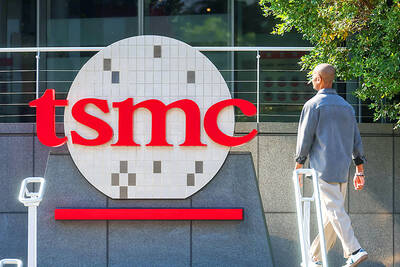
Shares of contract chipmaker Taiwan Semiconductor Manufacturing Co (TSMC, 台積電) came under pressure yesterday after a report that Apple Inc is looking to shift some orders from the Taiwanese company to Intel Corp. TSMC shares fell NT$55, or 2.4 percent, to close at NT$2,235 on the local main board, Taiwan Stock Exchange data showed. Despite the losses, TSMC is expected to continue to benefit from sound fundamentals, as it maintains a lead over its peers in high-end process development, analysts said. “The selling was a knee-jerk reaction to an Intel-Apple report over the weekend,” Mega International Investment Services Corp (兆豐國際投顧) analyst Alex Huang
Taiwan Semiconductor Manufacturing Co (TSMC, 台積電) is expected to remain Apple Inc’s primary chip manufacturing partner despite reports that Apple could shift some orders to Intel Corp, industry experts said yesterday. The comments came after The Wall Street Journal reported on Friday that Apple and Intel had reached a preliminary agreement following more than a year of negotiations for Intel to manufacture some chips for Apple devices. Taiwan Institute of Economic Research (台灣經濟研究院) economist Arisa Liu (劉佩真) said TSMC’s advanced packaging technologies, including integrated fan-out and chip-on-wafer-on-substrate, remain critical to the performance of Apple’s A-series and M-series chips. She said Intel and Samsung
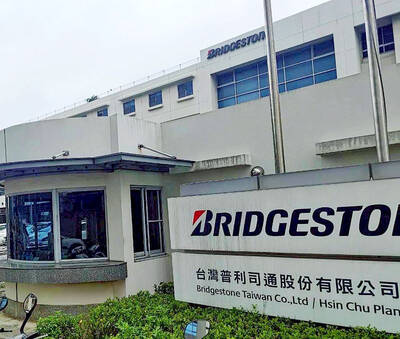
TRANSITION: With the closure, the company would reorganize its Taiwanese unit to a sales and service-focused model, Bridgestone said Bridgestone Corp yesterday announced it would cease manufacturing operations at its tire plant in Hsinchu County’s Hukou Township (湖口), affecting more than 500 workers. Bridgestone Taiwan Co (台灣普利司通) said in a statement that the decision was based on the Tokyo-based tire maker’s adjustments to its global operational strategy and long-term market development considerations. The Taiwanese unit would be reorganized as part of the closure, effective yesterday, and all related production activities would be concluded, the statement said. Under the plan, Bridgestone would continue to deepen its presence in the Taiwanese market, while transitioning to a sales and service-focused business model, it added. The Hsinchu
Taiwan Semiconductor Manufacturing Co (TSMC, 台積電) has approved a capital budget of US$31.28 billion for production expansion to meet long-term development needs during the artificial intelligence (AI) boom. The company’s board meeting yesterday approved the capital appropriation plan for purposes such as the installation of advanced technology capacity and fab construction, the world’s largest contract chipmaker said in a statement. At an earnings conference last month, TSMC forecast that its capital expenditure for this year would be at the higher end of the US$52 billion to US$56 billion range it forecast in January in response to robust demand for 5G, AI and


 RSS
RSS