


Delta Electronics Inc (台達電), the world’s top switching power supplies maker, is set to join hands with China Mobile Ltd (中國移動) to debut its first e-reader in December, sources from the supply chain said yesterday.
The 8.2-inch reader will come in colored panel instead of the monochrome models that are now available. It will bundle with features such as 3G and Wi-Fi.
The model will carry the “Vivitek” brand. Vivitek Corp (麗訊), a maker of e-paper and projectors, is a strategic partner and brand client of Delta.
China Mobile, the world’s largest mobile operator in terms of subscribers, will subsidize the e-reader and further partnership will depend on how well the market receives the first product, sources said.
“There are some bugs still to be ironed out for the product to make it on time for the December launch,” a source said.
“Delta is very aggressive with the e-reader segment, because it has the capability to control the whole manufacturing process, from e--paper and components to the end products. The e-paper could be applied to a wider range of products and e-readers are only one example,” the source added.
Delta’s move means it is set to compete head-to-head with China’s largest player, Hanvon Technology Co (漢王).
Hanvon has a slew of monochrome readers on offer, but will only unveil its first colored model in Japan in November, with mass release of colored models to follow early next year.
Meanwhile, despite Acer Inc (宏碁) keeping mum on the exact launch dates of its tablet and e-readers, sources said the PC maker is gearing up for the release of its first tablet PCs in Europe and the US next month.
The tablet will use Linux or Android operating systems, sources said.
Acer’s local telecom partner Far EasTone Telecommunications Co (遠傳電信) told the Taipei Times last month that it plans to release Acer’s tablet in the fourth quarter in Taiwan.
Far EasTone is testing tablet prototypes and would bundle tablets from three different partners with its monthly plans by year’s end.
Tablet models from Taiwanese players, including one that Micro-Star International Inc (微星) will debut in the second quarter next year, will mostly come in 7 inches, 9 inches and 13 inches, according to sources from the supply chain.
A 22-inch tablet is also already in the pipeline, showing Taiwanese PC makers’ eagerness to launch various models in an effort to grab some of the iPad’s market share.
Asustek will also launch its first e-reader model in Taiwan “pretty soon,” the supply chain sources said.
The model will be in monochrome and the initial price has been set at about NT$8,000 (US$256).
The timing is in line with Asustek’s original timeline. CEO Jerry Shen (沈振來) said last month its e-readers would be commercially available in Taiwan, the US and China in late October as the first debut markets.
Asustek’s e-reader is 8.9 inches and runs on ARM architecture, Marvell chips and the Linux operating system.

SECOND-RATE: Models distilled from US products do not perform the same as the original and undo measures that ensure the systems are neutral, the US’ cable said The US Department of State has ordered a global push to bring attention to what it said are widespread efforts by Chinese companies, including artificial intelligence (AI) start-up DeepSeek (深度求索), to steal intellectual property from US AI labs, according to a diplomatic cable. The cable, dated Friday and sent to diplomatic and consular posts around the world, instructs diplomatic staff to speak to their foreign counterparts about “concerns over adversaries’ extraction and distillation of US AI models.” Distillation is the process of training smaller AI models using output from larger, more expensive ones to lower the costs of training a powerful new

Micron Technology Inc is a driving force pushing the US Congress to pass legislation that would put new export restrictions on equipment its Chinese competitors use to make their chips, according to people familiar with the matter. A US House of Representatives panel yesterday was to vote on the “MATCH Act,” a bill designed to close gaps in restrictions on chipmaking equipment. It would also pressure foreign companies that sell equipment to Chinese chipmaking facilities to align with export curbs on US companies like Lam Research Corp and Applied Materials Inc. The bill targets facilities operated by China’s ChangXin Memory Technologies Inc

Singapore-based ride-hailing and delivery giant Grab Holdings’ planned acquisition of Foodpanda’s Taiwan operations has yet to enter the formal review stage, as regulators await supplementary documents, the Fair Trade Commission (FTC) said yesterday. Acting FTC Chairman Chen Chih-min (陳志民) told the legislature’s Economics Committee that although Grab submitted its application on March 27, the case has not been officially accepted because required materials remain incomplete. Once the filing is finalized, the FTC would launch a formal probe into the deal, focusing on issues such as cross-shareholding and potential restrictions on market competition, Chen told lawmakers. Grab last month announced that it would acquire
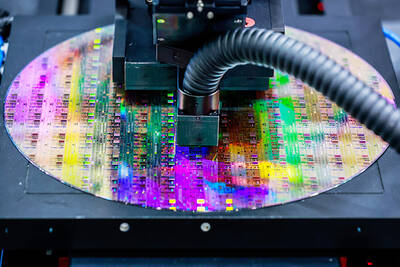
The artificial intelligence (AI) boom has triggered a seismic reshuffling of global equity markets, with Taiwan and South Korea muscling past European nations one by one. With its stock market now valued at nearly US$4.3 trillion, Taiwan surpassed the UK, Europe’s biggest market, earlier this month, data compiled by Bloomberg showed. South Korea is about US$140 billion away from doing the same. The tech-heavy Asian markets have shot past Germany and France in the past seven months. The shift is largely down to massive gains in shares of three companies that provide essential hardware for AI: Taiwan Semiconductor Manufacturing Co (TSMC, 台積電),


 RSS
RSS