


Vodafone’s partner in its Indian joint venture is understood to have met bankers in London and Mumbai to prepare for a multibillion-US dollar flotation of its stake in the mobile phone business.
Indian steel-to-retail conglomerate Essar Group retained a 33 percent stake in the venture after Vodafone bought out its original partner, Hong Kong-based conglomerate Hutchison Whampoa, in 2007 for £5.7 billion (US$180 million).
Under the terms of that deal, Essar was given a year-long option under which it could also sell its stake to Vodafone after three years. That period began in May this year.
FLOTATION
However, a flotation of the stake could give Essar, created by Indian tycoons Shashi and Ravi Ruia in 1969, a better return than a sale to Vodafone, advisers to the Indian firm believe, and an announcement could come next month.
While the “put option” gives Essar the ability to sell the entire stake for a flat fee of US$5 billion or sell a portion of it at a fair-market value to be agreed by the parties, a flotation either in London or India could be more lucrative for the Ruias, one of India’s richest families.
A listing in London would give British investors the chance to get involved directly in the Indian mobile phone market, one of the fastest-growing in the world, with operators currently adding more than 20 million customers each month.
A flotation may also offer Vodafone a way of avoiding a potential hurdle, which would arise if Essar decides to exercise its put option and sell. Under India’s foreign ownership laws, Vodafone cannot own the whole of Vodafone Essar and would have to find an Indian partner to take up part of the stake.
Essar already has experience of floating its business units in London. Earlier this year, Essar Energy shot into the FTSE 100 index in the market’s biggest debut since December 2007. Its initial public offering raised £1.3 billion and gave the company, which intends to use the proceeds to build power plants across India, a market capitalization of £5.5 billion.
Essar Energy is chaired by Shashi Ruia, who also controls Essar Group with his brother Ravi. Last month, Shashi’s son, Prashant Ruia, the eldest of the second generation of the Ruia family in the business, admitted that a flotation of the stake in Vodafone Essar, the nation’s second-largest player, could be one route, but stressed “all options are open.”
A spokesman for Vodafone said: “This is a matter for Essar.”
HIGH COURT
News of the discussions with bankers comes as Vodafone prepares to return to the Mumbai high court this week to continue with its appeal against a tax bill following the original Hutchison purchase.
Vodafone paid US$11.2 billion for its 67 percent stake, but Indian tax authorities claim the company is liable to pay as much as US$2.6 billion in tax on its investment in Hutchison Essar, as the deal involved the transfer of an Indian asset.
Last month Vodafone chief executive Vittorio Colao was among executives from British firms who traveled to India with British Prime Minister David Cameron.
In April, Vodafone Essar announced that it had signed up its 100 millionth customer, making it the fifth mobile company in the world to have passed that milestone in a single country.
100 MILLION CUSTOMERS
Two other operators in India have also passed the 100 million milestone: Bharti Airtel and Reliance Communications, and the dramatic growth in mobile phone usage in the country means Vodafone Essar now has close to 110 million customers.
However, the sector has become more competitive after the government allowed several new entrants into the market. As a result of the fierce competition sparked, Vodafone recently wrote £2.3 billion off the value of its Indian business.
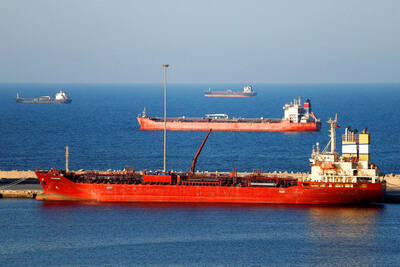
HORMUZ ISSUE: The US president said he expected crude prices to drop at the end of the war, which he called a ‘minor excursion’ that could continue ‘for a little while’ The United Arab Emirates (UAE) and Kuwait started reducing oil production, as the near-closure of the crucial Strait of Hormuz ripples through energy markets and affects global supply. Abu Dhabi National Oil Co (ADNOC) is “managing offshore production levels to address storage requirements,” the company said in a statement, without giving details. Kuwait Petroleum Corp said it was lowering production at its oil fields and refineries after “Iranian threats against safe passage of ships through the Strait of Hormuz.” The war in the Middle East has all but closed Hormuz, the narrow waterway linking the Persian Gulf to the open seas,

Nanya Technology Corp (南亞科技) yesterday said the DRAM supply crunch could extend through 2028, as the artificial intelligence (AI) boom has led the world’s major memory makers to dramatically reduce production of standard DRAM and allocate a significant portion of their capacity for high-bandwidth memory (HBM) chips. The most severe supply constraints would stretch to the first half of next year due to “very limited” increases in new DRAM capacity worldwide, Nanya Technology president Lee Pei-ing (李培瑛) told a news briefing. The company plans to increase monthly 12-inch wafer capacity to 20,000 in the first half of 2028 after a

Taiwan has enough crude oil reserves for more than 100 days and sufficient natural gas reserves for more than 11 days, both above the regulatory safety requirement, Minister of Economic Affairs Kung Ming-hsin (龔明鑫) said yesterday, adding that the government would prioritize domestic price stability as conflicts in the Middle East continue. Overall, energy supply for this month is secure, and the government is continuing efforts to ensure sufficient supply for next month, Kung told reporters after meeting with representatives from business groups at the ministry in Taipei. The ministry has been holding daily cross-ministry meetings at the Executive Yuan to ensure
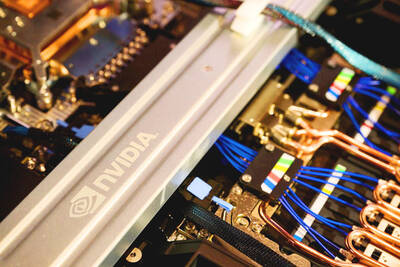
RATIONING: The proposal would give the Trump administration ample leverage to negotiate investments in the US as it decides how many chips to give each country US officials are debating a new regulatory framework for exporting artificial intelligence (AI) chips and are considering requiring foreign nations to invest in US AI data centers or security guarantees as a condition for granting exports of 200,000 chips or more, according to a document seen by Reuters. The rules are not yet final and could change. They would be the first attempt to regulate the flow of AI chips to US allies and partners since US President Donald Trump’s administration said it rescinded its predecessor’s so-called AI diffusion rules. Those rules sought to keep a significant amount of AI


 RSS
RSS