


Several research institutes have expressed optimism over this year’s prospects for the information technology and telecoms market, including the global cellphone, cloud-computing products and value-added services.
Global shipments of cellphones are expected to grow 12 percent to 1.33 billion units this year, with shipments of smartphones forecast to grow by 30 percent to 235 million units, a forecast made last month by Topology Research Institute (TRI) showed.
TRI researcher Chen Wei-hang (陳緯航) said that emerging markets, particularly China and India, would be the main pillars of growth in shipments.
Chen said the Asia-Pacific region would be the fastest-growing market for cellphones this year and would become a major target for the marketing of lower-level cellphones.
Anticipated 3G handset replacement purchases in cities on China’s southeastern coast, and strong demand from farm villages for extra-low-price models, will help bolster the growth of the market, Chen said.
India, meanwhile, is entering a stage of high-speed expansion. The number of cellphone users is expected to continue growing, following the completion of a number of telecommunication infrastructure projects in second and third-tier cities, Chen said.
In Taiwan, as the market for cellphone users has reached saturation, local telecoms companies are looking to value-added sales in both the domestic and Chinese markets, such as providing e-books for cellphones, as well as low-price smartphones.
In addition, another local market research firm forecast that this year will be a key year for cloud computing, which is a general term for anything that involves delivering hosted services over the Internet, as IT service companies are expected to tap cloud technologies to deliver new value-added services to the market such as e-books, e-medical records and e-commerce.
Gartner, an IT research and advisory firm headquartered in Connecticut, forecast in November that revenue from cloud computing would top US$14 billion annually by the end of 2013.
Since Microsoft chief executive Steve Ballmer proposed “Three Screens and a Cloud,” a concept that envisions connecting PCs, handsets and TVs to the Internet, during a visit to Taiwan last October, cloud computing has become a hot issue locally.
Microsoft then signed pacts with the Ministry of Economic Affairs and Chunghwa Telecom Co (中華電信) in the following month to collaborate on expanding the cloud computing business.
Google and IBM have also said they would develop new services and products based on cloud computing technology.
Also See: Tablets, smartphones to star at CES

SECOND-RATE: Models distilled from US products do not perform the same as the original and undo measures that ensure the systems are neutral, the US’ cable said The US Department of State has ordered a global push to bring attention to what it said are widespread efforts by Chinese companies, including artificial intelligence (AI) start-up DeepSeek (深度求索), to steal intellectual property from US AI labs, according to a diplomatic cable. The cable, dated Friday and sent to diplomatic and consular posts around the world, instructs diplomatic staff to speak to their foreign counterparts about “concerns over adversaries’ extraction and distillation of US AI models.” Distillation is the process of training smaller AI models using output from larger, more expensive ones to lower the costs of training a powerful new
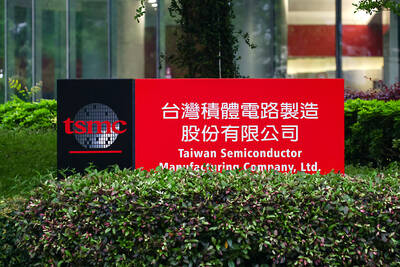
Shares of Taiwan Semiconductor Manufacturing Co (TSMC, 台積電) have repeatedly hit new highs, but an equity analyst said the stock’s valuation remains within a reasonable range and any pullback would likely be technical. The contract chipmaker’s historical price-to-earnings (P/E) ratio has ranged between 20 and 30, Cathay Futures Consultant Co (國泰證期) analyst Tsai Ming-han (蔡明翰) told Central News Agency. With market consensus projecting that TSMC would post earnings per share of about NT$100 (US$3.17) this year, supported by strong global demand for artificial intelligence (AI) applications, and the stock currently trading at a P/E ratio of below 25, Tsai said the valuation
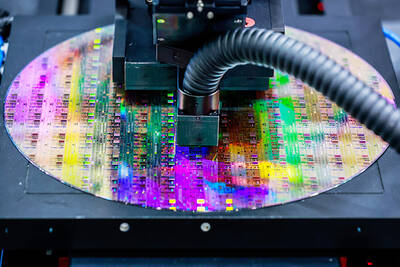
The artificial intelligence (AI) boom has triggered a seismic reshuffling of global equity markets, with Taiwan and South Korea muscling past European nations one by one. With its stock market now valued at nearly US$4.3 trillion, Taiwan surpassed the UK, Europe’s biggest market, earlier this month, data compiled by Bloomberg showed. South Korea is about US$140 billion away from doing the same. The tech-heavy Asian markets have shot past Germany and France in the past seven months. The shift is largely down to massive gains in shares of three companies that provide essential hardware for AI: Taiwan Semiconductor Manufacturing Co (TSMC, 台積電),
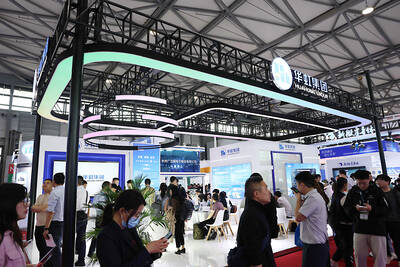
The US Department of Commerce last week ordered multiple chip equipment companies to halt shipments of certain tools to China’s second-largest chipmaker, Hua Hong Semiconductor Ltd (華虹半導體), its latest action to slow the country’s development of advanced chips, two people familiar with the matter said. The department sent letters to at least a handful of companies informing them of restrictions on tools and other materials destined for two Hua Hong facilities US officials believe make China’s most sophisticated chips, the people said. Top US chip equipment companies Lam Research Corp, Applied Materials Inc and KLA Corp, each of which has significant


 RSS
RSS