


The legislature’s finance committee yesterday rejected a rekindled merger proposal between Taiwan Financial Holding Co (台灣金控) and Land Bank of Taiwan (土地銀行) on concerns of their overlapped business models.
The strengths of Bank of Taiwan (台灣銀行), a subsidiary under Taiwan Financial, are the same as those of Land Bank, meaning that a merger with the state-run bank would not help create synergies, Chinese Nationalist Party (KMT) Legislator Alex Fai (費鴻泰) told reporters at the legislature.
The proposal, raised by KMT Legislator Lai Shyh-bao (賴士葆), had recommended that the Ministry of Finance re-evaluate the feasibility of Taiwan Financial acquiring Land Bank.
The ministry first proposed the merger after a request by Premier Wu Den-yih (吳敦義) that mergers of state-run banks be accelerated.
The committee, however, vetoed the proposal.
The ministry had previously planned to merge Bank of Taiwan, Land Bank, the Export-Import Bank of Republic of China (中國輸出入銀行), Bank of Taiwan Life Insurance (台銀人壽) and Bank of Taiwan Securities (台銀證券) into a financial holding company. But in November last year, the legislature decided to exclude Land Bank and the Export-Import Bank from plans to create a mega bank, which would be led by Bank of Taiwan.
Minister of Finance Lee Sush-der (李述德) said yesterday that he agreed with the legislature’s decision to keep Land Bank — a mortgage lender — independent from the state-run financial service provider.
Lee said that Land Bank and Bank of Taiwan have different market niches and should therefore develop separately.
Also yesterday, the legislative committee gave Bank of Taiwan approval to raise its capital ceiling to NT$90 billion (US$2.79 billion) from NT$60 billion, giving the financial service provider more room to attract capital to fund future expansion.

SECOND-RATE: Models distilled from US products do not perform the same as the original and undo measures that ensure the systems are neutral, the US’ cable said The US Department of State has ordered a global push to bring attention to what it said are widespread efforts by Chinese companies, including artificial intelligence (AI) start-up DeepSeek (深度求索), to steal intellectual property from US AI labs, according to a diplomatic cable. The cable, dated Friday and sent to diplomatic and consular posts around the world, instructs diplomatic staff to speak to their foreign counterparts about “concerns over adversaries’ extraction and distillation of US AI models.” Distillation is the process of training smaller AI models using output from larger, more expensive ones to lower the costs of training a powerful new

Singapore-based ride-hailing and delivery giant Grab Holdings’ planned acquisition of Foodpanda’s Taiwan operations has yet to enter the formal review stage, as regulators await supplementary documents, the Fair Trade Commission (FTC) said yesterday. Acting FTC Chairman Chen Chih-min (陳志民) told the legislature’s Economics Committee that although Grab submitted its application on March 27, the case has not been officially accepted because required materials remain incomplete. Once the filing is finalized, the FTC would launch a formal probe into the deal, focusing on issues such as cross-shareholding and potential restrictions on market competition, Chen told lawmakers. Grab last month announced that it would acquire
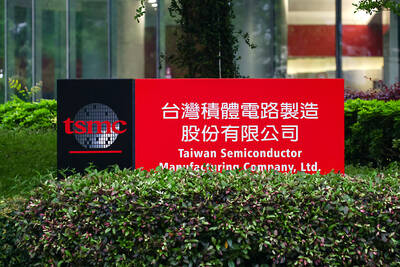
Shares of Taiwan Semiconductor Manufacturing Co (TSMC, 台積電) have repeatedly hit new highs, but an equity analyst said the stock’s valuation remains within a reasonable range and any pullback would likely be technical. The contract chipmaker’s historical price-to-earnings (P/E) ratio has ranged between 20 and 30, Cathay Futures Consultant Co (國泰證期) analyst Tsai Ming-han (蔡明翰) told Central News Agency. With market consensus projecting that TSMC would post earnings per share of about NT$100 (US$3.17) this year, supported by strong global demand for artificial intelligence (AI) applications, and the stock currently trading at a P/E ratio of below 25, Tsai said the valuation
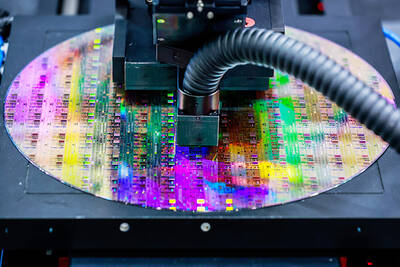
The artificial intelligence (AI) boom has triggered a seismic reshuffling of global equity markets, with Taiwan and South Korea muscling past European nations one by one. With its stock market now valued at nearly US$4.3 trillion, Taiwan surpassed the UK, Europe’s biggest market, earlier this month, data compiled by Bloomberg showed. South Korea is about US$140 billion away from doing the same. The tech-heavy Asian markets have shot past Germany and France in the past seven months. The shift is largely down to massive gains in shares of three companies that provide essential hardware for AI: Taiwan Semiconductor Manufacturing Co (TSMC, 台積電),


 RSS
RSS