


Taiwanese WiMAX license holders are displaying a variety of mobile devices enabling high-speed data transmission on next-generation technology at Computex. These are paving the way for a full commercial launch in Taiwan during the second half of the year.
With support from the government and chip giant Intel Corp, Taiwanese telecom companies and equipment makers are aggressively pushing for the deployment of the WiMAX ecosystem, taking a different path to their global peers, which bet on rival mobile technology, Long Term Evolution (LTE), in developed markets.
Vmax Telecom Co (威邁思) is showcasing notebook computers and Mobile Internet Devices (MID) embedded with WiMAX modules, partly from Taiwanese makers such as Elitegroup Computer Systems Co (精英電腦), before offering services in the fourth quarter in northern Taiwan.
“We think WiMAX technology will provide faster data transmission for applications like video screening, avoiding annoying time lag that most users experience now when browsing videos or watching TV shows on the Internet,” said James Lin (林鴻榮), a Vmax official.
Vmax is one of 30 WiMAX technologies and service providers worldwide receiving Intel investment. The US chip company has invested US$11.7 million in the Taiwanese company via its investment arm Intel Capital.
In the initial stage, Vmax will primarily sell data cards for notebook computer or MID users to connect to the Internt on the go, Lin said.
It seems it will take longer for users to have Internet access over handsets as only a handful of WiMAX-enabled mobile phones are on display at Computex and some are prototypes such as one running chips by Taiwan’s biggest handset chipmaker, MediaTek Inc (聯發科).
Local WiMAX licensee Global Mobile Corp (全球一動) is showcasing handsets supporting WiMAX technology including a dual-mode smartphone, code named MAX 4G, from HTC Corp (宏達電), the biggest maker of handsets running Microsoft Inc’s system.
HTC has shipped the MAX 4G to Russia’s WiMAX operator Yota, which launched the services in Moscow and St Petersburg on Monday, Global Mobile said.
Global Mobile is set to launch its service next quarter, followed by Vee Telecom Multimedia Co (威達超舜) and the nation’s No. 3 mobile carrier, Far EasTone Telecommunications Co (遠傳電信), by the end of this year.
Taiwan Semiconductor Manufacturing Co (TSMC, 台積電) yesterday reported record revenue of NT$416.975 billion (US$13.17 billion) for last month, putting the world’s largest contract chipmaker on track to set a record for quarterly revenue. Last month’s figure surpassed March’s record NT$415.19 billion and represented increases of 1.5 percent from April and 30.1 percent from a year earlier. For the first five months of the year, TSMC generated NT$1.96 trillion in revenue, up 30 percent year-on-year, it said in a statement. TSMC has forecast second-quarter revenue of between US$39 billion and US$40.2 billion, representing sequential growth of about 10 percent and year-on-year growth of about

Infineon Technologies AG is preparing to open its largest single investment, a 5 billion euro (US$5.8 billion) semiconductor factory built with the help of EU subsidies, as the bloc seeks to boost chip production. The power chip fab, which is an extension of the German company’s Dresden campus, is scheduled to open on July 2, Infineon chief operating officer Alexander Gorski said this week at the site. The project is a major recipient of EU Chips Act funds, receiving about 1 billion euros in subsidies. The new plant represents a rare success for the bloc’s flagship semiconductor law, which was drawn up during
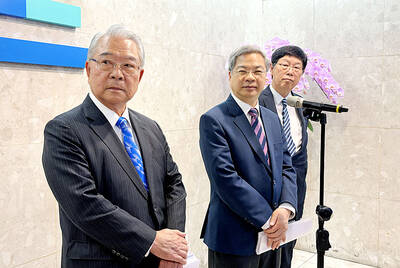
PATENT PROBE: US lawmakers called for a ban on imports of chips made by TSMC if they are found to infringe on US patents, with a preliminary ruling expected soon Minister of Economic Affairs Kung Ming-hsin (龔明鑫) yesterday expressed confidence in Taiwan Semiconductor Manufacturing Co’s (TSMC, 台積電) compliance with patent regulations after reports linked the company to a patent infringement lawsuit in the US. US Representative Ryan Zinke, and US senators Tim Sheehy, Roger Marshall and Bernie Moreno urged the US International Trade Commission in a May 22 letter to ban imports of chips made by TSMC if they are found to infringe on US patents, Axios reported on Wednesday. An administrative law judge is expected to issue a preliminary ruling this month, with the commission potentially making a final decision in

Taiwan remained the sixth-largest net creditor nation in the world last year, despite a fall of more than 10 percent in its net international investment position (NIIP) over the year, the central bank said yesterday. The NIIP is the difference between a country’s external financial assets and its external financial liabilities. Taiwan’s external financial assets hit US$3.27 trillion at the end of last year, up US$275.75 billion or 9.2 percent from a year earlier, the central bank said in its annual NIIP report. The growth largely reflected an increase in holdings of overseas marketable securities by residents in Taiwan, as well as a


 RSS
RSS