


While US bosses are under fire for “fat-cat” bonuses, Japanese executives have largely avoided a row over corporate greed by cutting their own pay or even working for free during the economic crisis.
When US auto bosses were being lambasted recently for flying to Washington in private jets to plead for government aid, the head of Japan Airlines (JAL), was taking the bus to work with regular commuters.
JAL president Haruka Nishimatsu cut his own pay and even lines up with other employees for lunch in the company cafeteria.
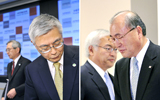
PHOTO: AFP
At Japanese computer chip maker Elpida Memory, group president Yukio Sakamoto voluntarily went without a salary for two months last year.
He is not the only one making sacrifices. A survey by the Nikkei Shimbun daily showed that the heads of more than 200 listed Japanese firms have cut their own pay since last April.
Toyota Motor has scrapped executive bonuses this year.
Even before the recession began, Japanese bosses’ salaries were relatively modest compared with their US peers.
“Japan’s CEO compensation is much lower compared to the United States,” said Hideaki Miyajima, a corporate governance expert at Waseda University.
The main reason is that a Japanese boss is a kind of a “representative of the employees” and will have typically joined the firm as a graduate and competed with colleagues for promotion.
In this kind of situation it is hard to pay the company head significantly more than colleagues of a similar age, he said.
In fact, a chief executive in the US earns about four times as much as a Japanese CEO, according to a survey by the human resources firm Towers Perrin published in 2006.
Japanese executives in general do not flaunt their wealth and bosses are often quick to step down when things start to go wrong.
Indeed, the presidents of companies including Toyota, Sony, Toshiba, Honda and Hitachi have all recently bowed out.
The humble approach in Japan has helped executives to avoid the kind of backlash seen in the US over corporate excess.
The woes of once-mighty US firms have prompted debate in Japan over whether firms should put the brakes on a slow shift towards Western-style practices, such as performance-related pay.
“Japanese corporate culture is in a bit of an identity crisis at the moment,” said Noriko Hama at Doshisha Business School in Kyoto.
“I think there is a lot of soul-searching about the way companies were headed before this crisis hit. A lot of Japanese executives were saying, ‘We need to get away from the old Japanese way of doing things.’ That’s really starting to change again but nobody really knows where to go from here,” he said.
Experts say that the row in the US over the multimillion-dollar bonuses paid out by insurance giant AIG after being bailed out by Washington is likely to make Japanese firms remain wary about linking pay to performance.
One prominent US Senator even suggested that top AIG executives ought to quit or commit suicide, which he described as the Japanese model of taking responsibility.
Japan has not had to save its banks or automakers from collapse but companies including Toyota and Honda have said they may apply for government loans because of difficulties raising credit.
And while they have avoided a row over their pay, Japanese companies have angered workers with a wave of layoffs.
“People do feel that the corporate leadership has become very disloyal to the workers. It is that aspect that they find the most unforgivable,” Hama said.
Japanese companies “had a lot of surplus cash that they chose to keep and to get rid of people. The workers saw that as a betrayal,” he said.
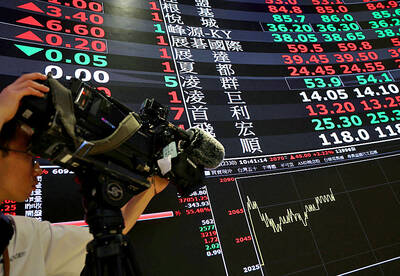
After several years flying high as Asia’s best Nvidia Corp proxy, Taiwan Semiconductor Manufacturing Co (TSMC, 台積電) is increasingly vying with other artificial intelligence (AI) stocks for investor attention. Stock traders are chasing a wider array of beneficiaries as mainstream usage of AI creates demand for hardware beyond the most-advanced chips TSMC makes for Nvidia. Subthemes from the deepening memory crunch to advances in robotics are also luring bids. At the same time, investment caps on single stocks are pushing funds to diversify, while retail investors long familiar with TSMC through its US depositary receipts are being offered a broader set of
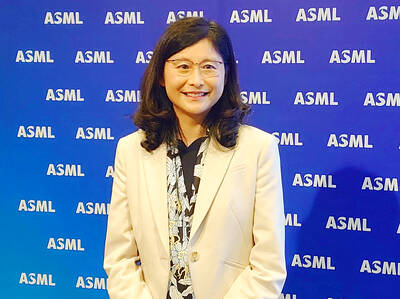
Netherlands-based semiconductor equipment supplier ASML Holding NV yesterday said that it is planning to hire an additional 1,000 people in Taiwan this year in response to growing demand from clients. ASML had previously planned to recruit 600 people this year, but that the plan has been adjusted upward, ASML vice president and ASML Taiwan general manager Grace Wang (汪佳慧) told reporters. ASML has a workforce of more than 4,500 in Taiwan, accounting for about 10 percent of its global total, Wang said. This year’s recruitment campaign would focus on adding people in the customer support, manufacturing and supply chain domains to assist ASML
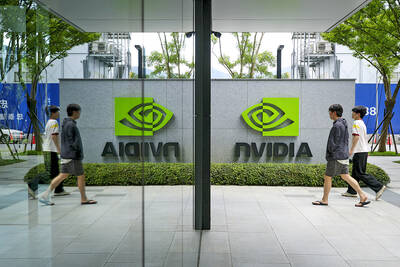
UNDER MICROSCOPE: Taiwan detained three people who allegedly conspired to buy servers in Taiwan and export them using fraudulent documentation, prosecutors said Nvidia Corp chief executive officer Jensen Huang (黃仁勳) on Saturday urged Super Micro Computer Inc to tighten up on compliance after Taiwan detained three people this week for allegedly making fraudulent declarations about artificial intelligence (AI) servers made by its US partner. The development marked the nation’s first crackdown on semiconductor smuggling, which grew after the US slapped restrictions on exports of high-end chips such as Nvidia AI accelerators to China. Nvidia is “rigorous” in explaining regulations to all of its partners, Huang told reporters after arriving in Taipei. “Ultimately Super Micro has to run their own company,” he said in response to
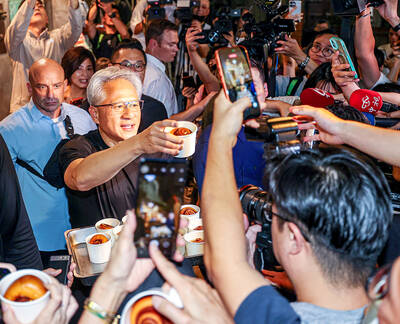
Nvidia Corp yesterday announced that CEO Jensen Huang (黃仁勳) would attend an employee meeting in Taipei tomorrow to celebrate the launch of the company’s Taiwan headquarters project. Huang would attend a gathering at the site of Nvidia’s planned headquarters in Beitou Shilin Technology Park (北投士林科技園區), the company said in a statement. After arriving in Taiwan on Saturday last week, Huang told reporters that he plans to meet with Quanta Computer Inc (廣達) chairman Barry Lam (林百里) and Taiwan Semiconductor Manufacturing Co (TSMC, 台積電) chairman C.C. Wei (魏哲家), and would attend the groundbreaking ceremony for Nvidia’s Taiwan headquarters tomorrow. Nvidia has not yet applied


 RSS
RSS